

 Slovensky (EUR)
 Česky (CZK)
 Magyar (HUF)
Laser blood irradiation: ILIB, VPBM and the limits of evidence
Laser blood irradiation: ILIB, VPBM and the limits of evidence
What invasive and non-invasive approaches mean, which mechanisms are being studied and what clinical evidence does not yet show.
Laser blood irradiation refers to different methods being studied for delivering light into the vascular system or through the skin towards a vascular area. Invasive ILIB and non-invasive VPBM differ in how light is applied and cannot automatically be considered equivalent.
We explain the terminology, light parameters, selected research reviews and their limitations. A biological response or a change in a blood marker alone does not demonstrate treatment of a disease.
Article contents Select a section to open it; select it again to close it.
01What does laser blood irradiation mean?
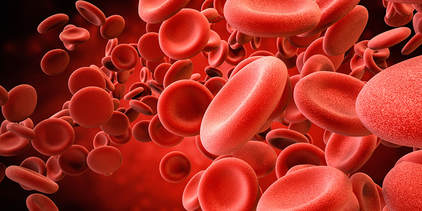
01 · What does laser blood irradiation mean?
The term “laser blood irradiation” is used for more than one procedure. Historically, it mainly refers to ILIB – intravascular laser irradiation of blood, in which low-energy light is delivered invasively into the vascular system using an optical fibre. More recent papers also use the term vascular photobiomodulation (VPBM) for non-invasive irradiation through the skin over a superficially accessible blood vessel.In the literature, ILIB is sometimes also used to describe a modified transcutaneous application. When reading a study, the abbreviation in its title is therefore not enough: check where the light source was placed and whether vascular access was used.
02ILIB versus non-invasive VPBM
02 · ILIB versus non-invasive VPBM
ILIB is an invasive procedure with an optical fibre introduced into the vascular system. VPBM is a non-invasive, transcutaneous approach in which light passes through the skin towards a vascular area.
These procedures cannot automatically be considered equivalent. With a non-invasive approach, the amount of energy reaching a blood vessel also depends on the optical properties of the tissue and the device parameters.
Comparison of application methods
03How this differs from other forms of photobiomodulation
03 · How this differs from other forms of photobiomodulation
Photobiomodulation (PBM) is a broader term. Light can be applied locally, transcranially, intranasally or in relation to the vascular system. An ILIB study therefore does not automatically demonstrate the effects of an intranasal, transcranial or other non-invasive device.Comparisons require information about application route, wavelength, power or irradiance, dose, duration and the population studied.
Cellular mechanisms and light parameters are explained in more detail in Cells and photobiomodulation.
04What is being studied at the biological level?
04 · What is being studied at the biological level?
Systemic PBM research investigates mechanisms associated with mitochondrial function, redox signalling, oxidative stress, inflammatory mediators and nitric oxide (NO).The systematic review by Vasconcelos et al. (2024) included six papers involving humans and animals and assessed cytokines and nitric oxide. Differences in light sources and protocols matter when interpreting these biological findings.
Scientific background: [4].
The role of the inner lining of blood vessels is discussed in Endothelium and the vascular lining.
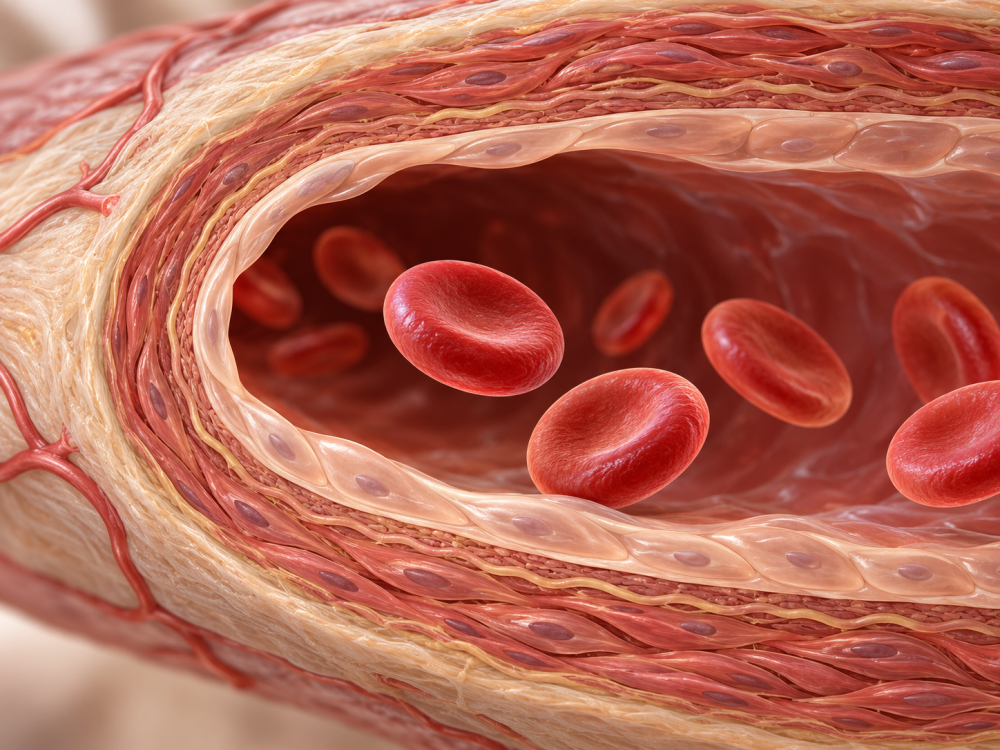
05Blood, rheology and microcirculation
05 · Blood, rheology and microcirculation
Some papers investigate blood cell parameters, aggregation, red blood cell deformability, haemodynamics or microcirculation. Findings come from different protocols and populations.Blood viscosity, clotting, fibrin, cell aggregation and microcirculation are not synonyms.
The broader context of circulation is explained in the main article, Heart and blood vessels. What individual assessments measure is discussed in Heart, blood vessel and blood measurements.
06What do clinical studies show?
06 · What do clinical studies show?
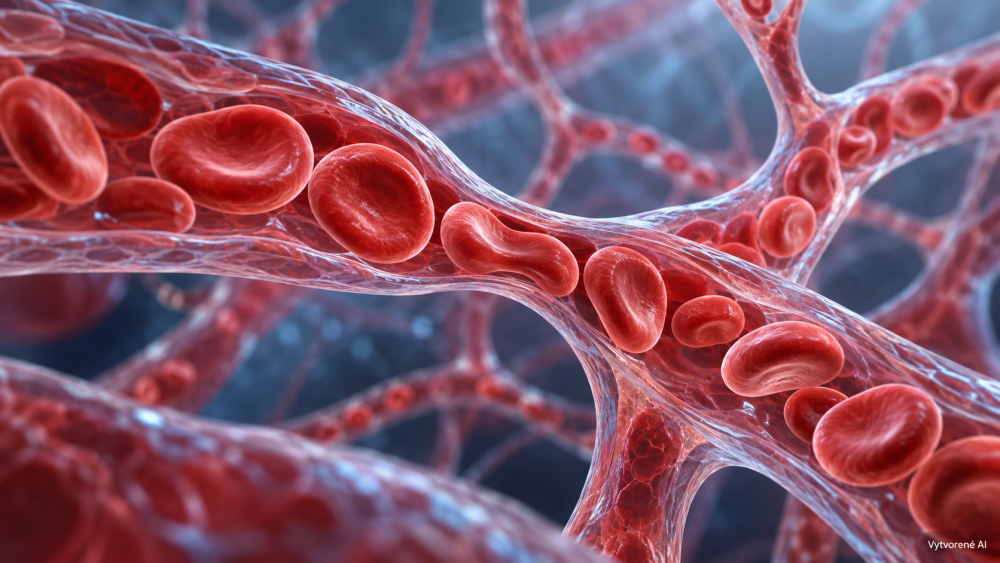
The integrative review by Brassolatti et al. (2025) included 37 papers: 28 clinical and 9 preclinical. It covered intravenous and transcutaneous applications and different health conditions. The authors reported promising results, but differences between methods and methodological limitations did not justify a general confirmation of efficacy.
Scientific background: [1].
The critical review by Schapochnik et al. (2023) on lung diseases highlighted a lack of randomised controlled trials and inadequately described light doses in some of the literature.
Scientific background: [2].
The narrative review by Díaz et al. (2025) selected eight randomised trials involving 340 participants and included invasive and transcutaneous approaches. The authors described favourable findings for some measured outcomes; four studies had a low risk of bias, while four raised some concerns. They also called for more standardised dosimetry and long-term outcomes that matter to patients.
Scientific background: [3].
07Why should findings be interpreted cautiously?
07 · Why should findings be interpreted cautiously?
Many studies have small samples, different protocols, wavelengths and doses, and assess different outcomes. A laboratory marker is not the same as clinical benefit, quality of life or prevention of a serious event.08Safety and differences between procedures
08 · Safety and differences between procedures
Invasive ILIB and non-invasive irradiation have different procedure and risk profiles. An invasive procedure requires vascular access and belongs in a healthcare setting. Non-invasive methods require assessment of the specific device, parameters, application site, contraindications and manufacturer’s instructions.The safety of one protocol cannot automatically be transferred to a device using a different wavelength, dose or application route.
No serious adverse events were reported in the 2025 review of eight randomised trials. This does not establish safety for every person, every device or long-term use.
Scientific background: [3].
09What claims are not justified by the evidence?
09 · What claims are not justified by the evidence?
The current evidence does not justify broad claims that laser blood irradiation “cleans blood vessels”, dissolves clots, treats atherosclerosis, replaces anticoagulants or reliably treats a wide range of systemic diseases.Likewise, findings from invasive ILIB cannot automatically be used as evidence of the efficacy of a commercial non-invasive device.
10Frequently asked questions
10 · Frequently asked questions
Is ILIB the same as non-invasive irradiation over a blood vessel?
Does an ILIB study prove the effects of an intranasal device?
Does a change in a blood marker mean that blood vessels are being treated?
Is systemic photobiomodulation a proven treatment?
Is the same wavelength enough to compare two methods?
Is an image of blood evidence of the effects of irradiation?
11📚 11 · Scientific sources
📚 11 · Scientific sources
- Brassolatti P. et al. (2025): Systemic photobiomodulation – integrative review of ILIB and vascular PBM
- Schapochnik A. et al. (2023): ILIB used to treat lung diseases – critical review
- Díaz L. et al. (2025): Clinical efficacy of ILIB – narrative review of randomized controlled trials
- Vasconcelos M.R. et al. (2024): ILIB, inflammatory cytokines and nitric oxide – systematic review
Educational materials by Ing. František Kokoš provide historical context. Conclusions about clinical effects in this article are based on the published literature listed here.
Sources checked on 6 October 2026. These are selected reviews, not a complete systematic audit of all publications.
12Further reading
This is an educational article and does not replace medical assessment, diagnosis or treatment. It is not a guide to home laser blood irradiation or a recommendation for a particular device. Do not change prescribed treatment, anticoagulant therapy or antiplatelet therapy based on this article. Invasive intravascular procedures belong in a healthcare setting.