

 Slovensky (EUR)
 Česky (CZK)
 Magyar (HUF)
Blood pressure: systolic and diastolic readings and home measurement
Blood pressure: systolic and diastolic readings and home measurement
Blood pressure is the pressure of blood against artery walls. Systolic pressure is the top number, measured when the heart contracts; diastolic pressure is the bottom number, during relaxation between beats.
High blood pressure can remain symptom-free for years. We explain monitor readings, correct home measurement and when to seek help. Routine assessment considers the average of repeated readings and your health; do not wait to measure blood pressure if sudden, serious symptoms occur.
01 · What do blood pressure readings mean?
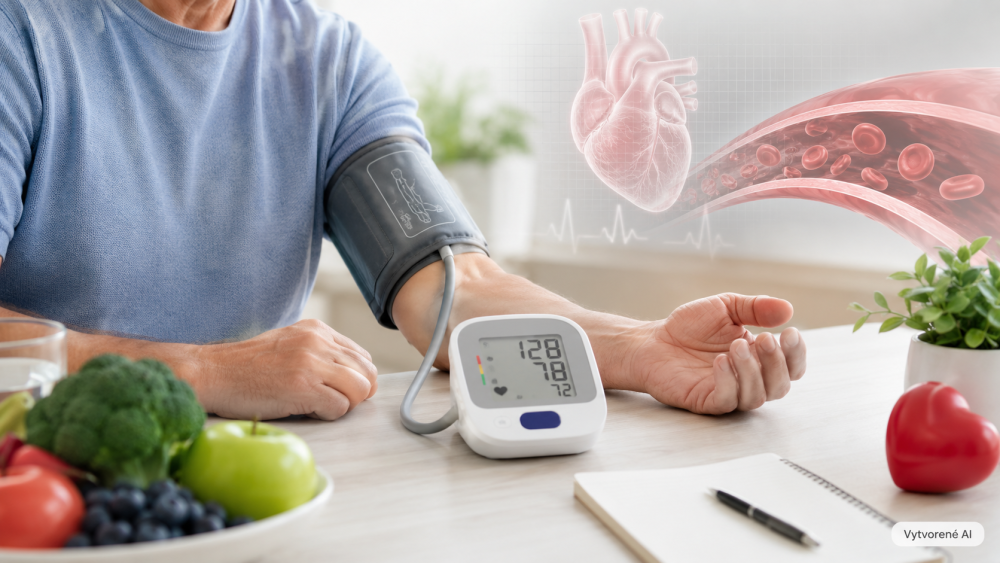
Blood pressure is recorded as two numbers in units of mmHg — millimetres of mercury. Pulse is a separate reading in beats per minute.
The upper number
Pressure in the arteries as the heart contracts and pumps blood out.
The lower number
Pressure in the arteries while the heart relaxes between beats.
Beats per minute
Pulse indicates how many times the heart beats in one minute.
One reading is not enough
Blood pressure naturally varies. Its pattern over time and the average of several readings matter.
Blood pressure describes the pressure of blood against artery walls; it does not measure how fast blood flows.
For example, if the monitor shows:
135 = systolic pressure · 85 = diastolic pressure · 70 = heartbeats per minute
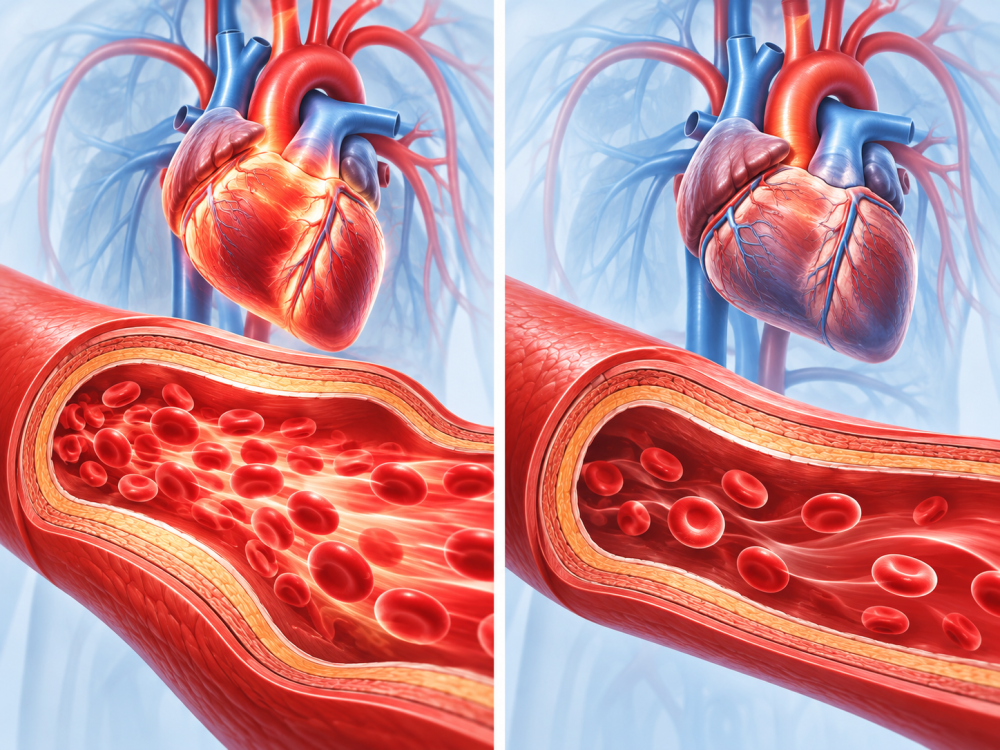
The example 135/85 does not represent an “ideal blood pressure”. If it is the average of home readings, it meets the European threshold for hypertension. A single reading does not by itself confirm a diagnosis.
For how the heart and circulation work, see the main article: Heart and blood vessels.
02 · How are blood pressure and pulse related?
Blood pressure and pulse are related, but they are different measurements.
Blood pressure is influenced by:
- the amount of blood pumped by the heart,
- heart rate,
- vascular resistance and elasticity,
- fluid and sodium balance,
- kidney function,
- hormones and the autonomic nervous system.
If blood vessels are stiffer or offer greater resistance, the heart may need to generate higher pressure even when the pulse remains, for example, 65–75 beats per minute.
A fast pulse does not automatically mean high blood pressure. It can occur with fever, dehydration, anaemia, anxiety, thyroid disease or an abnormal heart rhythm.
03 · Why does blood pressure rise temporarily?
Blood pressure is necessary for blood to reach the brain, heart, kidneys and other tissues.
- physical exertion,
- stress or fear,
- pain,
- exposure to cold,
- an acute need to increase blood supply to organs.
The problem arises when blood pressure remains high over time, including at rest.
Dehydration can also lower blood pressure and increase the pulse; its effect depends on the circumstances. It is not a reliable explanation for high blood pressure.
04 · What causes high blood pressure?
In most people, there is no single identifiable cause. Age, genetics, lifestyle, kidney function, hormonal regulation and the condition of blood vessels all play a role.
- excess salt intake,
- excess weight and visceral fat,
- physical inactivity,
- smoking,
- excess alcohol consumption,
- chronic stress,
- insufficient sleep,
- sleep apnoea,
- diabetes and insulin resistance,
- kidney disease,
- arterial stiffness and damage,
- certain hormonal disorders,
- certain medicines.
What is secondary hypertension?
When high blood pressure has a specific disease or another identifiable factor as its cause, it is called secondary hypertension.
A doctor may consider it in cases of:
- a sudden onset of marked hypertension,
- high blood pressure at a younger age,
- very high readings,
- blood pressure that does not respond to several medicines used together.
For how this relates to metabolic health, see Blood glucose and insulin.
05 · Why is high blood pressure often unnoticed?
Hypertension can occur without pain or obvious symptoms. This does not mean the blood vessels are unaffected.
Persistently high pressure places mechanical stress on artery walls. Over time, it can contribute to:
For the inner lining of arteries, see Endothelium: the living lining of blood vessels.
06 · What can long-term high blood pressure damage?
- the heart and coronary arteries,
- blood vessels in the brain,
- the kidneys,
- the retina,
- arteries in the legs,
- small blood vessels and the microcirculation.
Long-term untreated hypertension increases the risk of stroke, heart attack, heart failure, kidney disease, impaired vision and other vascular complications.
The level and duration of high blood pressure matter, along with other risk factors such as smoking, diabetes, high cholesterol or kidney disease.
For another process affecting arteries, see Atherosclerosis and cholesterol.
07 · How do you measure blood pressure correctly at home?
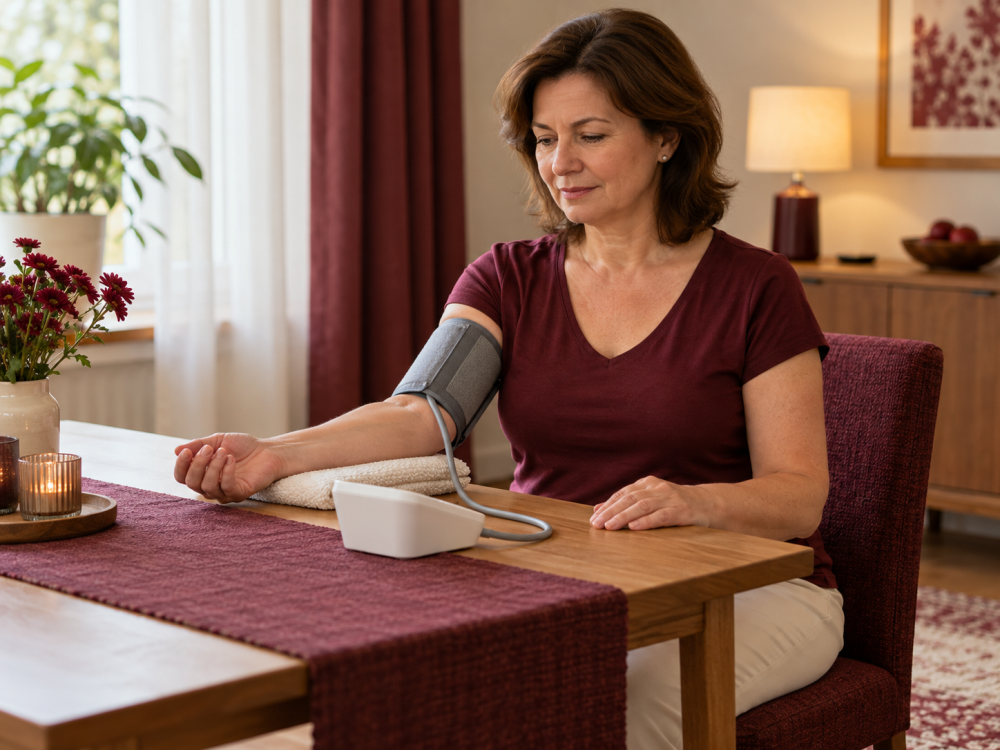
Incorrect technique can distort the result. Follow the same procedure each time.
- avoid smoking, exercise and caffeinated drinks for at least 30 minutes,
- empty your bladder,
- sit quietly for at least 5 minutes,
- support your back,
- keep your feet flat on the floor,
- do not cross your legs,
- place the cuff on your bare upper arm,
- support your arm at about heart level,
- do not talk during the measurement.
How many readings should you take?
Take two readings 1–2 minutes apart and record both blood pressure and pulse.
To check your readings, measure in the morning and evening at similar times for at least 3 days, ideally 7 days as agreed with your doctor. Record every result; the average matters, not just the highest number.
Choose a clinically validated upper-arm monitor and a cuff suited to your arm circumference. A cuff that is too small can produce falsely high readings.
Record the date, time, both blood pressure readings and pulse; add a brief note about unusual circumstances. Bring the record to your doctor. Do not skip medication for the measurement.
For what each method measures, see Heart, blood vessel and blood measurements.
08 · Which readings are high?
Interpretation also depends on whether blood pressure is measured in a clinic, at home or by 24-hour monitoring.
Treatment targets are individual. Age, other conditions, complication risk and treatment tolerance are taken into account.
An increase in either number is sufficient. These are European thresholds for assessing hypertension in adults, rather than a universal treatment target. A doctor confirms the diagnosis using repeated readings and an overall assessment.
In white-coat hypertension, blood pressure is high in the clinic but below the hypertension threshold outside it. In masked hypertension, the pattern is reversed. Correct home readings or 24-hour monitoring can help clarify the difference.
For what to do with very high readings or sudden symptoms, see section 11 — when to act immediately.
09 · What can we change to help manage high blood pressure?
1. Reduce excess salt
Much of our salt comes from foods rather than the salt shaker. Major sources can include:
- processed meats,
- certain cheeses,
- prepared foods,
- instant meals,
- salty snacks,
- certain types of bread and baked goods.
What does the DASH eating plan look like?
DASH is an eating plan studied for high blood pressure. It focuses on vegetables, fruit, whole grains, pulses, nuts and appropriate amounts of low-fat dairy, with less saturated fat and fewer high-sodium foods. Portions and energy intake are tailored to the individual.
In practice: check the salt content on food labels and replace some salty ready meals with everyday foods prepared at home. Reducing sodium intake can help lower blood pressure. DASH complements medical care; do not change prescribed medicines on your own. If you have kidney disease or need to limit potassium, discuss your diet and any salt substitutes individually with your doctor.
2. Manage weight and stay active
For people who are overweight, gradual weight loss can help improve blood pressure.
Regular walking, cycling, swimming and suitable strength exercise are often appropriate.
3. Sleep and stress
Chronic stress and insufficient sleep affect the autonomic nervous system and can impair blood pressure regulation.
Loud snoring, breathing pauses during sleep and marked daytime fatigue may suggest sleep apnoea.
4. Avoid smoking and limit alcohol
Smoking damages blood vessels and, together with hypertension, increases overall cardiovascular risk.
5. Take prescribed medicines
They often mean that treatment and lifestyle changes are working. Do not stop medicines on your own just because the monitor now shows normal readings.
For nutrient transport and its links with diet, see Diet, blood and the brain.
10 · Hypertension and microcirculation
Persistently high blood pressure can strain both large arteries and small blood vessels. The foundation of hypertension care is correct measurement, assessment of overall risk and treatment when needed.
The article on viscosity and microcirculation explains haematocrit, fibrinogen, red blood cell properties and flow through the smallest vessels. These concepts differ from blood pressure.
Blood viscosity and microcirculation → ❤️ Heart and blood vessels →11 · When is immediate action needed?
If chest pain, marked shortness of breath, difficulty speaking, limb weakness or paralysis, facial drooping, sudden vision changes or another sudden serious symptom occurs, call your local emergency number immediately. In the EU, call 112. Do not wait for another reading or a particular blood pressure value.
If you do not have these symptoms but systolic pressure is around 180 mmHg or higher, or diastolic pressure around 120 mmHg or higher, sit quietly and repeat the measurement after at least one minute. If it remains very high, contact a healthcare professional immediately. Do not change medicines or doses on your own.
12 · What should you remember?
High blood pressure often cannot be felt, but it can be measured easily.
A single reading does not establish a diagnosis. The average of repeated, correctly taken readings and overall cardiovascular risk matter.
Early detection and appropriate treatment of hypertension help protect the heart, brain, kidneys, eyes and blood vessels from long-term damage.
13 · Frequently asked questions about blood pressure
Can you always feel high blood pressure?
No. Hypertension can occur without obvious symptoms. Correct blood pressure measurement and assessment of repeated readings are reliable ways to detect it.
When should home readings be discussed with a doctor?
If correctly taken home readings average 135 mmHg or higher systolic, or 85 mmHg or higher diastolic, consult a doctor. One reading alone does not establish a diagnosis.
How do you measure blood pressure correctly at home?
Use an upper-arm monitor with a suitable cuff. Sit quietly for at least five minutes beforehand, support your arm at heart level and take two readings 1–2 minutes apart.
Can I stop medicines when my blood pressure is good?
Not on your own. Good readings may be the result of effective treatment. Discuss any medication changes with your doctor.
Can I have high blood pressure with a normal pulse?
Yes. Blood pressure and pulse are different readings. A normal pulse does not rule out hypertension; blood pressure must be measured separately.
Why is my blood pressure different at the doctor's clinic and at home?
The difference may relate to measurement conditions or the white-coat effect. Masked hypertension, with high readings outside the clinic, also exists. Your doctor may recommend a home record or 24-hour monitoring.
14 · Sources and further reading
- [1] European Society of Cardiology — 2024 ESC Guidelines for the management of elevated blood pressure and hypertension.
- [2] National Heart, Lung, and Blood Institute (NIH) — DASH Eating Plan: diet composition and sodium intake.
- [3] National Kidney Foundation — precautions about potassium-based salt substitutes in kidney disease.
- [4] World Health Organization — Hypertension: overview and risk factors.
- [5] American Heart Association — Home Blood Pressure Monitoring: correct home measurement.
- [6] American Heart Association — very high blood pressure and symptoms requiring emergency help.
← Previous article · Atherosclerosis and cholesterol
Educational information: This article does not replace individual medical assessment, diagnosis or treatment. Discuss readings and symptoms with your doctor. Do not change or stop prescribed treatment based on this article.