

 Slovensky (EUR)
 Česky (CZK)
 Magyar (HUF)
Collagen, hyaluronic acid, elastin and MSM: from digestion to use in the body
Collagen, hyaluronic acid, elastin and MSM: from digestion to use in the body
Collagen and elastin are proteins, hyaluronic acid is a glycosaminoglycan, and MSM is a small sulphur-containing compound. They therefore undergo different processing after oral intake. We explain the differences between digestion, absorption, transport in blood and use in tissues — and why the amount on a label does not by itself establish an effect.
For an overview of the main types, see Types of collagen. This article focuses on how these substances move through the body.
01 · Intake, absorption and effects: three different things
Our body constantly renews itself. Cells need oxygen and nutrients, while tissues build and maintain their structure. A substance we eat or drink must undergo digestion, absorption where applicable, and further metabolism. The outcome depends on its chemical form, the body's condition and other factors.
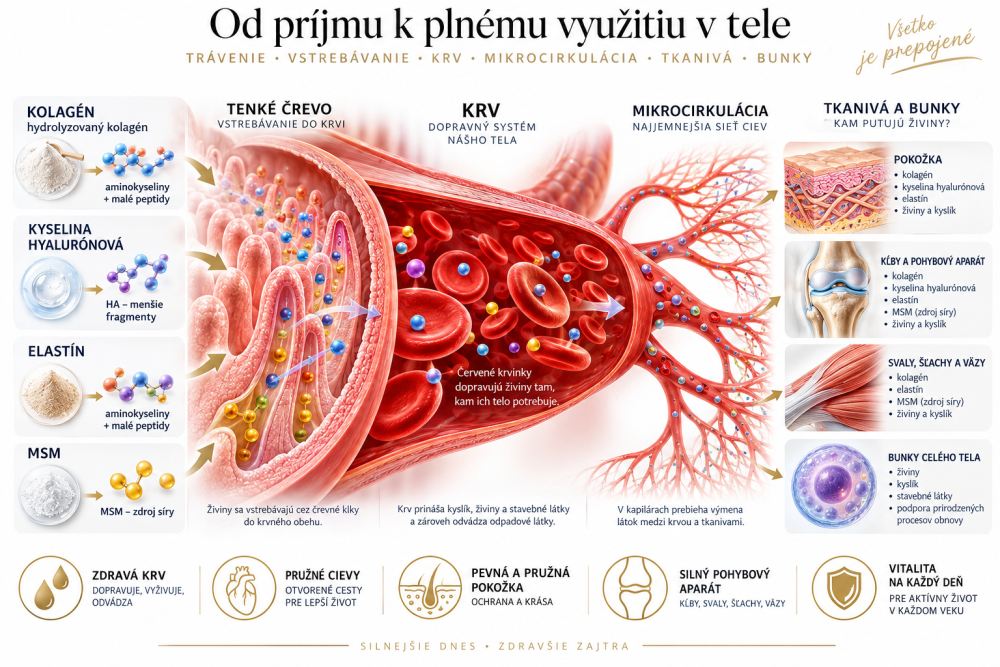
We will follow three areas: blood and blood vessels as a transport network, skin as an example of connective tissue, and the musculoskeletal system including bones, cartilage, tendons, ligaments and muscles.
02 · Blood: what travels, and in what?
Imagine the body as a city. Blood vessels are roads, and blood provides the transport medium. Red blood cells mainly carry oxygen; blood plasma carries many dissolved substances, including nutrients and metabolic products.
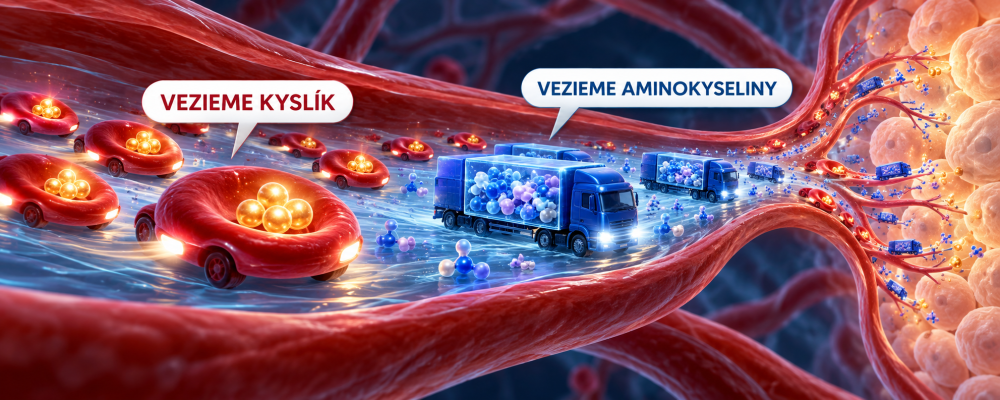
Mainly oxygen transport.
A liquid medium for many substances.
Sites of further exchange and use.
Heart, blood and blood vessels: series overview →
The main article explains how the body's transport system works: 03 · Heart and blood vessels.
03 · Blood vessels and microcirculation
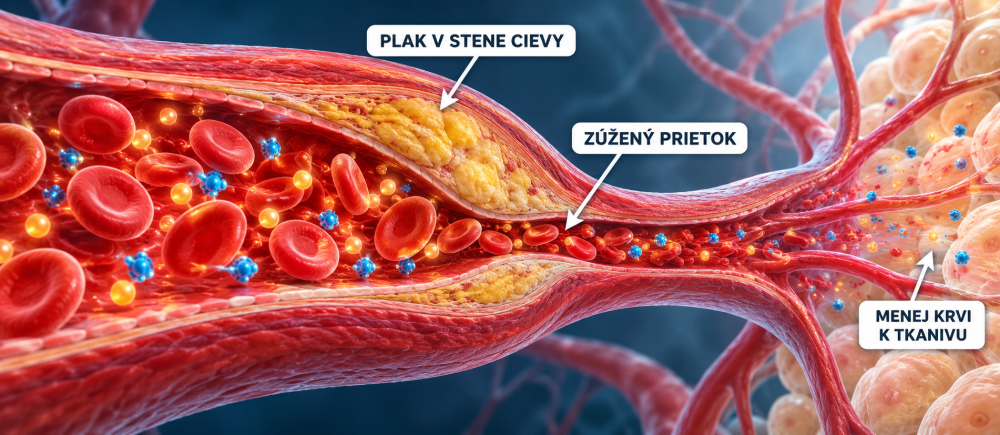
Blood flows through arteries and progressively smaller vessels into the capillary network. Microcirculation enables important exchanges between blood and surrounding tissues across the walls of the smallest vessels.
Capillaries are like the final small streets in a city. This does not mean every substance reaches every tissue in the same form or amount.
Atherosclerotic plaque is not dirt in a pipe. It is a complex change in the vessel wall; the phrase “cleaning the arteries” can be misleading.
02 · Blood viscosity and microcirculation ↗
For more about the inner lining of blood vessels, see 05 · Endothelium; for plaque formation, see 07 · Atherosclerosis and cholesterol.
04 · The small intestine: from food into the body
The digestive system processes the substances we consume. The small intestine is the main site of absorption for many nutrients. The next steps depend on the substance:
Hyaluronic acid is not a protein; its digestion and metabolism follow different pathways.
MSM is a small organic compound containing sulphur.
Digestion and the intestines ↗
For how other nutrients are processed after a meal, see 10 · Diet, blood and the brain.
05 · Collagen digestion and use of its components
Collagen is an important structural protein found in skin, bones, cartilage, tendons, ligaments, vessel walls, gums and other connective tissues. The body makes its own collagen from amino acids; vitamin C also plays a role in normal collagen formation.
What happens after drinking hydrolysed collagen?
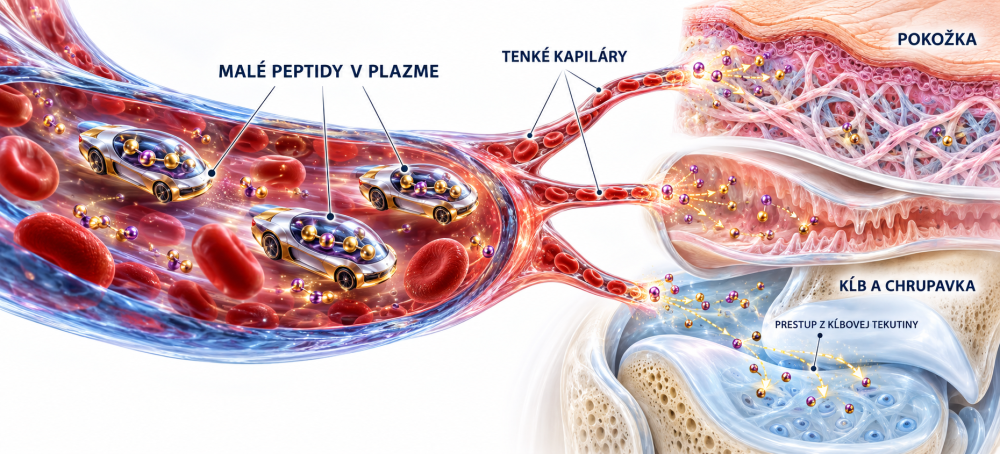
Hydrolysed collagen contains shorter peptides that undergo further processing in the digestive tract. Amino acids and some small peptides are absorbed into circulation. Studies have identified peptides containing hydroxyproline in human blood after collagen hydrolysate intake.
Please remember: collagen you drink does not attach to skin or a knee as a ready-made fibre. The body processes and uses the substances according to its needs. Finding a peptide in blood does not by itself establish an effect of a particular product.
What do the numbers on the label mean?
The following values are examples of converting milligrams to grams. They are not recommended daily doses.
= 10 g
= 12.5 g
= 15 g
A higher number means a larger amount in the stated serving, without automatically implying a proportionally greater effect. Composition, dosage and context also matter.
06 · Hyaluronic acid and water
Hyaluronic acid (HA) is a natural component of the extracellular matrix, found in skin, synovial joint fluid and the eye, for example. It binds water, but it is not a protein and is not digested in the same way as collagen.
Research on oral HA examines its breakdown, the role of gut microbiota and subsequent absorption. The body also continually produces and breaks down its own HA. A label stating 150 mg does not mean 150 mg reaches the skin unchanged.
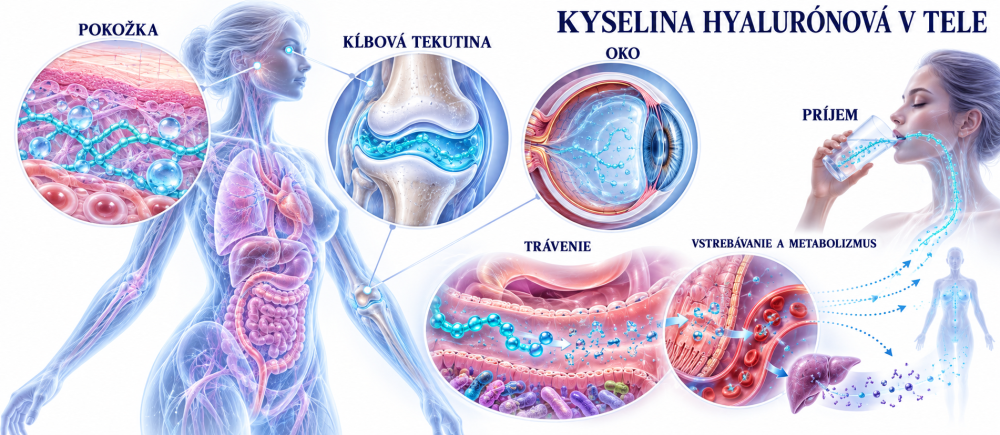
The cited study by Kimura and colleagues (2016) examined HA absorption and distribution in rats. Animal results do not determine how much HA from a particular supplement reaches human skin or joints.
07 · Elastin helps tissues recoil after stretching
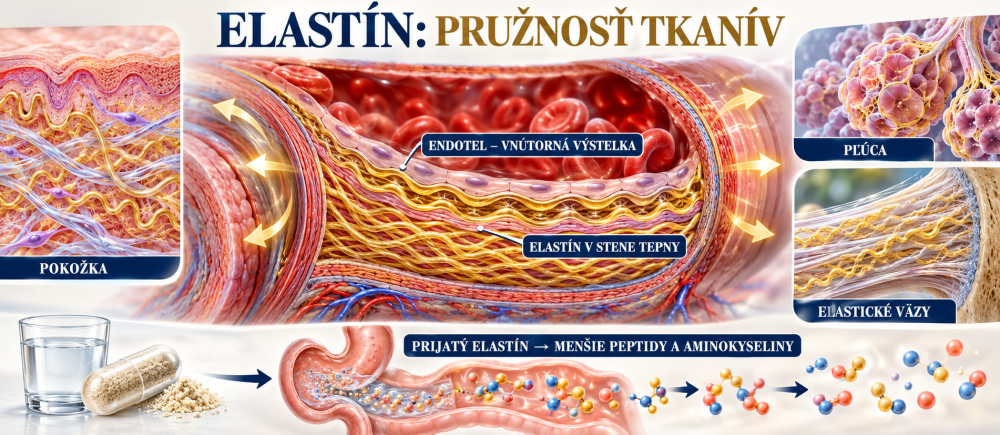
Elastin is a protein in elastic fibres in skin, large artery walls, lungs and other tissues. Elastic fibres help tissue return to its original shape after stretching. Collagen mainly provides strength; elastin supports elastic recoil.
Ingested elastin or its hydrolysate is digested into smaller peptides and amino acids. This does not mean ready-made elastic fibres are directly incorporated into skin. Elastic fibres have slow turnover in adulthood.
08 · MSM: a different substance, a different pathway
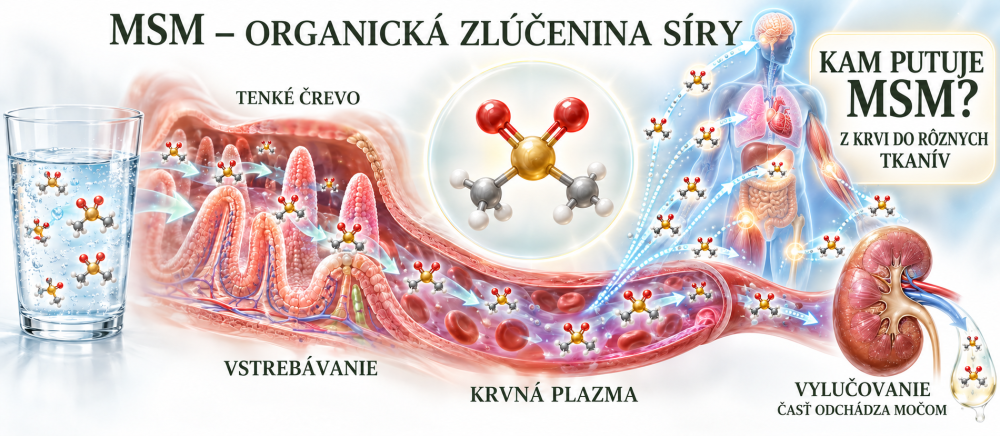
MSM (methylsulfonylmethane) is a small organic compound containing sulphur. It is not a protein, so digestion does not break it down into amino acids as it does collagen or elastin.
Sulphur is part of many molecules in the body, including the sulphur-containing amino acids cysteine and methionine. Cysteine is a component of glutathione, and sulphur bonds help form keratin's structure. This does not mean MSM automatically turns into keratin, glutathione or collagen. Different sulphur compounds follow different biological pathways.
09 · Collagen, HA, elastin and MSM: a comparison
Structural protein; digested into amino acids and small peptides.
Glycosaminoglycan; a water-binding component of the matrix.
Structural protein; a component of elastic fibres.
Small organic compound containing sulphur.
Remember: the label describes what you consume. It does not by itself determine how much is absorbed, where the substances go or what effects they have.
QUESTIONS AND ANSWERS
10 · Frequently asked questions
Does collagen you drink go directly to skin or a joint?
Not as a ready-made collagen fibre. Digestion produces amino acids and smaller peptides for the body to use. Their presence in blood does not itself mean targeted delivery to a particular tissue.
What role do capillaries play in this pathway?
They bring blood close to tissues and enable exchanges of oxygen, nutrients and other small substances. Articular cartilage has no blood vessels of its own; it is nourished mainly through joint fluid.
Does a higher dose guarantee a greater effect?
A higher number on the label indicates more of a substance per serving but does not by itself establish a proportionally greater effect.
Is hydrolysed collagen already fully digested?
No. Hydrolysis breaks collagen into shorter peptides, but these undergo further processing in the digestive tract after intake. Some small peptides may appear in blood; these are not ready-made collagen fibres.
Is hyaluronic acid a protein?
No. It is a glycosaminoglycan, so its processing cannot be described as the digestion of collagen into amino acids.
Does finding a substance in blood establish an effect?
No. Finding a substance or its components in blood provides information about their availability in circulation. An effect on a specific outcome must be studied separately; this finding alone does not establish an effect of a product.
11 · Related articles and sources
← Previous article · Endothelium
Scientific sources – click to open
- [1] Iwai et al. (2005) — collagen peptides in human blood after hydrolysate intake
- [2] Kimura et al. (2016) — processing and absorption of oral HA in a rat study
- [3] Baumann et al. (2021) — elastin and skin structure
- [4] Regulation (EU) No 432/2012 — authorised health claims for nutrients
- [5] Butawan et al. (2017) — MSM: a review of absorption, distribution and excretion
- [6] NIDDK — the digestive system and nutrient absorption
- [7] Articular cartilage nutrition — substance transport and differences from tissues supplied by blood vessels
This educational article explains general physiology. It does not provide a diagnosis or promise effects from a food supplement. Consult a doctor if you have health concerns.