

 Slovensky (EUR)
 Česky (CZK)
 Magyar (HUF)
 Slovenščina (EUR)
 Deutsch (EUR)


Light guide: photobiomodulation, lasers, LEDs and infrared light
KINGRAY ADVICE · LIGHT AND DEVICES
Biolamp, laser or LED: which light device should you choose?
Take a moment for yourself. Choose nasal light application, warming relaxation for your feet or a handheld device for your skin. Discover who each model is for, how it works and what makes it stand out.

NASAL APPLICATOR
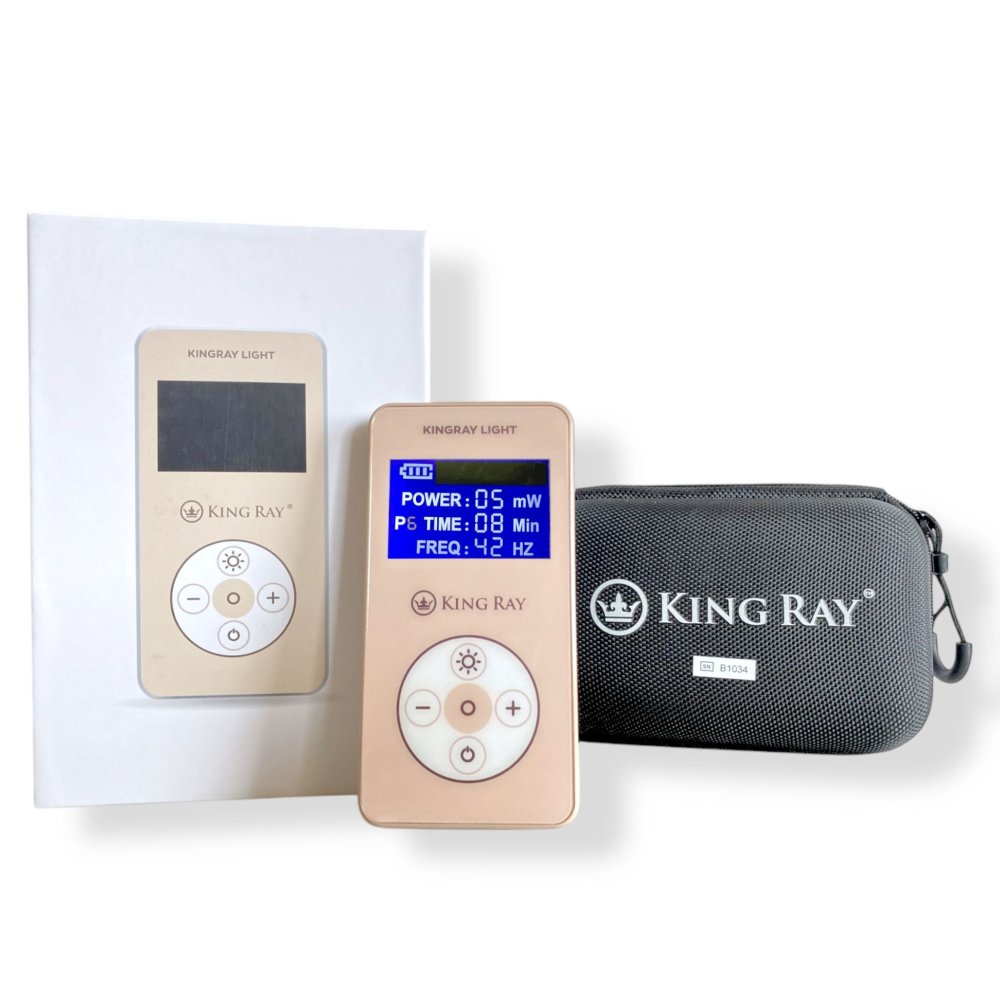
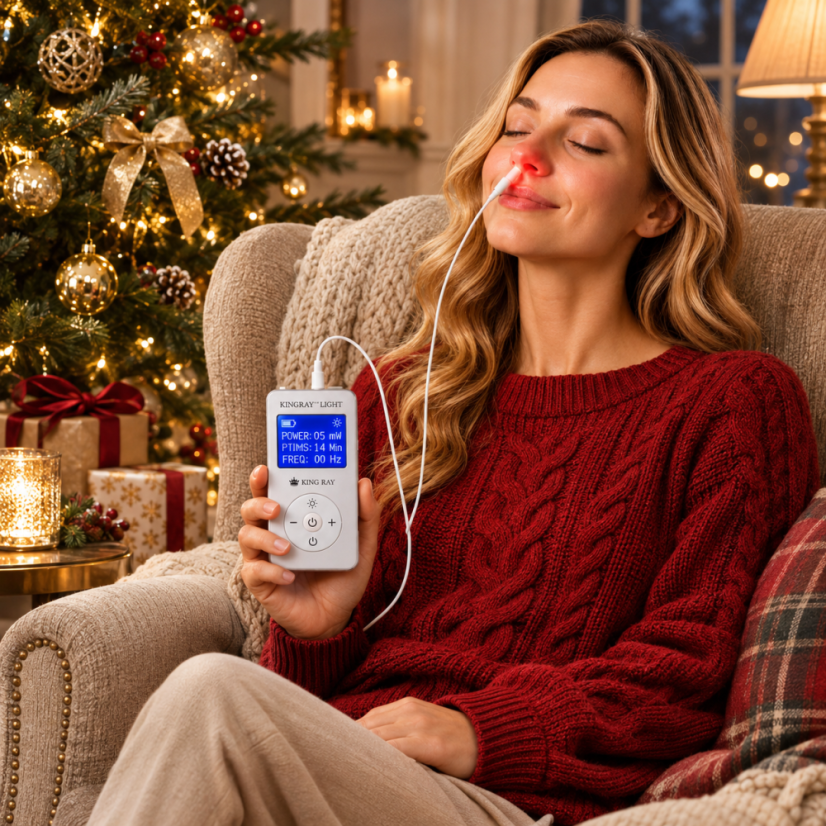
KINGRAY Light – light for your personal routine
Who it is for
For you if you want nasal light application and comfortable use without holding a handheld head.
How it works
The applicator directs light towards the nasal mucosa. This is an optical stimulus studied in photobiomodulation research.
What makes it stand out
Two nasal applicators included, with the option to add other light colours.
- Additional LED applicators available separately:
Before choosing: Keep applicators clean and use an individual applicator for each user. Do not use the device while charging; follow the manual for details.
View device and package contents →Experience behind the design
The nasal optics were designed by Ing. František Kokoš. His work as an inventor is documented by US patent US9731145B2 (2017). It documents a technical solution, not a therapeutic effect of the device. [7]
FEET AND WARMTH
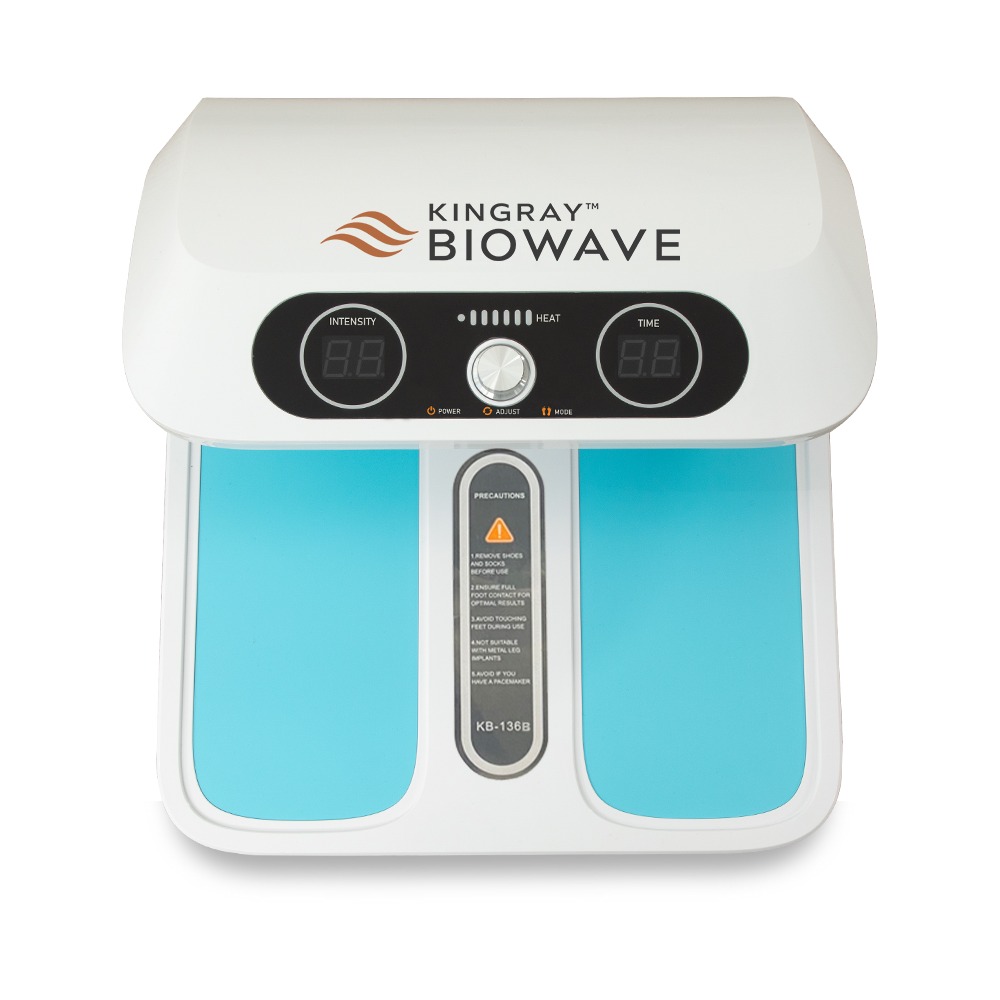
KINGRAY BioWave – a moment of warmth and rest
Who it is for
For you if you spend the day sitting or on your feet and want a calm wellness routine at home.
How it works
The platform uses a pulsed magnetic field. Light and heating provide additional, separate stimuli.
What makes it stand out
Red and blue light, plus an external heating belt with its own temperature control included.
Before choosing: do not use with a pacemaker or another implanted electronic device. Follow the manual's adaptation procedure before using the platform and belt together.
View device and package contents → · Slovak product pageWarmth, microcirculation and relaxation
- Supporting microcirculation through warmth: local warming can temporarily dilate skin blood vessels and increase blood flow in the warmed area. [12]
- Relaxation after exertion: pleasant warmth and comfortable sitting can be part of a restful moment after an ordinary day.
- The nervous system and calming down: we perceive warmth through skin receptors and nerve pathways. Research into foot warming also examines changes in autonomic nervous activity and subjective relaxation. [9] [13]
- A break from everyday stress: a calm wellness routine creates space to slow down and notice your own comfort.
These are general links between warmth and relaxation. The cited research studied other methods and devices, not BioWave; its findings cannot automatically be attributed to this model.
COLOURED LIGHT
STIMLIGHT – choose your light colour

Who it is for
For you if you want a compact biolamp with interchangeable heads. Use by individual family members must follow the manual.
How it works
LED light passes through an optical system with a polarising filter.
What makes it stand out
Four coloured light heads and an infrared head in one system. The mirror optics were designed by Ing. František Kokoš.
Before choosing: Select the colour, distance and application time according to the instructions for the specific head. Colour alone does not establish suitability for a health condition.
View device and package contents →LOCAL APPLICATION
COZ T03 – light where you want to use it

Who it is for
For you if you prefer a handheld head for local application to the skin.
How it works
Red and infrared sources illuminate the selected area as directed in the manual.
What makes it stand out
Two wavelengths in one head, 17 diodes in total and a clear display.
TECHNOLOGY OVERVIEW
What the devices use and how they work
Technologies, light sources, modes and physical principles in one place.
| Device and use | Technology and features | How it works, simply |
|---|---|---|
| KINGRAY LightNasal light application.Reference [2] |
|
Continuous mode: uninterrupted light emission. Pulsed mode: light pulses at the selected rhythm. |
| KINGRAY BioWaveFoot platform and external heating belt.Reference [4] |
|
Magnetic field: generated when the coil receives pulsed power. LED: a light source. Belt: transfers heat where it is applied. |
| STIMLIGHTHandheld biolamp with interchangeable light heads.Reference [1] |
|
Mirrors direct the light; the filter adjusts the orientation of its oscillations. Pulsing changes the timing of light emission. |
| COZ T03Handheld device for local light application.Reference [3] |
|
650 nm: visible red light. 808 nm: near-infrared light. Delivered energy depends on power, distance and time. |
↑ Select another device to compare
BioWave and the name “terahertz”: this is only a commercial name. The device uses PEMF, not THz radiation. [4]
Technical features and a general mechanism do not prove a therapeutic effect for a particular model. Always follow its manual.
Choose what fits into your day
- Choose a comfortable method of application.
- Compare the accessories and instructions in the manual.
- Find the price, availability and package contents on each model's page.
The best choice is one you understand and can use comfortably.
Safe use starts with the instructions
Follow the model-specific application time, distance, contraindications and eye-protection instructions. Never look directly into a laser beam; visible brightness is not a reliable indication of safety. [6] If you take medicines that increase light sensitivity or have a health condition, check suitability with your clinician. Stop the application if it feels uncomfortable.
BASED ON YOUR INTERESTS
A quick guide by goal
Consider the specific parameters and intended use. Light colour alone does not determine the result.
| Your interest | What to compare | How to interpret it |
|---|---|---|
| Penetration depth | Wavelength, optics and light dose | Neither laser nor NIR alone guarantees “maximum penetration”. Light weakens within tissue; the tissue's properties also matter. [10] |
| Skin, wrinkles, collagen and acne | Red and NIR light; blue light has different uses | Skin research uses specific sources and doses. Colours are not interchangeable; they do not establish an effect on acne or a zero risk of burns. [11] |
| Warmth and local blood flow | Heat source, controls and permitted duration | Look for adjustable heating to suit your comfort and follow the duration in the manual. We explain the blood-flow context above. |
YOU ASK US
Answers to your questions
Technology differences, choosing a device and using it at home — clearly and briefly.
Technology and application
What is the difference between an LED and a laser if both shine red?
A laser generally has a narrower spectrum and greater coherence than an LED — its light waves are more orderly. Optics and dose also matter for its use. [10]
What is photobiomodulation (PBM)? Is it the same as red light?
Not exactly. Photobiomodulation is the biological action of absorbed light that is not based on heating. It can use either lasers or LEDs. [5] [8]
What is the difference between red and infrared light? Can I see both?
We can see red light; near-infrared (NIR) is outside the normally visible spectrum. Colour alone does not determine penetration depth or results. [10]
Do KINGRAY Light in the nose and COZ T03 on the skin have the same effect?
They cannot be considered equivalent: application to mucosa and to skin involves different entry tissues and optics. [2] [10]
Can I shine COZ T03 into my nose?
No. Only use an applicator explicitly intended by the manufacturer for nasal use. COZ T03 is not a substitute. [3]
What is the main practical difference between KINGRAY Light and COZ T03?
You use KINGRAY Light with a nasal applicator; COZ T03 is positioned at the selected skin area as directed in its manual.
Choice and expectations
Which device is best?
Choose according to comfort and intended use. The overview of technologies and features will help you compare the options.
Which light is best for pain relief?
There is no universal “best colour”. The cause of pain, protocol and dose matter. Clinical photobiomodulation research does not prove an effect for these wellness models; discuss persistent pain with a doctor. [9]
What might light mean for skin, wrinkles and collagen?
Red and NIR LED studies have examined changes in wrinkles, elasticity and collagen. The controlled study by Lee et al. used other devices and a specific protocol, so it does not establish the same result for every LED. [11]
Which device best supports blood flow or microcirculation?
We do not have a direct comparison of these models. Read about the skin's general response to heat in Warmth, microcirculation and relaxation.
Is infrared light always the same as heating?
No. “Infrared” refers to part of the spectrum. Heating depends on the source, power, absorption and time; NIR used for photobiomodulation and a heating belt are therefore assessed differently. [8]
Use and safety
Can light or a laser damage my eyes or skin?
Yes, if used incorrectly. The absence of UV does not guarantee zero risk. Follow the manual on laser class, eye protection, permitted areas, duration and distance. Do not look into the beam. [6]
How soon will I see results and how often should I use the light?
There is no shared onset time or universal schedule for these four models. Feeling warmth or relaxation differs from a demonstrated change in pain or skin. Follow the manual for duration and breaks.
Can I use several devices at once?
Only if the relevant manuals allow it. Get to know each device separately first, and do not extend sessions or add light doses on your own.
Can I combine photobiomodulation with heat or PEMF?
Combined use must be allowed by the manual. Warming does not automatically establish deeper light penetration or better combined results. For BioWave, follow the adaptation procedure for the platform and belt. [4]
Are these devices a substitute for treatment?
No. These are non-medical wellness uses; consult a doctor for diagnosis and treatment of disease.
Where can I find detailed articles about my chosen device?
Related articles appear below each model. They explain use and research; the binding instructions for a specific device are in its manual.
Need help understanding your options?
Read the details and instructions for your chosen model. KINGRAY Advice also offers practical guidance on choosing and using devices.
Browse light devices →Explore KINGRAY Advice →Sources and product information
Product documentation describes the declared features. Scientific sources explain general principles and research limitations; they are not efficacy studies of these particular models.
- STIMLIGHT – Product page and stated specifications
- KINGRAY Light – Product page and stated specifications
- COZ T03 – Product page and stated specifications
- KINGRAY BioWave – Product page and stated specifications (Slovak product page)
- WALT – photobiomodulation and light sources
- FDA – laser questions and eye safety
- Technical documentation for nasal optics
- ASLMS – definition of photobiomodulation and light sourcesOfficial professional overview; verified explanation of PBM and the difference between light and thermal effects.
- IASP – photobiomodulation and thermal therapies (2023)Official professional overview; full text on mechanisms and evidence limitations read.
- Kaub and Schmitz (2022) – measuring NIR laser light penetrationPrimary laboratory research on tissue samples, not a clinical test of our devices. Abstract and introduction checked; full text available at the link.
- Lee et al. (2007) – controlled study of LEDs and skinAbstract checked in a university repository; the full paper was not read. The study examined other devices and a specific protocol.
- Minson et al. (2001) – skin blood flow during local heatingVerified abstract of primary physiological research; it studied neural mechanisms and nitric oxide, not BioWave.
- Matsui et al. (2023) – foot warming, nervous activity and moodAbstract and full-text methods checked: a crossover study of 20 women using a different heating device. The results cannot be transferred to BioWave.