

 Slovensky (EUR)
 Česky (CZK)
 Magyar (HUF)
Alzheimer’s disease: symptoms, diagnosis and links with vascular health
Alzheimer’s disease: symptoms, diagnosis and links with vascular health
Alzheimer’s disease is a progressive brain disease and the most common cause of dementia. It can gradually affect memory, thinking, orientation and independence. It is not a normal part of ageing.
We explain the difference between Alzheimer’s disease and dementia, changes that warrant assessment and links with vascular health. When discussing research into 40 Hz light and sound stimulation, we distinguish pilot study findings from evidence of treatment effectiveness.
01 · What is Alzheimer’s disease?
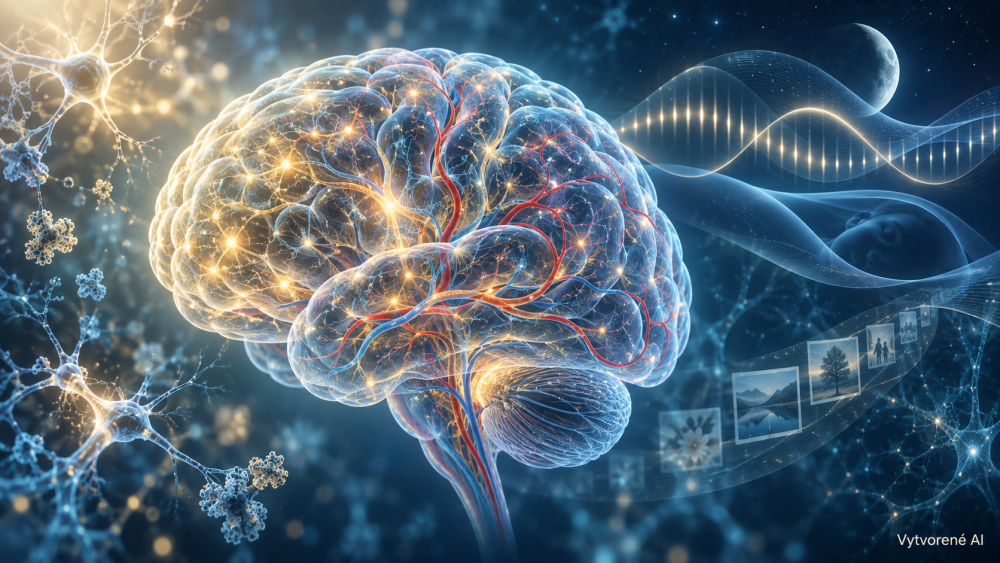
Alzheimer’s disease is a progressive brain disorder and the most common cause of dementia. Dementia describes a group of symptoms affecting memory, thinking and everyday functioning. Not every memory problem means Alzheimer’s disease, and the condition is not a normal part of ageing. [1]
The course of the condition and the need for support vary between people. This article provides an introduction; it does not establish a diagnosis or a care plan for an individual patient.
Alzheimer’s disease and dementia are not synonyms
02 · Which changes should we notice?
Gradually worsening difficulties may be a reason for assessment, for example:
- repeatedly forgetting recent conversations or events,
- becoming disoriented even in familiar places,
- difficulty with planning and decision-making,
- problems expressing oneself or carrying out everyday activities,
- significant changes in behaviour and mood.
A list of symptoms alone is not enough for a diagnosis. Their progression and effect on independence matter. [1]
The everyday effects of tiredness, stress and sleep are discussed in Memory and concentration. New or progressively worsening difficulties need individual assessment.
03 · How is Alzheimer’s disease diagnosed?
The first step is a conversation with a doctor. It may help to bring someone close to you who can describe specific changes. The doctor assesses symptoms, general health and medications; cognitive tests, laboratory tests or specialist assessment may be recommended as needed. Further assessment may include a brain CT or MRI scan. [2]
Memory can also be affected by depression, anxiety, stress, medications and some hormonal or nutritional disorders. It is therefore useful to look for the cause rather than attribute every difficulty to age. A memory test result should not be interpreted in isolation. [2]
Specialist assessment may also use biomarkers associated with amyloid and tau when appropriate, for example through PET imaging or testing biological samples. A doctor must interpret their significance alongside symptoms and other findings. A home memory test cannot replace them.
04 · Vascular health, sleep and risk factors
Alongside age, factors associated with dementia risk include high blood pressure, diabetes, smoking, physical inactivity, impaired hearing and vision, depression and social isolation. WHO also lists poor sleep. A risk factor is not a diagnosis or proof of the cause in an individual person. [3]
Looking after overall health includes appropriate physical activity, a balanced diet, not smoking, social contact and managing blood pressure, cholesterol and blood glucose. These measures do not guarantee that Alzheimer’s disease will not develop. [3]
What is being studied in the brain?
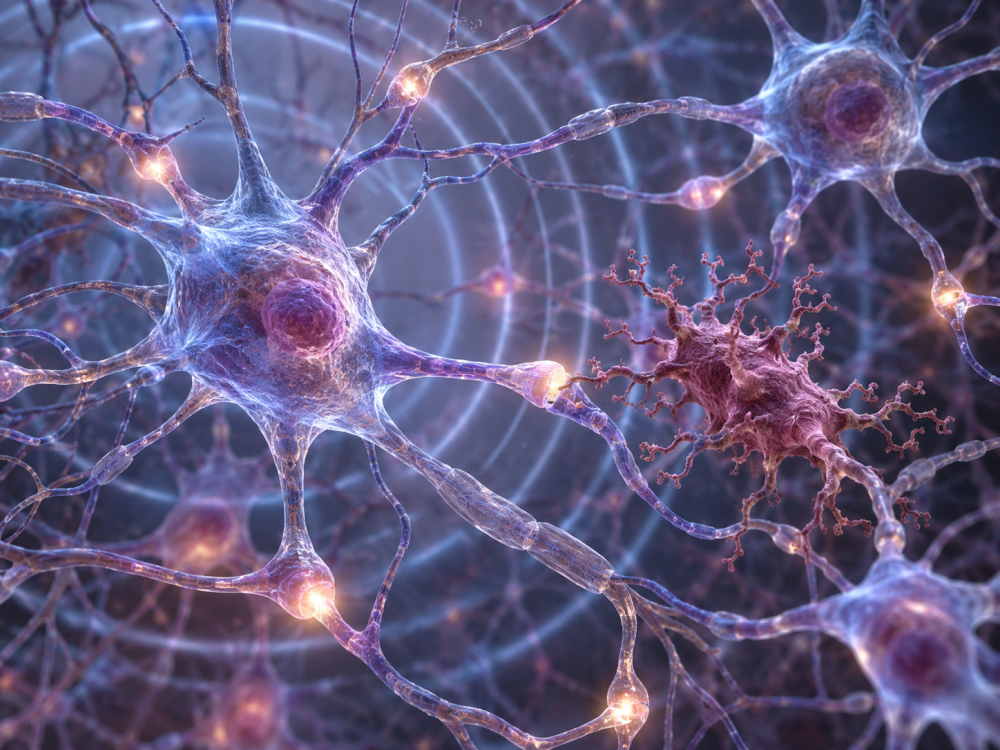
Characteristic changes in Alzheimer’s disease include beta-amyloid deposits between nerve cells and changes in the tau protein inside cells. Researchers study how these processes interact, as well as the roles of inflammation, metabolism and blood vessels.
Vascular damage can worsen brain health and coexist with Alzheimer’s changes. Research into these mechanisms does not justify changing medicines independently or using methods that promise to “cleanse the brain”.
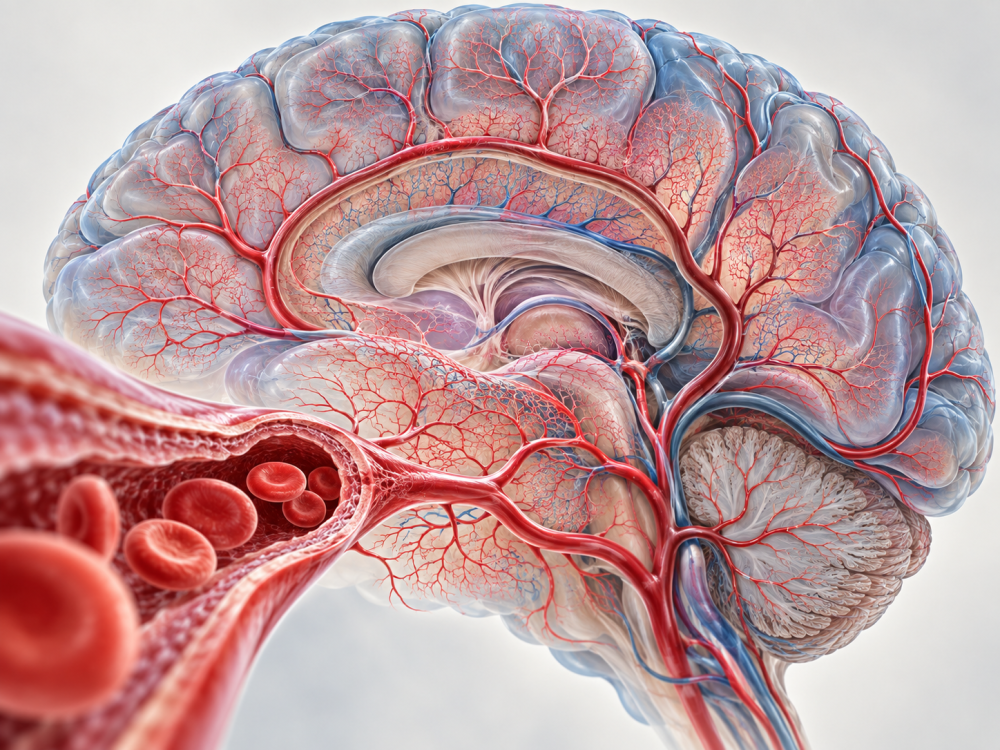
The broader context is explained in the main article Heart and blood vessels. Individual risk factors are discussed in Blood pressure and Blood glucose and insulin.
05 · What does research into light and 40 Hz mean?
A pilot study published in 2022 investigated combined light and sound stimulation at 40 Hz. Its randomised component included 15 people with mild probable Alzheimer’s dementia. The main aim was to assess safety, adherence and the brain’s response. The study did not have sufficient statistical power to reliably assess differences in exploratory clinical outcomes. [4]
Such findings do not establish that a light used at home or a commercial device treats Alzheimer’s disease. Matching the frequency alone does not demonstrate equivalent devices, safety or effects. This article does not recommend light stimulation for use at home.
The MIT pilot study described here has the registration number NCT04055376. Its public registry record allows readers to find the protocol and recorded study information. Registration or an ongoing study alone does not mean that a method is an approved treatment or that its effectiveness has been demonstrated. [6]
What does 40 Hz mean?
In this research, 40 Hz means sensory stimuli repeated 40 times per second. It is not the wavelength of light, which may be expressed in nanometres. Sensory stimulation and photobiomodulation are different methods.
Their different principles are discussed in Cells and photobiomodulation. Findings from one method cannot automatically be transferred to another.
06 · Overview: what the information tells us
Information and its limits
07 · Supporting the person and their family
Clear communication, help with everyday activities and planning support around the person’s needs are important. Families can discuss home safety, care arrangements and available social support with professionals. Caregiver exhaustion and the need for rest also deserve attention. [3]
Professional care is planned individually. This overview does not recommend specific medications, supplements or devices.
Diet and the evidence behind it are discussed in Diet, blood and the brain. Nutrition is part of care, but it does not replace diagnosis and a treatment plan.
08 · When should you seek help?
Arrange a medical appointment if memory, orientation or independence is gradually worsening. [1]
09 · Frequently asked questions about Alzheimer’s disease
Does every decline in memory mean Alzheimer’s disease?
No. Memory problems can have different causes. If they are getting worse or affecting everyday life, professional assessment is appropriate.
Is one memory test enough for a diagnosis?
No. The doctor considers symptoms, general health and medications, and adds cognitive tests, laboratory tests and imaging as needed.
Does the pilot study of 40 Hz stimulation prove that it treats Alzheimer’s disease?
No. The small pilot study mainly examined safety and the brain’s response. Its findings do not establish the effectiveness of home devices or treatment of the condition.
When does a change in condition require immediate help?
For sudden difficulty speaking, weakness on one side of the body, sudden confusion or impaired consciousness, call 112 or your local emergency number.
What is the difference between Alzheimer’s disease and dementia?
Dementia describes a set of symptoms affecting thinking and everyday functioning. Alzheimer’s disease is one of its causes. Dementia can also be associated with vascular damage or a combination of processes.
Are amyloid plaques the same as arterial plaques?
No. Amyloid plaques are deposits of beta-amyloid protein in the brain, whereas atherosclerotic plaques form in artery walls. These processes can occur together in one person, but they are different.
Does controlling blood pressure and blood sugar guarantee prevention of Alzheimer’s disease?
No. Managing vascular and metabolic risk factors matters for overall health and reducing dementia risk, but it does not guarantee that Alzheimer’s disease will not develop.
10 · Professional sources
- NHS: Alzheimer’s disease — overview
- NHS: Diagnosing Alzheimer’s disease
- WHO: Dementia
- Chan et al., 2022: feasibility and pilot studies of sensory stimulation at 40 Hz
- NHS: Symptoms of a stroke
- ClinicalTrials.gov — NCT04055376: study of daily light and sound stimulation in Alzheimer’s disease.
- NIH / NIA: What Happens to the Brain in Alzheimer’s Disease?
- NHS: Vascular dementia
← Previous article · Diet, blood and the brain
Educational information: This article does not replace an individual medical assessment, diagnosis or treatment. Discuss health concerns and changes in memory with a doctor. Do not change or stop prescribed treatment based on this article.