

 Slovensky (EUR)
 Česky (CZK)
 Magyar (HUF)
Nattokinase and vitamin K2: differences, FU and safety
Nattokinase and vitamin K2: differences, FU and safety
Nattokinase is an enzyme, while vitamin K2 belongs to the vitamin K family. Although both are associated with the food natto, they are different substances and their effects should not be confused.
We explain what FU units mean, how K1 and K2 differ, what selected studies found and why interactions with medicines affecting blood clotting matter.
01 · Two substances with different roles
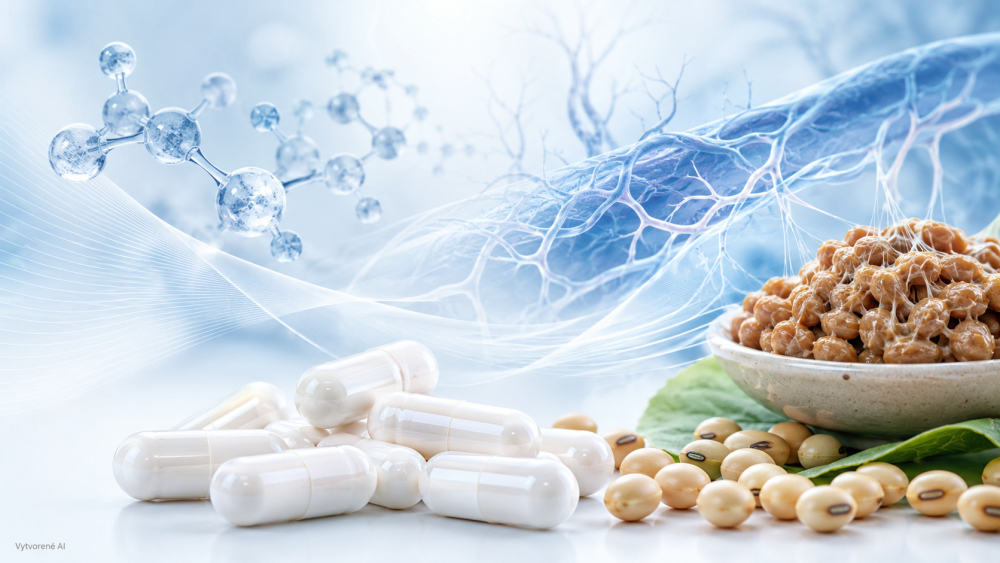
Nattokinase and vitamin K2 side by side
Source: EFSA – characteristics of fermented soybean extract.
02 · FU measures enzyme activity
FU (fibrinolytic units) are units used to express the ability to break down fibrin in a defined test procedure. Fibrin is a protein involved in forming a blood clot.
Milligrams measure mass; FU measures activity. Without information about the specific ingredient, these values cannot be freely converted. Also check whether activity is stated per capsule, daily serving or gram of ingredient.
Source: EFSA – specifications and activity measurement.
FU describes enzyme activity in a defined test procedure. The differences between fibrin, fibrinogen, clotting and blood viscosity are explained in the article on viscosity and microcirculation.
Blood viscosity and microcirculation → 🔬 What can we see in a drop of blood? →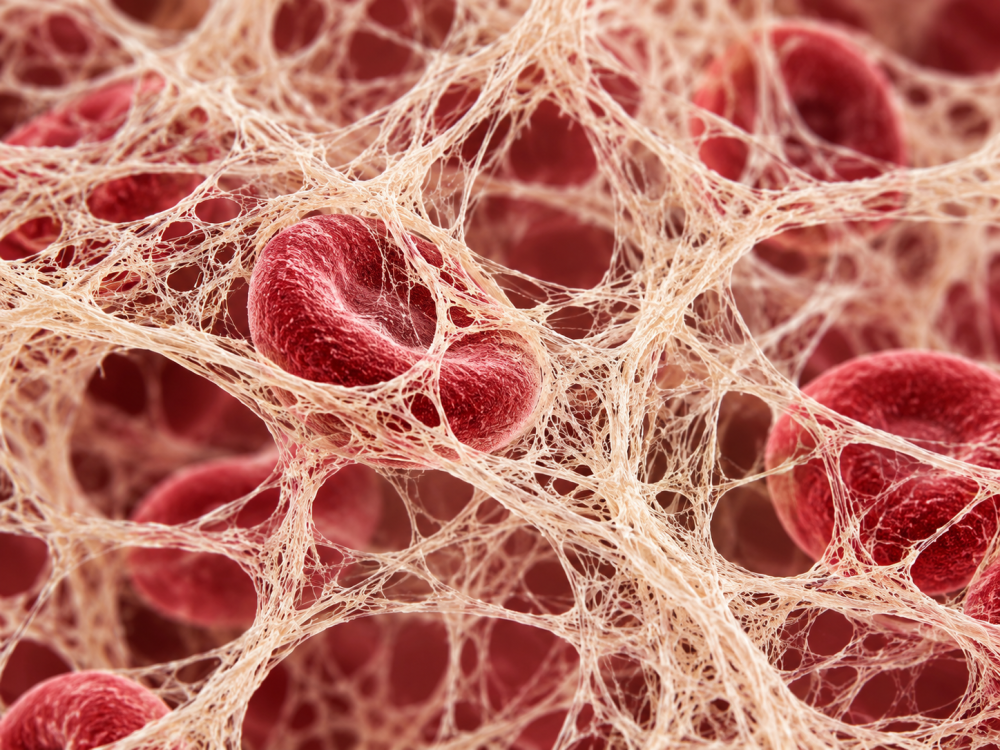
Measuring enzyme activity in FU is not a measurement of blood viscosity or a patient examination. Differences between general wellness assessments and clinical methods are explained in Heart, blood vessel and blood measurements.
03 · What does research show, and what are its limits?
Two examples of different research questions
Source: Kurosawa et al. – randomised study published in 2015.
Source: Memorial Sloan Kettering – review of clinical evidence.
When reading a study, consider who participated, which preparation they received, for how long and what was measured. A change in a blood marker and a reduction in the number of strokes are different outcomes.
Source: Hodis et al., 2021 – Nattokinase atherothrombotic prevention study: a randomised controlled trial.
What makes up an arterial plaque and how it differs from a clot are explained in Atherosclerosis and cholesterol.
04 · Why is K2 studied in relation to blood vessels?
Vitamin K is needed to activate certain proteins, including matrix Gla protein, which is studied in relation to calcium deposition in blood vessels. Observational associations alone do not show that a supplement removes calcification.
A biological mechanism is insufficient to recommend K2 as a treatment for atherosclerosis. Conclusions about effects must come from clinical studies of the specific form and use.
Source: NIH ODS – vitamin K and coronary heart disease.
Vitamin K: Forms, Dietary Sources and Intake – NIH ODS →Dietary sources, MK-4 and MK-7 forms, intake and common questions.Vitamin K1 and K2: a brief comparison
- K1 (phylloquinone) is the main dietary form of vitamin K; it is found particularly in green leafy vegetables.
- K2 (menaquinones) includes several forms, such as MK-4 and MK-7; sources include some fermented and animal-based foods.
Vitamin K helps activate proteins involved in blood clotting and bone metabolism. Describing K1 as “only for blood” and K2 as “only for bones and blood vessels” is therefore too simplistic.
Source: NIH ODS – forms and biological roles of vitamin K.
How the circulation and blood vessels work is explained in the main article in this series, Heart and blood vessels.
05 · Safety and health claims are separate questions
In 2016, EFSA assessed the specific fermented soybean extract NSK-SD® as a novel food. Its safety conclusion applied to the defined composition and proposed conditions of use. It was not an assessment of efficacy in treating disease.
Source: EFSA – Safety of fermented soybean extract NSK-SD®.
In the EU, vitamin K has authorised claims concerning normal blood clotting and the maintenance of normal bones, provided the conditions of use are met. These claims do not imply a promise to remove arterial plaques.
Source: Commission Regulation (EU) No 432/2012 – vitamin K.
06 · Medicines and safe use
Nattokinase
If you take anticoagulant or antiplatelet treatment, including regular aspirin, do not start nattokinase on your own. It may increase bleeding risk. Caution is also needed with clotting disorders.
Vitamin K1 and K2
If you take warfarin or another vitamin K antagonist, do not start or stop a supplement containing K1 or K2 without consulting your doctor. Consistent vitamin K intake from both food and supplements is important.
Before a procedure, tell your healthcare professional about all supplements you take. During pregnancy, breastfeeding or serious illness, the specific product and its warnings require individual assessment.
Source: MSK – contraindications and medicine interactions.
Source: NIH ODS – vitamin K antagonists.
07 · What should you record from the label?
Checks before deciding
If the activity specification is missing or the amount in a daily serving is unclear, ask the manufacturer for clarification. Do not substitute information from a different preparation.
08 · Frequently asked questions
Is nattokinase vitamin K2?
No. Nattokinase is an enzyme; K2 refers to forms of vitamin K.
Does more FU mean a better effect on blood vessels?
Not automatically. FU expresses enzyme activity under test conditions, not the size of a clinical benefit.
Does every nattokinase supplement contain K2?
The name alone cannot establish this. Check the specific ingredient list.
Does the EFSA assessment confirm a therapeutic effect?
No. The cited assessment evaluated the safety of a specific extract under defined conditions.
Can I replace warfarin or aspirin with nattokinase?
No. Do not replace prescribed treatment with a supplement. Discuss any changes with your treating doctor.
Where can I find dietary sources and intake information for vitamin K?
Information about dietary sources and vitamin K intake is available in the NIH ODS fact sheet listed in the final sources section.
Is vitamin K1 only for clotting and K2 only for bones?
No. They are forms of vitamin K, which helps activate several proteins. Dividing their biological roles in this way is too simplistic.
Has nattokinase or K2 been shown to remove arterial plaque?
The sources cited here do not justify that promise. The NAPS nattokinase trial found no benefit for the progression of subclinical atherosclerosis in the group studied. Vitamin K’s biological mechanisms alone do not demonstrate that a supplement removes plaque or calcification.
09 · Sources and further reading
- Kurosawa et al., 2015 – a single dose of nattokinase
- EFSA, 2016 – safety of NSK-SD® extract
- NIH ODS – Vitamin K
- Memorial Sloan Kettering – Nattokinase
- EU – Regulation No 432/2012
- Hodis et al., 2021 – the long-term randomised NAPS trial.
Sources checked on 6 October 2026. These are selected references, not a systematic review of all studies.
Vitamin K: forms, dietary sources and intake – NIH ODS →
← Previous article · Alzheimer’s disease
Educational information: This article does not replace an individual medical assessment, diagnosis or treatment. Discuss supplement use with a doctor or pharmacist if you take medicines or have health concerns. Do not change or stop prescribed treatment based on this article.