

 Slovensky (EUR)
 Česky (CZK)
 Magyar (HUF)
Vitamins and minerals for immunity: C, D, zinc and selenium
Vitamins and minerals for immunity: C, D, zinc and selenium
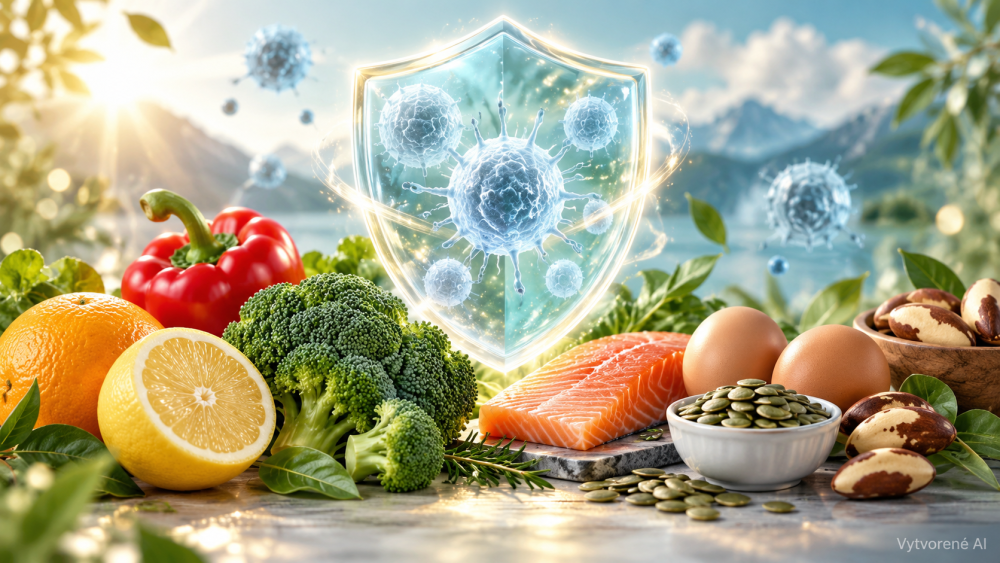
The immune system needs an adequate supply of nutrients. Before supplementing, it helps to know what is missing, how much you already consume and what you can reasonably expect from a particular product.
01 · Meet your needs rather than maximise the dose
The immune system needs an adequate supply of nutrients. Insufficient intake of some vitamins and minerals can impair its function. When intake is already adequate, increasing doses usually does not provide better protection against infection.
A nutrient’s role in normal immune function does not prove that a particular supplement prevents influenza or COVID-19. Preventing and treating an infection are separate questions that require clinical evidence.
Start with a varied diet and an assessment of individual needs. Sleep, physical activity and other everyday habits also form part of the overall picture of health.
↑ Back to contents02 · Nutrients and safe supplementation
| Nutrient | What to check | What to watch for |
|---|---|---|
| Vitamin C | Fruit, vegetables and the amount in combination products. | High doses can cause digestive discomfort. |
| Vitamin D | Your risk of deficiency and all sources of supplemental vitamin D. | Long-term excessive intake can raise calcium levels and harm health. |
| Zinc | The amount of elemental zinc in the complete daily serving. | Excess intake can interfere with copper utilisation. Interactions with some antibiotics also matter. |
| Selenium | The amount in both multivitamins and separate supplements. | Long-term excessive intake can damage hair and nails. |
| Vitamins A, B6, B12 and folate | Whether they appear in several products. | The need for supplementation depends on diet, life stage and health. |
Vitamin C is found in foods such as peppers, citrus fruit and other fruit and vegetables. Sources of vitamin D include oily fish and some fortified foods; the skin also produces it when exposed to sunlight. Zinc and selenium occur in a range of animal and plant foods.
Vitamin D deficiency risk depends on more than time outdoors. Season, age and other circumstances also matter. Increasing UV exposure is not a safe substitute for assessing individual needs.
↑ Back to contents03 · What do we know about respiratory infections?
Vitamin C
Regular supplementation may slightly shorten a common cold. Starting it only after symptoms appear may not help. Findings about the common cold cannot automatically be applied to COVID-19.
Vitamin D
Studies of respiratory infection prevention have produced mixed results. Correcting a deficiency and treating an existing infection are different situations. Evidence is insufficient to recommend taking vitamin D solely to prevent or treat COVID-19.
A single study or a laboratory mechanism does not establish the effects of every product containing the same nutrient. Participants, doses and the outcomes measured also matter.
↑ Back to contents04 · When might a supplement be useful?
| Situation | Practical next step |
|---|---|
| Confirmed deficiency | Agree the dose and duration with a healthcare professional. |
| A very restricted diet | Identify the specific missing sources. Do not choose solely by the number of ingredients. |
| Risk of vitamin D deficiency | Discuss supplementation appropriate to your circumstances. |
| Repeated or prolonged infections | Discuss the cause with a doctor. The phrase “weak immunity” alone does not explain the problem. |
Tests should be guided by symptoms and risk factors. An extensive test package or a multivitamin is not automatically needed by everyone.
Discuss supplement choices with a healthcare professional if you take medicines, are pregnant or breastfeeding, or have a chronic condition. Children need an age-appropriate assessment. Supplements must not replace prescribed treatment.
↑ Back to contents05 · Add up everything you already take
For each product, write down its recommended daily serving and the amounts of nutrients that appear in more than one product. Check collagen drinks and supplements marketed for skin or hair as well.
| Nutrient | Product A | Product B | Total from supplements |
|---|---|---|---|
| Vitamin D | 25 µg | 25 µg | 50 µg = 2,000 IU |
| Zinc | 10 mg | 10 mg | 20 mg |
| Selenium | 55 µg | 55 µg | 110 µg |
This is a calculation example, not a recommendation to combine products or take these doses. Food adds to your intake. Percentages of the nutrient reference value (NRV) on a label do not measure “immune strength” and are not an individual safe upper limit.
For vitamin D, 1 µg = 40 IU. Do not confuse micrograms (µg) and milligrams (mg): 1 mg = 1,000 µg. Follow your doctor’s instructions when a dose has been prescribed.
↑ Back to contents06 · What should you do during an infection or COVID-19?
Rest, adequate fluids and appropriate food intake are important during a mild illness. Taking a supplement must not delay a necessary medical assessment.
If you are at higher risk of severe COVID-19, contact a doctor promptly. Some treatments must begin within the first few days of symptoms. A healthcare professional assesses suitability, including your other medicines and health conditions.
Seek emergency help for severe difficulty breathing, persistent chest pain or pressure, new confusion, or an inability to wake someone. In the EU, call 112. Elsewhere, use the local emergency number.
Check current testing and treatment advice with your doctor and the relevant health authorities.
↑ Back to contents07 · Frequently asked questions
Do I need all these nutrients in a supplement for immunity?
No. The choice should depend on your diet, deficiency risk and individual circumstances.
Will vitamin D prevent COVID-19?
You cannot rely on it for that purpose. Evidence is insufficient to recommend it solely to prevent or treat COVID-19.
Will vitamin C help once I have a cold?
Starting it after symptoms appear may not help. Findings about regular supplementation are not evidence of an immediate treatment.
Should I double my supplement dose during an infection?
Do not increase the dose on your own. A higher dose may not help and can increase the risk of adverse effects.
Is it enough to add up products labelled for immunity?
No. Multivitamins, collagen drinks and supplements for skin or hair may contain the same nutrients.
Sources
- NIH ODS: dietary supplements, immune function and infectious diseases
- NHS: vitamin D
- NHS: vitamin C
- NIH ODS: zinc
- NIH ODS: selenium
- CDC: COVID-19 treatment
- CDC: COVID-19 symptoms and warning signs
- EU: authorised health claims, Regulation 432/2012
Educational information: This article does not replace an individual medical assessment, diagnosis or treatment. Discuss supplementation needs and potential interactions with a healthcare professional. Do not change prescribed treatment based on this article.