

 Slovensky (EUR)
 Česky (CZK)
 Magyar (HUF)
 Slovenščina (EUR)
 Deutsch (EUR)


Vitamin D: benefits, D3 and D2, dosage and supplement comparison

KINGRAY ADVICE · VITAMIN D
Vitamin D: benefits, D3 and D2, dosage and supplement comparison
What is vitamin D3, how does it differ from D2, and how do you convert IU to micrograms? Compare 9 selected food supplements by the amount of vitamin D in their recommended daily serving. The selection includes capsules, multivitamins, shots and collagen drinks. Products are listed by vitamin D content, not by effectiveness or suitability for everyone.
Vitamin D2 vs D3: what is the difference?
Vitamin D3 (cholecalciferol) and vitamin D2 (ergocalciferol) are two forms of vitamin D. Both raise blood levels of vitamin D; D3 generally raises them more and maintains them for longer. However, a blanket claim that it is “four times more effective” is not appropriate.
We obtain vitamin D from food, and our skin also produces it in response to UVB radiation. Food sources include oily fish, egg yolks and fortified foods. Skin production also depends on the season; this article does not recommend unprotected sun exposure.
Drops, capsules, vegan and liposomal vitamin D
When comparing vitamin D supplements, distinguish the chemical form, D2 or D3, from the delivery format. Drops, capsules and shots are different ways of taking a supplement; the format alone does not determine the best product.
- Oil-based vitamin D drops: check the amount per drop and the number of drops per day. Vitamin D is fat-soluble, and a meal containing fat can support absorption. This does not automatically make oil-based drops superior.
- Capsules and tablets: compare the dose, other ingredients and the source of the capsule shell. An “additive-free” product is not automatically more effective or more suitable.
- Vegan vitamin D3 from lichen: this source exists, but the D3 designation alone does not confirm a vegan origin. Check the other ingredients too.
- Liposomal vitamin D: the term describes a formulation. Claims of better absorption or greater effectiveness require evidence for the specific product; they cannot be inferred from the name alone.
Vitamin D3 and K2: what should you compare?
When considering D3 + K2 combinations, check the amounts of both vitamins and the stated form of K2, such as MK-7. K2 is not a requirement for using the authorised claims for vitamin D. The combination name does not guarantee protection of blood vessels or mean that everyone needs it.
If you take warfarin, do not start a vitamin K supplement without consulting your doctor. Vitamin K can affect how warfarin works. Assess the suitability of the whole combination alongside any other medicines and supplements you take.
Authorised claims
The following seven claims may be used for foods that meet the conditions for being a “source of vitamin D”. They are not promises of treatment or evidence that a higher dose provides a greater benefit.
Bones, teeth and calcium
Vitamin D contributes to the maintenance of normal bones.
Vitamin D contributes to the maintenance of normal teeth.
Vitamin D contributes to normal absorption/utilisation of calcium and phosphorus.
Vitamin D contributes to normal blood calcium levels.
Immune system
Vitamin D contributes to the normal function of the immune system.
Muscles
Vitamin D contributes to the maintenance of normal muscle function.
Cell division
Vitamin D has a role in the process of cell division.
Vitamin D: converting IU to µg and NRV percentages
| Vitamin D in µg | Vitamin D in IU | % NRV |
|---|---|---|
| 5 µg | 200 IU | 100 % |
| 15 µg | 600 IU | 300 % |
| 20 µg | 800 IU | 400 % |
| 25 µg | 1 000 IU | 500 % |
| 30 µg | 1 200 IU | 600 % |
| 35 µg | 1 400 IU | 700 % |
| 50 µg | 2 000 IU | 1 000 % |
| 100 µg | 4 000 IU | 2 000 % |
| 125 µg | 5 000 IU | 2 500 % |
The abbreviation mcg means the same as µg. To convert IU to µg, divide the IU value by 40. The conversion table is not a recommendation to take the doses listed.
1 µg of vitamin D = 40 IU. Therefore, 25 µg = 1,000 IU, 30 µg = 1,200 IU, 35 µg = 1,400 IU and 50 µg = 2,000 IU.
The EU nutrient reference value (NRV) for vitamin D used on adult food labels is 5 µg = 100%. Amounts of 25, 30, 35 and 50 µg therefore represent 500%, 600%, 700% and 1,000% NRV. The NRV is not a personalised dosage recommendation or an upper intake limit.
Daily vitamin D dosage: 2,000, 4,000 or 5,000 IU?
The reference value on a label, adequate intake and tolerable upper intake level are three different figures. EFSA set an adequate intake for adults of 15 µg (600 IU) per day, assuming minimal production in the skin. This refers to total intake, not a supplement dose automatically recommended for everyone.
EFSA's tolerable upper intake level for adults is 100 µg (4,000 IU) per day from all dietary sources, including supplements. This is not a target dose or a guarantee of safety for every health condition. For children aged 1–10 years, the limit is lower: 50 µg per day. Separate values apply to infants.
- 2,000 IU = 50 µg: an amount found in some supplements, not a universal recommendation.
- 4,000 IU = 100 µg: already reaches the adult upper intake level before any other sources are counted.
- 5,000 IU = 125 µg: exceeds this limit; do not choose this dose for routine long-term use without medical supervision.
For a confirmed deficiency, a doctor may prescribe an individual regimen. Do not copy treatment doses from reviews or another product's instructions. If you have kidney disease, abnormal calcium levels or take medicines, check the supplement's suitability with your doctor.
Vitamin D toxicity can cause hypercalcaemia — an elevated blood calcium level — and kidney damage. K2 does not make excessive vitamin D doses safe.
Supplement comparison (9)
The figures below refer to the stated daily serving, not the whole bottle. We compare declared content, not absorption or outcomes. Products with the same vitamin D dose can have very different additional ingredients.
| Product | Daily serving | Vitamin D3 | IU | NRV |
|---|---|---|---|---|
| KINGimmuno 2.0 | 2 capsules | 50 µg | 2000 IU | 1000 % |
| Vitamin C + D3 + K2 Shots | 25 ml | 50 µg | 2000 IU | 1000 % |
| Swedish Collagen GOLD 15 000 mg | 25 ml | 35 µg | 1400 IU | 700 % |
| Swedish Collagen DELUXE 12 500 mg | 25 ml | 30 µg | 1200 IU | 600 % |
| Swedish Collagen REPAIR 10 000 mg | 25 ml | 30 µg | 1200 IU | 600 % |
| Swedish Nutra Cal Mag | 15 ml | 30 µg | 1200 IU | 600 % |
| Swedish Nutra Ginger Ultra+ | 15 ml | 30 µg | 1200 IU | 600 % |
| Swedish Nutra Woman Multivitamin | 15 ml | 25 µg | 1000 IU | 500 % |
| Swedish Collagen MAX 15 000 mg | 25 ml | 25 µg | 1000 IU | 500 % |
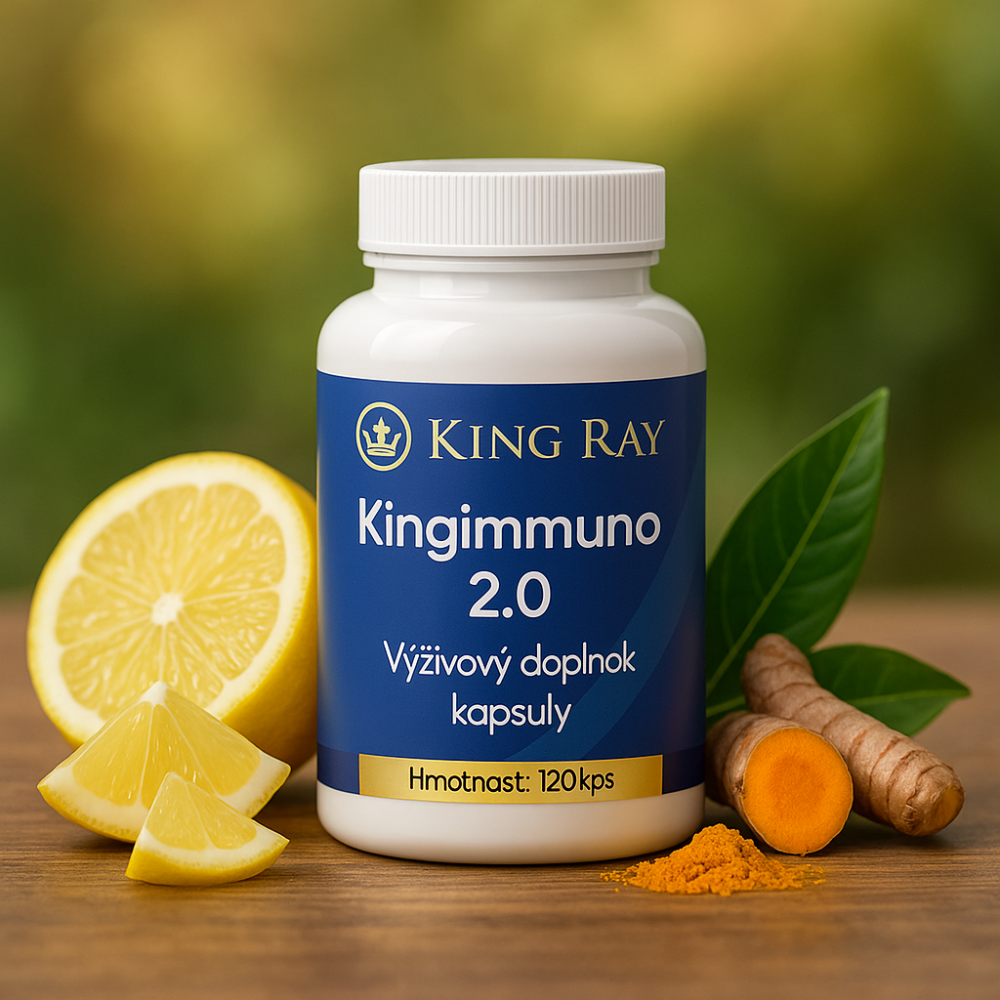
KINGimmuno 2.0
Vitamin D3: 50 µg
2,000 IU · 1,000% NRV
Daily serving / pack size: 2 capsules · 120 capsules
A blend of several nutrients and plant extracts. Also contains green tea; read all warnings before combining it with other products.
Ingredients, directions and warnings →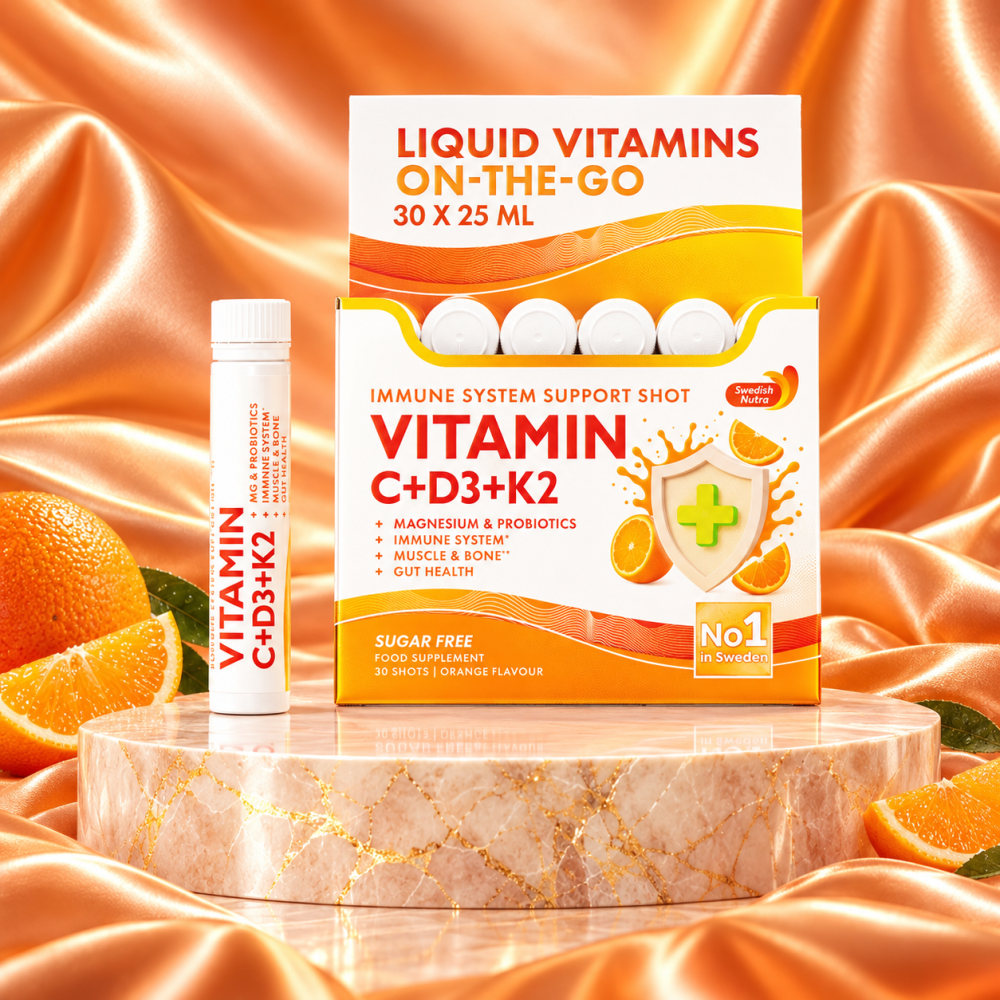
Vitamin C + D3 + K2 Shots
Vitamin D3: 50 µg
2,000 IU · 1,000% NRV
Daily serving / pack size: 25 ml · 30 × 25 ml
One daily serving is one shot. The formula also contains vitamins C and K2, magnesium and zinc. According to the product specification, its vitamin D3 comes from lichen.
Ingredients, directions and warnings →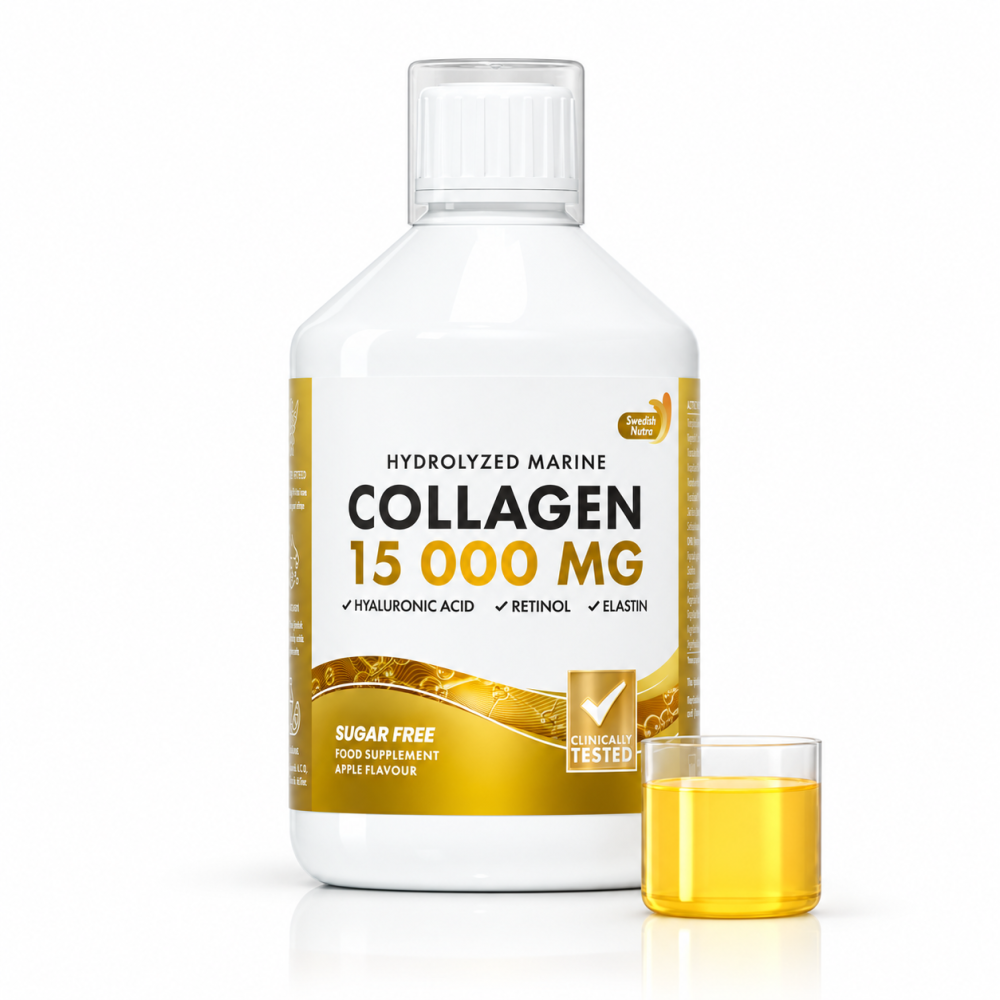
Swedish Collagen GOLD 15 000 mg
Vitamin D3: 35 µg
1,400 IU · 700% NRV
Daily serving / pack size: 25 ml · 500 ml
Contains fish collagen. Consider fish allergens as well as the other vitamins and minerals when choosing a product.
Ingredients, directions and warnings →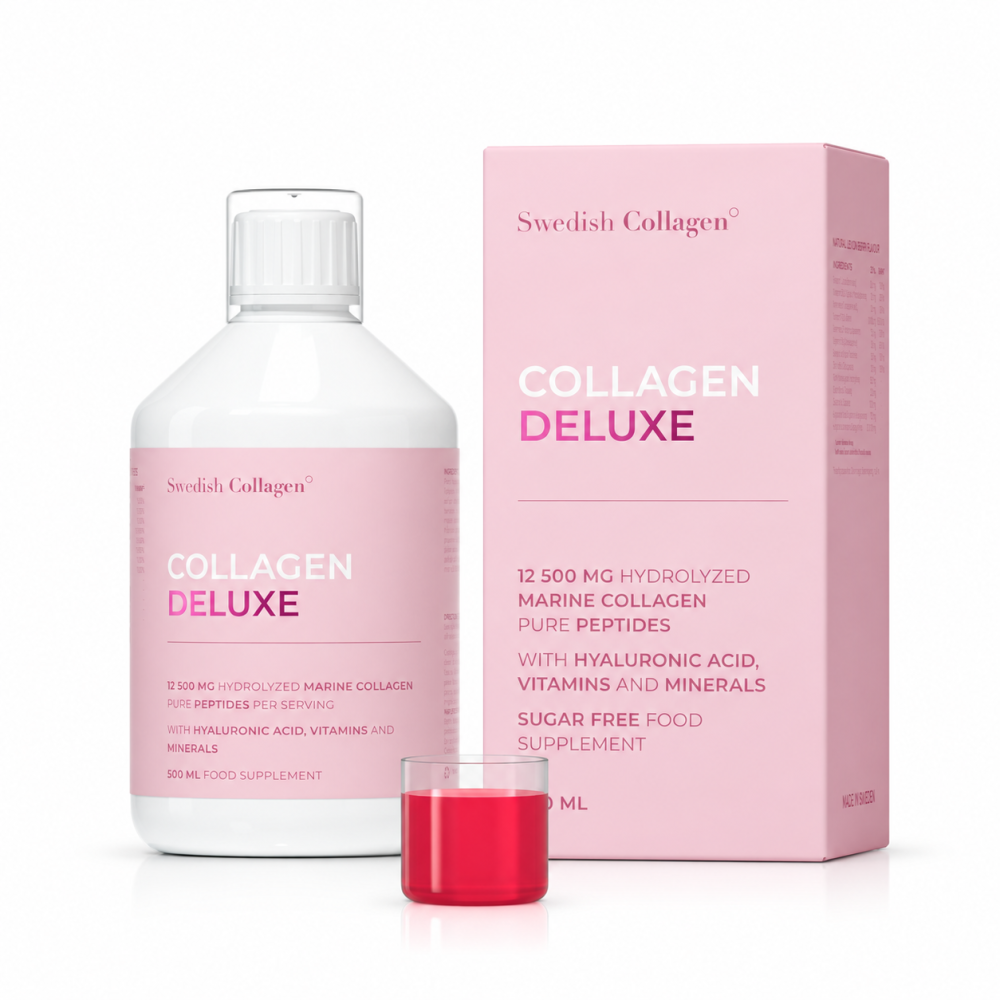
Swedish Collagen DELUXE 12 500 mg
Vitamin D3: 30 µg
1,200 IU · 600% NRV
Daily serving / pack size: 25 ml · 500 ml
Contains fish collagen and green tea extract. Check allergens, age restrictions and label instructions.
Ingredients, directions and warnings →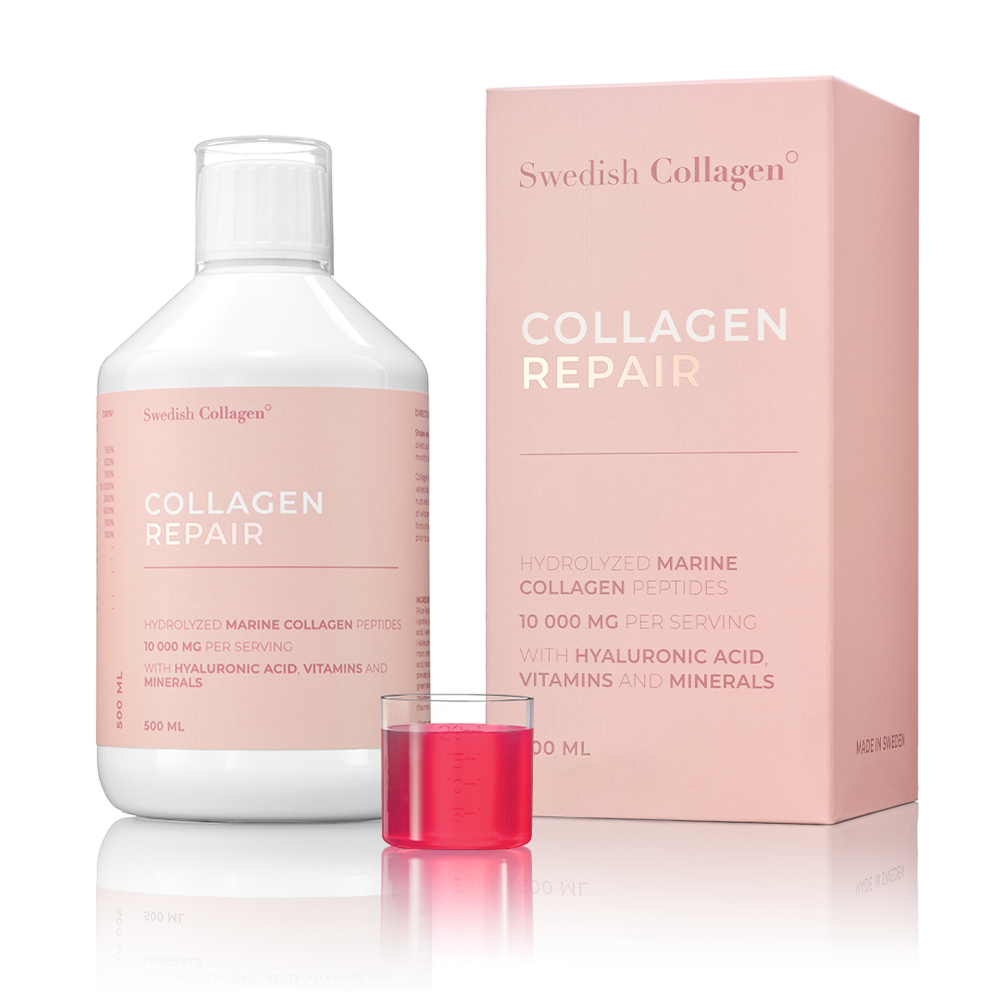
Swedish Collagen REPAIR 10 000 mg
Vitamin D3: 30 µg
1,200 IU · 600% NRV
Daily serving / pack size: 25 ml · 500 ml
Contains fish collagen and green tea extract. Check allergens, age restrictions and label instructions.
Ingredients, directions and warnings →
Swedish Nutra Cal Mag
Vitamin D3: 30 µg
1,200 IU · 600% NRV
Daily serving / pack size: 15 ml · 500 ml
A formula with calcium, magnesium and other nutrients. When combining products, add up your total mineral intake too.
Ingredients, directions and warnings →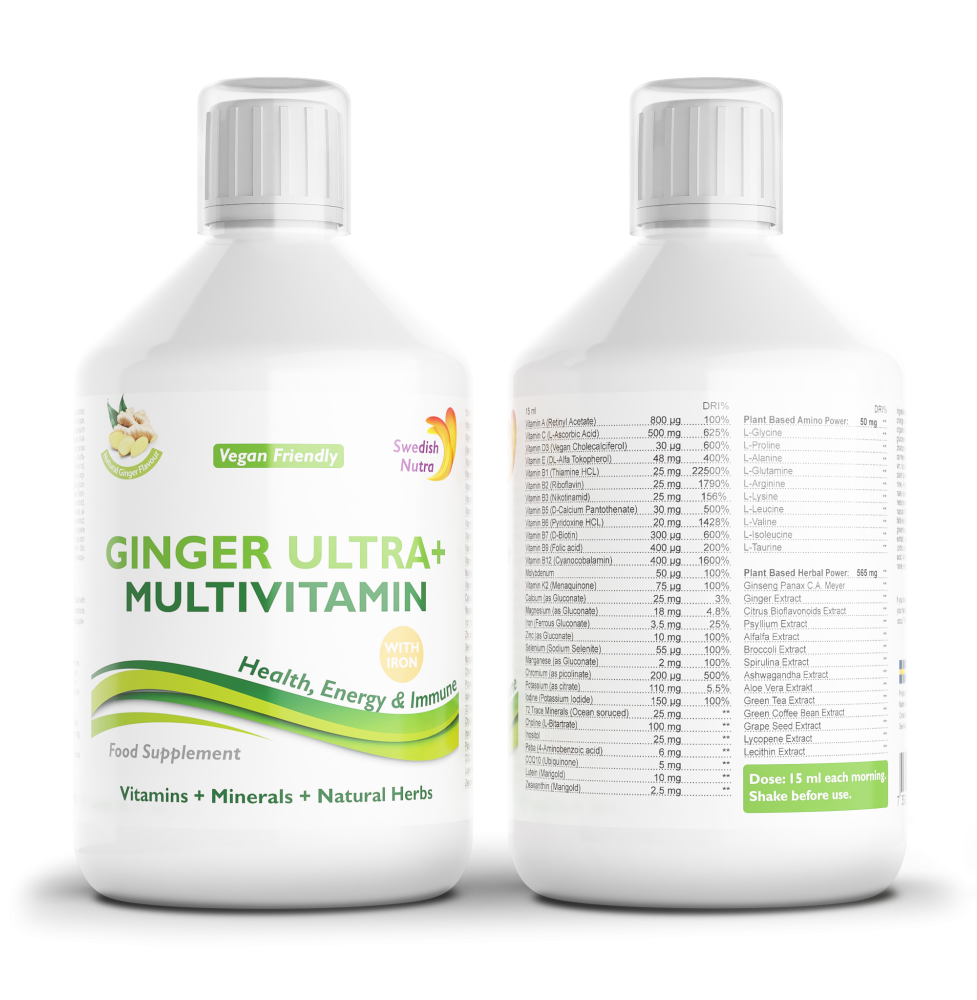
Swedish Nutra Ginger Ultra+
Vitamin D3: 30 µg
1,200 IU · 600% NRV
Daily serving / pack size: 15 ml · 500 ml
The daily serving contains 70 mg of caffeine. Not intended for children or pregnant or breastfeeding women.
Ingredients, directions and warnings →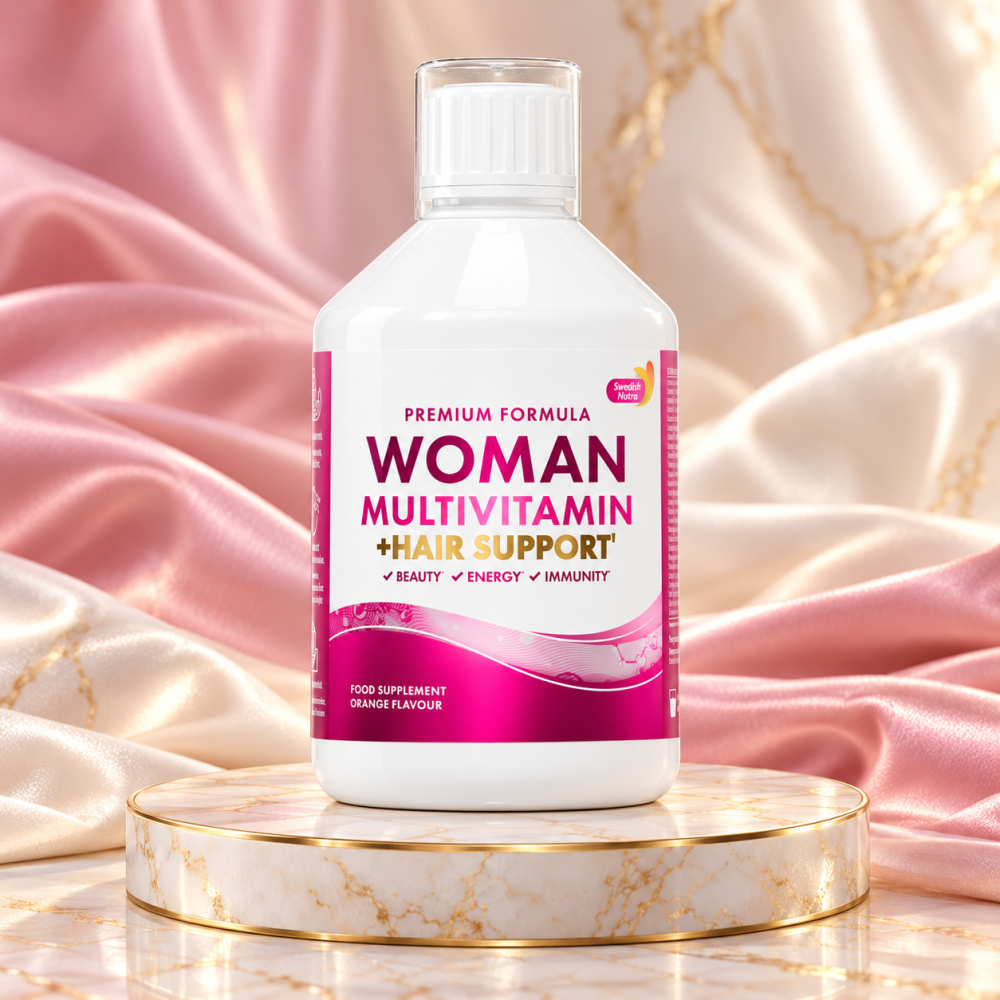
Swedish Nutra Woman Multivitamin
Vitamin D3: 25 µg
1,000 IU · 500% NRV
Daily serving / pack size: 15 ml · 500 ml
The daily serving contains 50 mg of caffeine. Not intended for children or pregnant or breastfeeding women.
Ingredients, directions and warnings →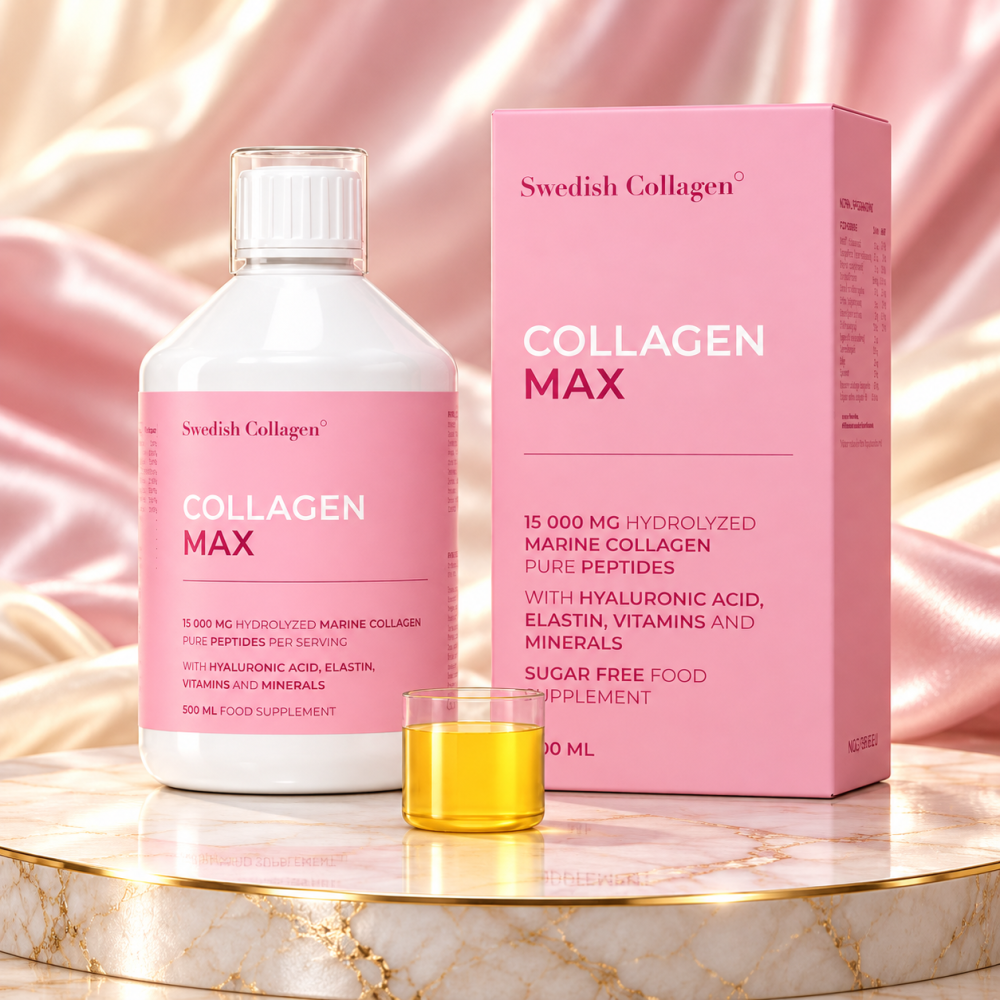
Swedish Collagen MAX 15 000 mg
Vitamin D3: 25 µg
1,000 IU · 500% NRV
Daily serving / pack size: 25 ml · 500 ml
Contains fish collagen and green tea extract. Check allergens, age restrictions and label instructions.
Ingredients, directions and warnings →How to choose a vitamin D supplement
- Choose based on the whole formula. A collagen drink, a multivitamin and a mineral combination are not interchangeable products.
- Add up vitamin D from all the supplements you already take. A higher NRV percentage does not, by itself, make a product more suitable.
- Compare the recommended daily servings: two capsules, 15 ml and 25 ml are different amounts.
- Check allergens, caffeine, green tea and age restrictions. For green tea extracts, follow any label warnings against taking them on an empty stomach or together with other green tea products on the same day.
- The current label on your specific pack takes precedence. Formulas and directions may change.
Food supplements do not replace a varied, balanced diet or a healthy lifestyle. Do not exceed the recommended daily dose. Keep out of reach of young children. During pregnancy or breastfeeding, or if you take medicines or have a medical condition, consult a doctor or pharmacist about the suitability of the specific product.
Frequently asked questions
Which vitamin D supplement is best according to reviews?
Reviews can describe taste or convenience, but they do not establish absorption or whether a dose is right for you. This article is not an independent laboratory test or a ranking of winners. We compare declared ingredients and doses.
Is liposomal vitamin D automatically better?
No. Such a conclusion would require evidence for the specific product. First check the daily dose, full ingredients and warnings.
How many micrograms are in 2,000 IU of vitamin D?
2,000 IU equals 50 µg. The conversion applies to vitamins D2 and D3: 1 µg = 40 IU.
Can I combine two supplements containing 2,000 IU each?
Together they would provide 4,000 IU (100 µg), reaching the adult tolerable upper intake level before any food intake is counted. Do not combine them automatically; add up all sources and check whether the dose is appropriate.
Which products contain the most vitamin D in this comparison?
KINGimmuno 2.0 and Vitamin C + D3 + K2 Shots each contain 50 µg per stated daily serving. This equals 2,000 IU and 1,000% NRV. It is not a ranking of the best products.
Is vitamin D3 the same as vitamin D?
D3, or cholecalciferol, is one form of vitamin D. The products in this comparison declare vitamin D3.
Does 1,000% NRV mean ten times the benefit?
No. The percentage compares the amount with the reference value used on labels. It does not measure the strength of an effect or your individual needs.
Does 15,000 mg on a collagen product refer to vitamin D?
No. This figure refers to collagen as stated on the product label. Vitamin D is listed in micrograms (µg) in this comparison.
Do I need different vitamin D products for bones and immunity?
The authorised claims listed apply to the same nutrient. Products differ in their dose, delivery format and other ingredients.
Can I take all these products together?
This overview compares alternatives. It does not recommend taking them together. Combining products may duplicate vitamin D and other ingredients.
Does a vitamin D supplement have to contain K2?
K2 is not required for using the listed authorised claims for vitamin D. The suitability of a particular combination also depends on other products and medicines you take.
Is this a vitamin D dosage guide for children?
No. It compares the declared servings of selected products. Children need a product intended for their age, used according to its specific instructions.
What if I have a confirmed vitamin D deficiency?
Discuss dosage and next steps with your doctor based on your test results. This product comparison does not replace individual treatment.
Scientific sources and comparison methodology
The comparison is based on declared information on the Slovak product pages, checked on 25 October 2026. Product cards link to the English pages where available. These are not independent laboratory measurements. In case of differences, the current label on your specific pack takes precedence.