

 Slovensky (EUR)
 Česky (CZK)
 Magyar (HUF)
 Slovenščina (EUR)
 Deutsch (EUR)
NMN and NAD+: What Is Nicotinamide Mononucleotide and What Is Its EU Regulatory Status?
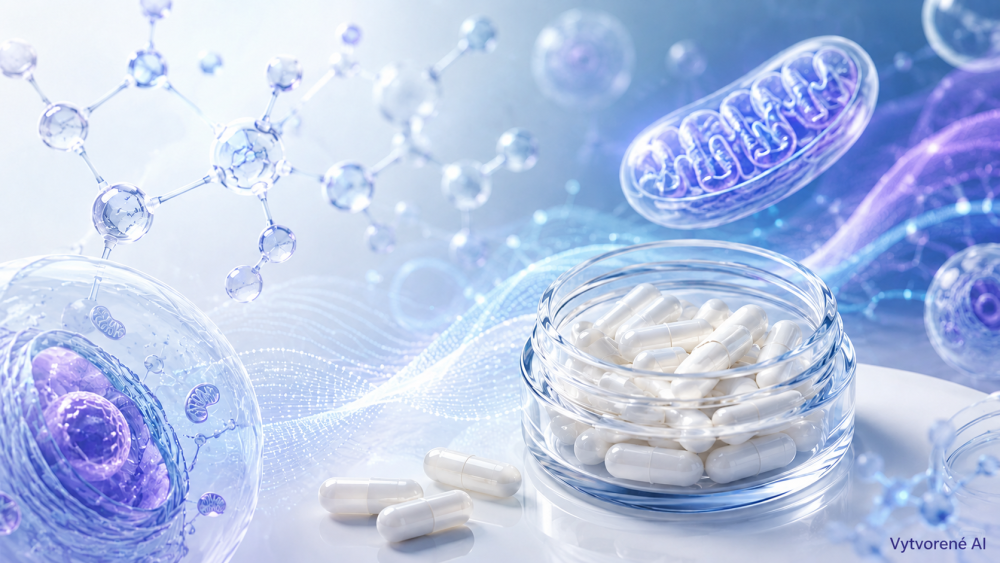
NMN and NAD+: what is nicotinamide mononucleotide and what is its status in the EU?
NMN – nicotinamide mononucleotide – is a naturally occurring molecule involved in metabolic pathways that lead to the formation of NAD+.
In recent years, NMN has attracted scientific interest, particularly in cellular metabolism and ageing research. A scientific study result is not automatically an authorised health claim or evidence of a health effect from a particular supplement.
Author: Ing. František Kokoš and colleagues · Updated:
NMN may be studied in laboratory experiments or clinical research. This does not automatically mean that it can be placed on the European Union market as a food supplement ingredient or marketed with health claims.
Nicotinamide mononucleotide
A molecule involved in metabolic pathways associated with NAD+ formation.
A coenzyme
Participates in many cellular and redox reactions.
Specific conditions
Studies assess a specific form, dose and set of outcomes.
Regulatory status
A novel food requires the relevant authorisation under EU rules before it can be placed on the market.
What is NMN?
NMN stands for nicotinamide mononucleotide. It is a nucleotide derived from nicotinamide that participates in biochemical pathways leading to NAD+ formation.
Biochemical literature therefore describes NMN as one of the precursors of NAD+.
What is NAD+?
NAD+ – nicotinamide adenine dinucleotide – is a coenzyme naturally present in cells. It participates in numerous biochemical reactions.
- redox reactions,
- energy conversion in cellular metabolism,
- the activity of various enzyme systems,
- other physiological cellular processes.
These are general biochemical functions of NAD+. They do not automatically establish that taking NMN provides a particular health benefit.
Sirtuins are NAD+-dependent enzymes, not simply “longevity genes”. Changes in NAD+ are a subject of research and depend on the tissue, measurement method and population studied. We do not use a universal claim that everyone's NAD+ levels fall by half between the ages of 40 and 60. A change in a blood NAD+ marker does not, by itself, demonstrate rejuvenation or a clinical benefit.
How are NMN and NAD+ connected?
NMN is one of the molecules the body can use in metabolic pathways leading to NAD+ formation.
The fact that NMN is a precursor of NAD+ does not, by itself, prove that taking it extends life, slows ageing or prevents a particular disease.
Why is NMN being studied?
Research into NMN is largely driven by interest in NAD+ metabolism and how it changes in different biological settings.
Scientific work includes laboratory experiments, animal models and short-term clinical studies in humans. These types of research provide different levels of evidence.
| Type of research or assessment | What it can establish |
|---|---|
| Laboratory research | Describes how a substance behaves under precisely defined experimental conditions. |
| Animal model | Can help investigate biological mechanisms, but findings cannot automatically be applied to humans. |
| Clinical study | Assesses a particular substance, dose, group of people and predefined outcomes. |
| Authorised health claim | A legal category determining what can be communicated about a food or food supplement in the EU. |
A study result does not automatically establish a product's effects
Research uses a precisely defined substance with a particular purity, dose and manufacturing process. Two products labelled NMN are therefore not necessarily identical in composition or quality.
Commercial communications about foods are subject to Regulation (EC) No 1924/2006 on nutrition and health claims. Novel food authorisation does not, by itself, authorise a claim about a health effect. Authorised claims for niacin cannot automatically be applied to NMN without checking the legal and nutritional conditions. Labelling an article as educational does not, by itself, bypass the rules on food advertising and presentation.
NMN and “anti-ageing”: what the research does not establish
NMN is often mentioned alongside terms such as longevity or healthy ageing. These popular labels, and a safety assessment alone, do not demonstrate that NMN can slow ageing, extend life or prevent disease.
- “slows ageing”,
- “extends life”,
- “rejuvenates cells”,
- “improves metabolism”,
- “increases energy”,
- “protects mitochondria”,
- “prevents disease”.
Laboratory or clinical research does not automatically determine NMN's regulatory status in the EU.
NMN in the EU: novel food, EFSA and market authorisation
Regulatory overview as of 25 October 2026: novel food classification, scientific safety assessment, a committee vote and final legal authorisation are separate stages. They are not interchangeable.
A consultation document published by the European Commission classifies nicotinamide mononucleotide with a purity of 95–99% as a novel food. This status assessment is not a market authorisation. Commission document →
EFSA published an opinion on a specific chemically synthesised β-NMN ingredient. At the proposed use level of up to 300 mg per day, it concluded that the ingredient was safe for adults, excluding pregnant and breastfeeding women, and was a bioavailable source of nicotinamide. The assessment concerns the ingredient and conditions described, not automatically every product labelled NMN. The amount stated is part of the conditions assessed, not a recommendation for use. The opinion was adopted on 4 March 2026 and amended on 8 July 2026. EFSA opinion →
The Commission's Comitology Register records a positive committee opinion on a draft implementing regulation authorising β-NMN. A vote on a draft is not the same as publication of the final regulation and its entry into force. Voting record V118291/01 →
The EFSA assessment and positive committee opinion described above have been confirmed. In our review of available official sources as of 25 October 2026, we did not confirm a published final regulation authorising β-NMN. This article therefore does not describe NMN as an authorised food supplement ingredient in the EU. Before placing a specific ingredient on the market, the final legal act, its entry into force and all conditions of use must be checked.
Under Regulation (EU) 2015/2283, novel food status involves assessing significant consumption in the EU before 15 May 1997 and whether the food falls within the categories defined in the Regulation. Only authorised novel foods included in the Union list may be placed on the market, subject to the specified conditions.
Why does the Union list matter?
The European Commission maintains the Union list of authorised novel foods, established by Implementing Regulation (EU) 2017/2470. Checks should use the current text and subsequent amendments, not just the original 2017 version.
An authorisation may specify the ingredient's characteristics, food categories, amounts, target population, labelling and any data protection provisions. Where an ingredient is used as a vitamin source, the relevant rules on vitamin sources must also be checked. The health claims that may be used are a separate matter.
Novel food rules and the Union list may change as new authorisations are added.
NMN, NR and vitamin B3 are not the same
| Substance | What it is |
|---|---|
| NMN | Nicotinamide mononucleotide – a molecule involved in NAD+ metabolism. |
| NR | Nicotinamide riboside – another molecule associated with NAD+ metabolism. Legal authorisation of a specific form, such as nicotinamide riboside chloride, cannot be transferred to NMN or to any other form of NR. |
| Nicotinamide | A form of vitamin B3. |
The fact that these substances are associated with some of the same metabolic pathways does not mean that they have the same regulatory status or properties.
What should you remember?
NMN is a molecule associated with NAD+ metabolism.
This biochemical fact alone does not establish a health or “anti-ageing” effect of taking NMN in humans.
Scientific findings relate to the specific substance, dose, form and experimental conditions studied.
For NMN, the current novel food regulatory status in the European Union is also particularly important.
This article provides general educational information. It is not a health claim or a recommendation to use a particular product. NMN's EU regulatory status should be checked against the current Union list and European Commission decisions.
Frequently asked questions
What is NMN?
NMN is nicotinamide mononucleotide, a molecule involved in metabolic pathways associated with NAD+ formation.
Is NMN the same as NAD+?
No. NMN is one of the precursors of NAD+. NAD+ is a coenzyme involved in cellular reactions.
Does an EFSA assessment automatically mean market authorisation?
No. An EFSA safety assessment, a positive committee opinion and final legal authorisation are separate stages. The applicable regulation in force and compliance with its conditions are decisive.
Which regulatory developments for NMN have been confirmed in 2026?
On 11 May 2026, EFSA published a favourable assessment of a specific β-NMN ingredient under the proposed conditions. On 24 September 2026, the committee delivered a positive opinion on the draft authorisation. In our review of available official sources as of 25 October 2026, we did not confirm a published final regulation authorising β-NMN.
Does the connection with NAD+ prove that NMN slows ageing?
No. A biochemical connection or a change in a laboratory marker does not, by itself, demonstrate longer life or slower ageing in humans.
Are NMN, NR and nicotinamide the same?
No. They are different molecules. Nicotinamide is a form of vitamin B3; similar names do not imply the same regulatory status.
Does this article recommend an NMN dose?
No. The article explains biochemical terms and the regulatory process. It does not provide instructions for use or recommend buying NMN.
Regulatory and scientific sources
- European Commission: NMN consultation assessment (11 October 2022)
- EFSA Journal 2026;24:e10007: safety of β-NMN and bioavailability of nicotinamide
- Comitology Register: voting result V118291/01 (24 September 2026)
- Comitology Register: draft D118035/02 — not the final regulation
- European Commission: Union list of authorised novel foods
- Regulation (EU) 2015/2283 on novel foods
- European Commission: nutrition and health claims — Regulation (EC) No 1924/2006
Text updated: 25 October 2026. This overview distinguishes confirmed documents from final legal authorisation that has not been verified. The regulatory position may change.
Nutrition, metabolism and the difference between research and authorised claims.
↑ Back to top