

 Slovensky (EUR)
 Česky (CZK)
 Magyar (HUF)
 Slovenščina (EUR)
 Deutsch (EUR)


05. Autophagy and Longevity — How Cells Recycle Their Components and What Science Is Exploring
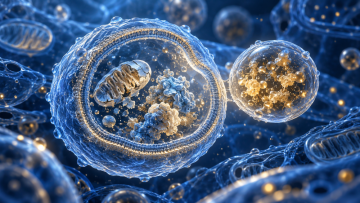

Autophagy and longevity: how cells recycle their components and what science is exploring
Autophagy is a natural mechanism of cellular maintenance and recycling. It helps break down damaged proteins and worn-out cellular components, allowing cells to reuse the resulting building materials. It also includes mitophagy — the targeted removal of mitochondria, which we discussed in the article on mitochondria. When these processes work properly, they help maintain cellular quality and are therefore relevant to healthy ageing and longevity research. Nutrient availability influences the signals that regulate autophagy. Early human studies suggest that some intermittent fasting regimens may also affect the process of cellular recycling. Tissue renewal, however, requires a balance between breaking down worn-out components and making new ones, for which the body needs energy and nutrients.
Sources for the introduction: [1] [2] [3] [4] [6]

What is autophagy and how does it work?
Autophagy is the breakdown and recycling of cellular material. In macroautophagy, the focus of this article, a membrane encloses selected material to form an autophagosome. This fuses with a lysosome, whose enzymes break down the contents. The cell can reuse the resulting smaller building blocks. [1]
| Term | Meaning |
|---|---|
| Autophagosome | A membrane-bound vesicle enclosing cellular material to be processed. |
| Lysosome | A small structure inside a cell containing enzymes that break down material it receives. |
| Autophagic flux | The passage of material through the entire pathway, including its degradation. |
Yoshinori Ohsumi received the 2016 Nobel Prize in Physiology or Medicine for discoveries of mechanisms for autophagy. The award recognised basic research, rather than validating a specific fasting diet. [1]
Autophagy also occurs at a basal level as part of routine cellular maintenance. It is not a process that exists only when we stop eating. [2]
More vesicles do not necessarily mean better recycling
Think of parcel handling: more packages in a warehouse could mean more incoming deliveries, but also a blockage in dispatch. Similarly, a higher number of autophagosomes may reflect increased formation or slower breakdown of their contents.
Researchers therefore distinguish a snapshot of a cell from autophagic flux. Methodological guidelines emphasise combining measurements and monitoring the whole process. A change in one protein or in a gene’s activity does not by itself show that the cell breaks down material more efficiently. [3]
Why is autophagy of interest in ageing research?
Maintaining proteins and organelles — small structures inside a cell — is fundamental to cellular function. Autophagy helps remove damaged material and contributes to cellular balance. Its relationship with disease depends on the biological context; it cannot be reduced to a rule that “more is always better”. [2]
An example from an animal model
In a study published in Nature in 2018, researchers created mice with a targeted alteration in the beclin 1 protein. This weakened its connection to the regulatory protein BCL2 and released one of the “brakes” on autophagy. The basal flow of material through the recycling pathway increased. These mice lived longer and showed fewer of certain age-related changes. [4]
This was a genetic experiment in mice. The finding illustrates the importance of the mechanism, but does not demonstrate that fasting or a food supplement produces the same effect in humans.
Autophagy and fasting: what do human studies tell us?
A 2019 study: a change in gene activity
In a small randomised crossover study, 11 adults with overweight ate within an earlier, shorter eating window or a longer control window during four-day periods. Each participant tried both regimens in sequence. Researchers recorded increased morning expression of the LC3A gene in blood cells — meaning greater activity of a gene associated with autophagy. [5]
The measurement showed a change in gene activity in specific cells. It did not establish whether more cellular material was actually being broken down in all organs. The study did not determine a universal hour when autophagy “switches on”, nor did it demonstrate longer life.
A 2025 study: measuring autophagic flux
An exploratory analysis included 121 people with obesity, randomly assigned to standard care, calorie restriction, or a combination of intermittent fasting and time-restricted eating. Researchers measured autophagic flux in selected white blood cells, technically called peripheral blood mononuclear cells. [6]
After six months, the groups differed in how measured recycling had changed from the start: the result favoured the combined regimen over the control. Within the group following this regimen, however, a statistically significant increase from the start was not confirmed. The difference may have arisen partly because values fell in the control group. This was a post hoc analysis; at two months, no significant difference between groups was found.
This represents important progress in measurement, rather than proof of whole-body rejuvenation. The authors call for further studies.
Sleep, daily rhythms and cellular maintenance
Autophagy is also linked to the internal biological clock, which helps time processes in the body. Researchers are exploring its connections with sleep, wakefulness and nutrient availability. The relationship is complex, and much of the evidence comes from animal models. [8]
We cannot generally say that most human autophagy takes place at night. Activity may vary with the tissue, daily rhythm and measurement method. The findings do not establish a single nighttime hour when the whole body “switches into recycling mode”.
Regular, sufficient sleep matters for health even without measuring autophagy. However, the relationship between sleep and cellular recycling is still being studied; better sleep cannot therefore be presented as a proven way to increase autophagy throughout the human body. [8]

Spermidine and cellular maintenance — findings from human studies
Spermidine is a substance being studied in relation to cellular processes and ageing. Knowing a possible mechanism of action is not enough: a health benefit must be confirmed by a specific study.
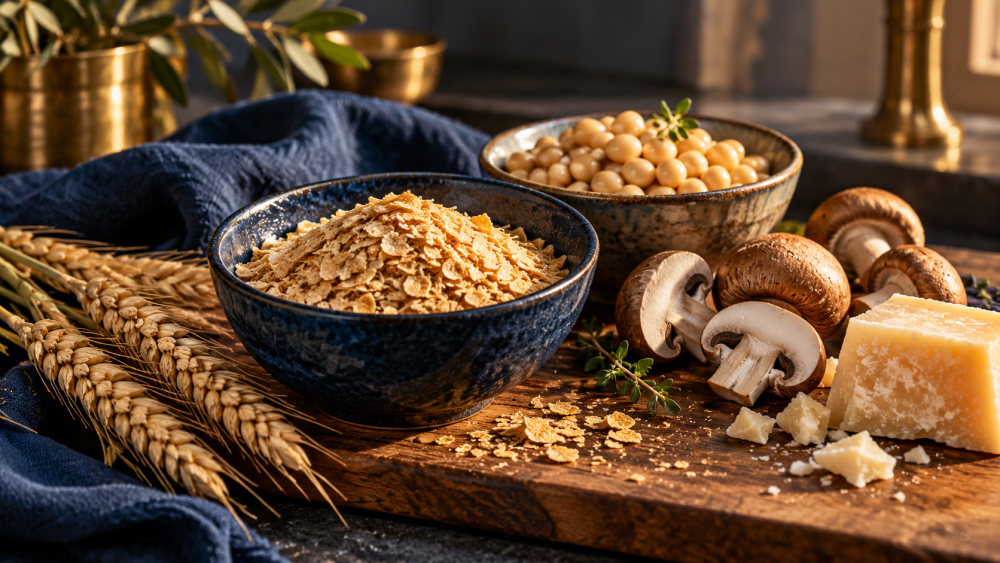
The 2022 SmartAge trial randomly assigned 100 people aged 60 to 90, who themselves noticed a decline in their cognitive abilities, to two groups. It compared a spermidine-rich wheat germ extract with placebo for 12 months. The main memory test did not show a significant improvement over placebo. Favourable signals in additional exploratory analyses need to be checked in further studies. [7]
The trial did not establish longer life or directly increased autophagy in the human brain. Its findings concern the preparation, regimen and population tested.
What the individual findings actually mean
| Observation | Limit of the conclusion |
|---|---|
| Longer life in genetically modified mice | Does not confirm the effect of a diet in humans. |
| A change in LC3A gene activity in blood cells | Does not by itself confirm flux through the entire pathway. |
| A difference in flux in selected blood cells | Does not automatically apply to the brain, liver or whole body. |
| A favourable result from an additional exploratory analysis | Suggests an idea or hypothesis that needs to be tested in further research. |
Frequently asked questions
Does autophagy switch on after exactly 16 hours of fasting?
The cited studies did not establish such a universal threshold. Autophagy also has basal activity; a specific measurement cannot be turned into a timer that applies to everyone and every tissue.
Is autophagy a whole-body detox?
It involves specific cellular mechanisms of breakdown and recycling. The term “detox” is too vague and does not describe what the studies measure.
Does more autophagy automatically mean a longer life?
No. A change in a cellular process, a health benefit and an extension of lifespan are different outcomes. The human studies cited here did not demonstrate longer life.
Did the Nobel Prize confirm the effectiveness of fasting?
No. The prize recognised discoveries of mechanisms for autophagy. A Nobel Prize is not a clinical assessment of a specific eating regimen.
Is this article a guide to starvation or taking spermidine?
No. It explains research and does not prescribe a fasting regimen or dosage. If you have a medical condition or are receiving treatment, dietary changes should be discussed individually with a healthcare professional.
Does most autophagy happen during nighttime sleep?
No such general rule has been confirmed for the human body. Autophagy also takes place continuously, and its rhythm depends on the tissue and other circumstances. Sleep is important, but its relationship with autophagic flux remains under investigation. [8]
Sources and further reading · 8 sources
- The Nobel Prize in Physiology or Medicine 2016: official announcement. Explanation of the prize-winning discoveries.
- The Nobel Prize 2016: scientific background on autophagy. Mechanisms and biological context.
- Klionsky et al. (2021): Guidelines for the use and interpretation of assays for monitoring autophagy, 4th edition. Methodological guidelines.
- Fernández et al. (2018): Disruption of the beclin 1–BCL2 autophagy regulatory complex promotes longevity in mice. Nature. An experiment in mice.
- Jamshed et al. (2019): Early Time-Restricted Feeding Improves 24-Hour Glucose Levels and Affects Markers of the Circadian Clock, Aging, and Autophagy in Humans. Nutrients. Small crossover study.
- Bensalem et al. (2025): Intermittent time-restricted eating may increase autophagic flux in humans: an exploratory analysis. The Journal of Physiology. Exploratory analysis of a human study.
- Schwarz et al. (2022): Effects of Spermidine Supplementation on Cognition and Biomarkers in Older Adults With Subjective Cognitive Decline. JAMA Network Open. Randomised clinical trial.
- Ullern et al. (2025): Rest, Repair, Repeat: The Complex Relationship of Autophagy and Sleep. Journal of Molecular Biology. A review of the relationship between sleep and autophagy and the limitations of the evidence so far. DOI: 10.1016/j.jmb.2025.169227.
Scientific sources selected by the author, not a systematic review of all studies. This article is educational and does not replace diagnosis or individual medical advice.