

 Slovensky (EUR)
 Česky (CZK)
 Magyar (HUF)
 Slovenščina (EUR)
 Deutsch (EUR)


11. Physical Activity, Muscle and Longevity: Why Fitness and Strength Are Studied

Physical activity, muscle and longevity: why fitness and strength are studied
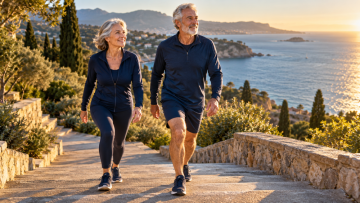
Regular physical activity is one of the foundations of healthy longevity. It helps preserve muscle strength, fitness, bone health and joint mobility. It also supports vascular function, while the muscle pump assists venous blood return and lymph flow. Walking, appropriate strength training and balance exercises complement one another. Their practical benefit is the ability to manage everyday activities and remain independent for as long as possible. Studies show that a suitable activity programme can help preserve mobility and muscle function in older age too. [4] [5] [6] [7] [8] [9] [10] [11]
Muscles: size, strength and function are different things
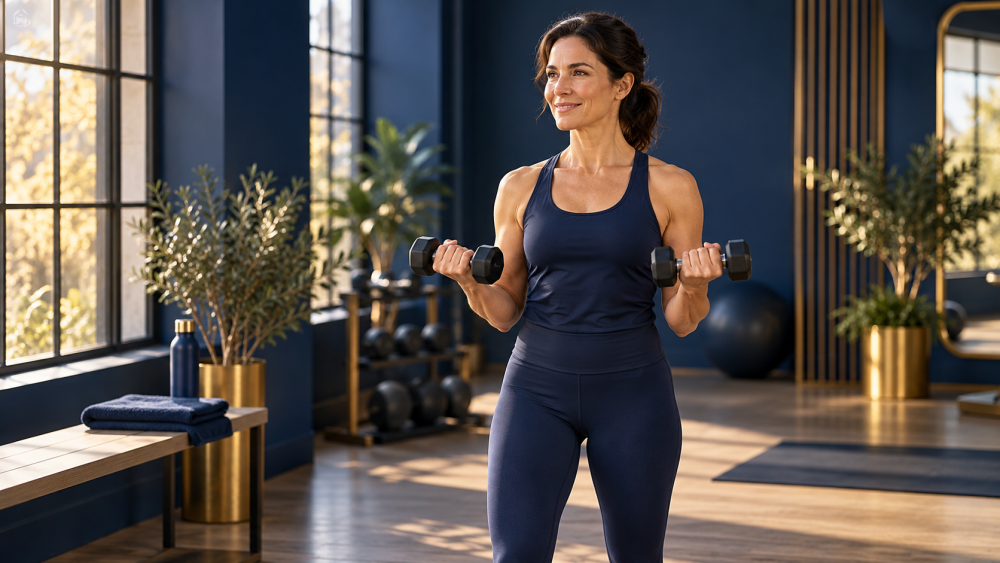
Muscle size alone does not capture how much force a person can produce or how well they manage everyday movement. The European expert consensus EWGSOP2 emphasises low muscle strength when assessing sarcopenia. Reduced muscle quantity or quality helps confirm the diagnosis, while poor physical performance indicates severity. [1]
Sarcopenia is a muscle disease that is more common in later life but can also occur earlier. It should not be identified solely by appearance, body weight or a single test at home.
| Term | What it describes | Example of assessment |
|---|---|---|
| Muscle mass | The amount of muscle tissue. | Body composition measurement. |
| Muscle strength | The ability to produce force. | A dynamometer or chair-rise test. |
| Physical function | How a person manages movement tasks. | Walking speed or a set of functional tests. |
| Aerobic fitness | The ability to perform endurance exercise. | An exercise stress test. |
Tests are interpreted in the context of health status and the methods used. References: [1], [2].
Why is fitness associated with longevity?
In 2018, Mandsager and colleagues analysed data from adults who underwent treadmill exercise testing. Higher cardiorespiratory fitness was associated with lower long-term mortality. [2]
This observational analysis shows an important association, but participants were not randomly assigned a fitness level. The finding may also reflect health status, genetics and previous habits. It does not prove that every extra workout or increase in intensity automatically adds years of life.
What about grip strength?
A prospective analysis of approximately half a million UK Biobank participants found associations between lower grip strength, higher mortality and several health outcomes. [3] A simple measurement can provide information about overall health, but it does not explain the cause of weakness on its own.
What did randomised trials show?

In a randomised trial, researchers allocate participants to groups by chance. This allows a more reliable comparison of an activity programme with another approach.
LIFE: the ability to walk 400 metres
The LIFE study included 1,635 sedentary adults aged 70–89 with physical limitations who could walk 400 metres at baseline. It compared a structured physical activity programme with a health education programme. [4]
Over an average follow-up of 2.6 years, 30.1% of participants in the physical activity group and 35.5% in the comparison group lost the ability to walk this distance. The difference was 5.4 percentage points. The programme combined aerobic activity, resistance exercises and flexibility exercises.
The finding supports maintaining mobility in this population. It is not a measurement of “cellular rejuvenation” or a calculation of additional years of life.
LISA: strength after the organised programme ended
In LISA, 451 adults of retirement age were randomly assigned to one year of heavy resistance training, moderate-intensity training or a control group. A total of 369 people took part in the assessment four years after the study began. [5]
The heavy resistance group maintained baseline isometric leg strength — force produced while the muscle contracts without joint movement. In the other groups, the average value was lower after four years. This was an additional outcome; the main outcome was leg extensor power, the ability to produce force quickly. The results should therefore not be simplified into a claim that every aspect of muscle function was preserved.
Participants were relatively healthy and well-functioning. The year-long programme was supervised. The conclusion is not a recommendation to start lifting maximum weights without preparation.
Different types of activity complement each other
The WHO recommends that adults, including older adults, do 150–300 minutes of moderate-intensity aerobic activity or 75–150 minutes of vigorous activity per week, or an equivalent combination. It recommends strengthening the major muscle groups on at least two days a week. [6]
For older adults, varied activity emphasising functional balance and strength is added on at least three days a week. This is a general framework to be adapted to abilities and health status.
| Component | Example |
|---|---|
| Aerobic activity | Brisk walking, cycling or swimming. |
| Muscle strengthening | Resistance exercises using appropriate weights, bands or body weight. |
| Balance and function | Appropriate exercises for stability and everyday movement tasks. |
| Everyday movement | Walking for transport and active breaks throughout the day. |
Even a small amount of activity is better than none. People can start gradually and increase duration, frequency and difficulty as their abilities allow. [6]
Movement benefits bones, joints and circulation
Bones need appropriate loading
Bone is living tissue that adapts to mechanical stimuli. Appropriately selected resistance training and weight-bearing activity help maintain its strength. In LIFTMOR, postmenopausal women with low bone mass had better bone density and physical function outcomes after eight months of supervised training than with a low-intensity comparison programme. With osteoporosis, exercise selection and loads must reflect fracture risk. [7]
Joints need movement and stability
Regular movement maintains range of motion, and strong muscles help stabilise joints. Joint cartilage has no blood vessels of its own and receives nutrients mainly from joint fluid. Alternating appropriate loading and unloading supports fluid movement and the transport of dissolved substances within cartilage. Experiments on cartilage samples also demonstrate this mechanism. [8]
Blood supply and microcirculation
During activity, blood supply to working muscles adjusts to their oxygen and nutrient needs. Exchange between blood and tissues occurs in the microcirculation. In a small study involving 11 healthy adults, brief leg movements during prolonged sitting increased local blood flow and helped preserve the function of the vessel lining, the layer of cells on the inside of blood vessels. [9]
The muscle pump supports blood return and lymph flow
Muscle contractions, especially in the calves, help move venous blood towards the heart. Walking and ankle movements therefore reduce venous stasis — the pooling of blood in the lower limbs during prolonged sitting or standing. Muscle movement also supports lymph flow, returning excess fluid and proteins from the spaces between cells to the bloodstream. Movement thus supports both delivery of needed substances and removal of fluid from tissues. [10] [11]
In practice: regularly interrupt prolonged sitting with a short walk, ankle movements or suitable heel raises. These brief breaks complement regular aerobic and strength activity. [6] [9] [10]
How can research become a useful goal?

Instead of a vague goal such as “I want to become younger”, a goal might be getting up more easily, taking a longer comfortable walk or managing stairs better. These tasks have a clear meaning in everyday life. Tracking them does not replace a health assessment, but it helps define what needs to improve.
- Compare like with like: the same task under similar conditions.
- Separate the number from the conclusion: better performance is a change in performance, not automatically a lower biological age.
- Track more than one measure: walking, strength and the ability to manage everyday activities.
- Consider the starting point: a healthy athlete’s programme cannot be transferred directly to someone with limited mobility.
If you have health limitations or are unsure about safe exercise intensity, it makes sense to adapt the programme with a doctor or physiotherapist.
Conclusion: strength, fitness and independence have value in their own right
When considering physical activity, it is important to distinguish muscle mass, strength, aerobic fitness and the ability to manage daily tasks. LIFE and LISA show specific outcomes in mobility or strength; they do not prove cellular rejuvenation or calculate additional years of life.
A useful goal might be managing stairs, standing up or walking more easily. The suitability of a programme is assessed according to baseline abilities and health limitations, not a universal promise of longevity.
Frequently asked questions
Is walking alone enough?
Walking is a useful part of physical activity. However, recommendations also include muscle strengthening and, in older age, functional balance. A single activity may not cover every component. [6]
Is muscle mass the same as muscle strength?
No. They are related but describe different properties. Low strength has a distinct role in assessing sarcopenia. [1]
Can grip strength predict how many years I will live?
Not with certainty for an individual. A population-level association with mortality is not a personal prediction of lifespan. [3]
Is retirement age too late to start training?
Does better fitness prove cellular rejuvenation?
Not on its own. Improved function is a valuable outcome, but it is not the same as evidence of a change in cellular age or a longer life for a particular person.
Related reading
Physical activity is complemented by the topic of 10 – Nutrition and longevity. At the cellular level, continue with 03 – Mitochondria and ageing.
Sources and scientific background
- Cruz-Jentoft A. J. et al. (2019): Sarcopenia: revised European consensus on definition and diagnosis. Age and Ageing; EWGSOP2 expert consensus.
- Mandsager K. et al. (2018): Association of Cardiorespiratory Fitness With Long-term Mortality Among Adults Undergoing Exercise Treadmill Testing. JAMA Network Open; observational cohort analysis.
- Celis-Morales C. A. et al. (2018): Associations of grip strength with cardiovascular, respiratory, and cancer outcomes and all cause mortality. BMJ; prospective cohort study.
- Pahor M. et al. (2014): Effect of Structured Physical Activity on Prevention of Major Mobility Disability in Older Adults: The LIFE Study. JAMA; randomised clinical trial.
- Bloch-Ibenfeldt M. et al. (2024): Heavy resistance training at retirement age induces 4-year lasting beneficial effects in muscle strength. BMJ Open Sport & Exercise Medicine; long-term follow-up of a randomised trial.
- WHO (2020): Guidelines on Physical Activity and Sedentary Behaviour – Recommendations. Official recommendations. Bull FC et al. (2020). World Health Organization 2020 guidelines on physical activity and sedentary behaviour. British Journal of Sports Medicine; scientific publication of the WHO recommendations.
- Watson SL et al. (2018). High-Intensity Resistance and Impact Training Improves Bone Mineral Density and Physical Function in Postmenopausal Women With Osteopenia and Osteoporosis: The LIFTMOR Randomized Controlled Trial. Journal of Bone and Mineral Research. Randomised clinical trial.
- Culliton KN, Speirs AD (2021). Sliding contact accelerates solute transport into the cartilage surface compared to axial loading. Osteoarthritis and Cartilage. Experimental study on cartilage samples.
- Morishima T et al. (2016). Prolonged sitting-induced leg endothelial dysfunction is prevented by fidgeting. American Journal of Physiology – Heart and Circulatory Physiology. Small physiological study in 11 healthy adults.
- Li T et al. (2020). Effects of ankle pump exercise frequency on venous hemodynamics of the lower limb. Clinical Hemorheology and Microcirculation. Measurement of venous blood flow during ankle movements.
- Havas E et al. (1997). Lymph flow dynamics in exercising human skeletal muscle as detected by scintography. The Journal of Physiology. Physiological study of lymph flow during muscle activity.
An educational article about research and general recommendations. It does not replace an individual assessment or an exercise or rehabilitation plan.