

 Slovensky (EUR)
 Česky (CZK)
 Magyar (HUF)
 Slovenščina (EUR)
 Deutsch (EUR)


02. Why Do We Age? Cellular Ageing and Longevity Research
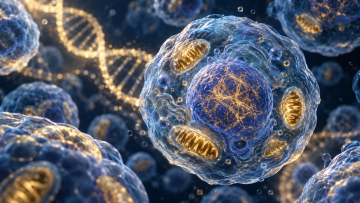

Ageing also happens where we cannot see it.
Wrinkles and grey hair are visible. Longevity research also looks at processes inside cells: DNA maintenance, energy production, the recycling of cellular components and communication between tissues.
What does cellular ageing mean? Why do scientists study telomeres, senescent cells and partial reprogramming? And when should we describe something as an interesting experiment rather than a guide to rejuvenation?
Why do we age, and what can we influence?
Damage builds up in our cells over time. Their ability to repair themselves, obtain energy and renew their components gradually changes. These changes are connected and can make the body less resilient. Genes, our environment and the way we live all influence this process.
We can influence some processes and measures associated with ageing. Physical activity, appropriate nutrition, good sleep, not smoking and looking after our blood vessels, blood pressure and blood sugar therefore matter today. The aim is to preserve health, strength and independence for as long as possible. Research helps us understand how to do this.
1. Why do we age? There is no single process
The 2023 scientific framework Hallmarks of Aging describes 12 interconnected hallmarks of ageing. It helps scientists organise what we know about the changes that occur in the body with age. [1]
| Area | What it involves |
|---|---|
| DNA damage (genomic instability) | Damage and changes to genetic information. |
| Telomere shortening | Changes to protective structures at the ends of chromosomes. |
| Epigenetic alterations | Changes in which genes a cell uses more or less. |
| Poorer protein maintenance (loss of proteostasis) | Disrupted protein quality control. |
| Disrupted cellular recycling (macroautophagy) | Changes in cellular recycling. |
| Deregulated nutrient sensing | Changes in signals responding to nutrient availability. |
| Reduced mitochondrial function | Changes in how mitochondria function. |
| Cellular senescence | A state associated with the cessation of cell division. |
| Stem cell exhaustion | A reduced ability of stem cells to renew tissues. |
| Altered intercellular communication | Disruption of signal exchange. |
| Chronic inflammation | Long-lasting inflammatory processes. |
| Dysbiosis | Changes in communities of microorganisms, for example in the gut, that can affect health. |
These processes influence one another. Changing one marker therefore does not automatically mean slowing ageing throughout a person’s body.
2. DNA, telomeres and epigenetics made simple
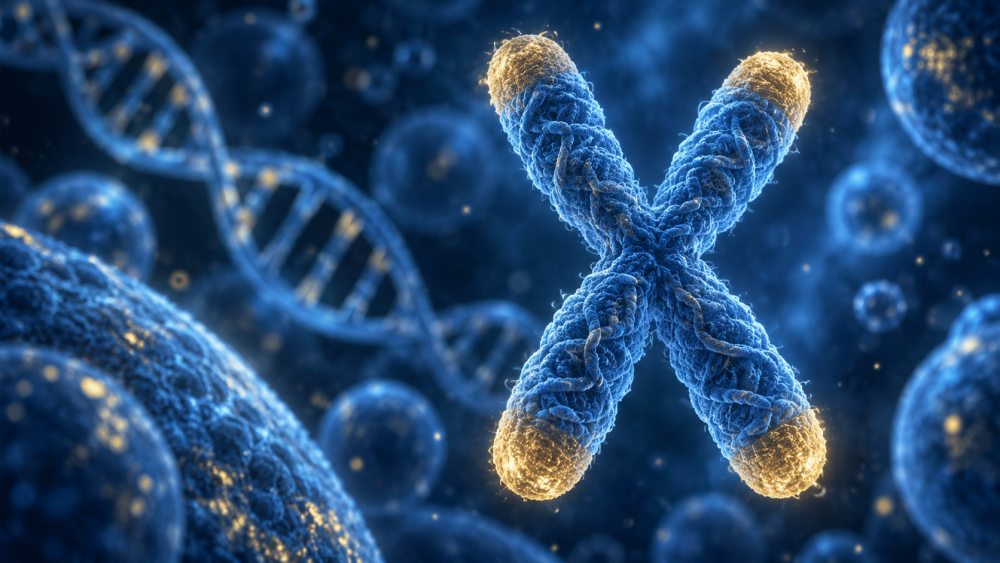
DNA: instructions for our cells
DNA carries the genetic information that cells use to function. It can become damaged, and cells have mechanisms to repair that damage. Some damage accumulates as we get older. Scientists study how this relates to ageing and disease. [6]
Telomeres: protective ends of chromosomes
Chromosomes are structures that contain DNA. At their ends are telomeres – protective sections that help keep genetic information intact. If this protection breaks down, a cell may stop dividing or die. [2]
Telomere length is not a countdown of the years we have left. One measurement cannot tell us how long someone will live, and longer telomeres are not always better.
Epigenetics: how a cell uses its genes
Cells can change how they function without changing the DNA code itself. They can also change which genes they use more or less. Epigenetics studies this kind of gene regulation. Some of these changes help scientists estimate biological age and investigate ageing. [6]
3. What happens when a cell stops dividing?
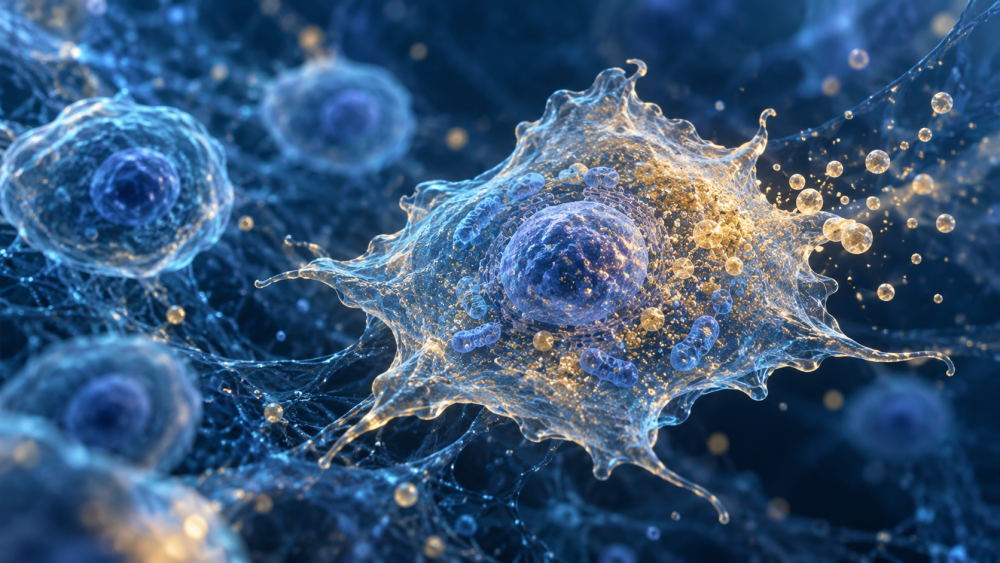
Some cells stop dividing but remain alive and active. This state is called cellular senescence. These cells can release substances that affect their surroundings. Scientists study what happens when they build up in tissues. [3]
They are sometimes called “zombie cells”, but this label is misleading. They also have useful roles, for example in healing. Their location and how long they remain in a tissue both matter.
Senolytics are substances being studied for their ability to remove some of these cells. Researchers are investigating who might benefit and what the risks are. This is not yet an established general method of rejuvenation.
4. Cellular recycling and energy production
Autophagy is a natural form of cellular recycling. A cell breaks down and processes some of its damaged or unneeded components, helping to maintain its internal organisation. This maintenance process can change with age. [6]
Mitochondria are small structures inside cells that help turn energy from nutrients into a form the cell can use. They also take part in other processes, including signalling. Researchers study how their function changes with age and how cells remove damaged mitochondria.
Both processes are important for cells. However, changing them in a laboratory does not by itself show that the same intervention will extend human life.
5. What is being investigated around the world?
The following examples show the difference between an animal experiment and testing a specific intervention in humans. This is not a complete overview of all ongoing research.
Partial reprogramming: an experiment in mice
In a paper published in 2022, scientists investigated partial reprogramming during natural ageing in mice. This experimental approach aims to return some cell properties to a younger state without completely erasing the cell’s original role. The researchers found changes in gene regulation and the processing of substances within cells, including in the skin and kidneys. Some measured features shifted towards a younger state. Results also depended on how long the approach was used. [4]
What this means: the findings help us understand cellular ageing. They do not yet demonstrate safe rejuvenation in humans.
Senolytics: a randomised trial in postmenopausal women
A phase 2 study published in 2024 included 60 postmenopausal women and investigated a combination of dasatinib and quercetin. The primary outcome — a change in a marker of bone breakdown after 20 weeks — did not differ significantly between the groups. Some additional measurements suggested a possible effect that needs further investigation. [5]
What this means: the study did not confirm general rejuvenation or an extension of lifespan. Furthermore, the effects of the combination cannot be attributed to quercetin alone. Experimental drug regimens are not instructions for self-treatment.
| Question | Why does the answer matter? |
|---|---|
| Were cells, animals or humans studied? | These represent different levels of evidence. |
| What was the primary outcome? | A secondary finding does not replace an unsuccessful primary outcome. |
| Did they measure only a laboratory marker, or also a person’s health and function? | A better test result does not necessarily mean better health. |
| Were risks and long-term effects assessed too? | A short experiment does not establish lifelong safety. |
6. Can cellular ageing be slowed?
Some processes and measures associated with ageing can be influenced. Research shows this in humans too. It is important to distinguish a change in a test result from demonstrated improvements in health or lifespan.
For example, in the two-year CALERIE trial, reducing calorie intake while maintaining adequate nutrients led to a small slowing in one measure of the pace of biological ageing. The other methods used did not show a significant change, and the study did not demonstrate a longer lifespan. [7] We explain the findings in more detail in article 01 on biological age.
We can take steps towards healthy ageing today
- Move regularly and maintain muscle strength.
- Eat a varied diet in appropriate amounts, with enough protein, fibre and other essential nutrients.
- Sleep well and do not smoke.
- Monitor blood pressure, blood sugar and blood fats and discuss any abnormal results with a doctor.
Blood circulation matters too, including microcirculation – blood flow through the smallest vessels. These vessels allow oxygen and nutrients to reach tissues. Looking after blood vessels and overall health helps preserve physical function and independence.
These everyday steps help reduce the risk of chronic disease. Meanwhile, longevity research is looking for further ways to support cell renewal and maintenance and extend the years we spend in good health.
What do we still need to find out?
- Which new approaches will improve human health, and who will benefit?
- How can we measure their effects reliably?
- How can we influence ageing without disrupting useful cell functions?
- How long will the effects last, and what risks might they carry?
Frequently asked questions
Is cellular senescence the same as human ageing?
No. It is one of the processes associated with ageing. Ageing of the body also involves other changes and relationships between tissues.
Are all senescent cells harmful?
No. Senescence also has useful functions, for example in development and healing. The circumstances, duration and tissue matter.
Can telomere length tell me how long I will live?
A telomere measurement alone does not determine exactly how much life remains. Many other processes also influence ageing.
Does activating autophagy automatically mean rejuvenation?
No. We need to know how and where the process was measured and whether changing it led to a demonstrated benefit. The word “activation” alone does not provide such evidence.
Does research in mice confirm an effect in humans?
No. It helps scientists decide what to study next. Effects and safety still need to be tested in humans.
Sources and further reading · 7 sources
- López-Otín C. et al. (2023). Hallmarks of aging: An expanding universe. Cell. Review article. Publication.
- National Institute on Aging. Section for Telomere Maintenance. Information on telomere research. Source.
- National Institute on Aging (2021). Does cellular senescence hold secrets for healthier aging? An explanation of this research area. Source.
- Browder K. C. et al. (2022). In vivo partial reprogramming alters age-associated molecular changes during physiological aging in mice. Nature Aging. Original study in mice. Publication.
- Farr J. N. et al. (2024). Effects of intermittent senolytic therapy on bone metabolism in postmenopausal women: a phase 2 randomized controlled trial. Nature Medicine. Original human study. Publication.
- Aging and aging-related diseases: from molecular mechanisms to interventions and treatments. Signal Transduction and Targeted Therapy (2022). Scientific review. Publication.
- Waziry R. et al. (2023). Effect of long-term caloric restriction on DNA methylation measures of biological aging in healthy adults from the CALERIE trial. Nature Aging. Analysis of biological ageing measures in the two-year CALERIE trial. Publication.
Author’s note: This educational article presents selected mechanisms and studies; it is not a systematic review or individual health advice. It does not recommend specific products or experimental treatments. New findings will be added with an update date.