

 Slovensky (EUR)
 Česky (CZK)
 Magyar (HUF)
 Slovenščina (EUR)
 Deutsch (EUR)
01. Mitochondria and Cellular Energy
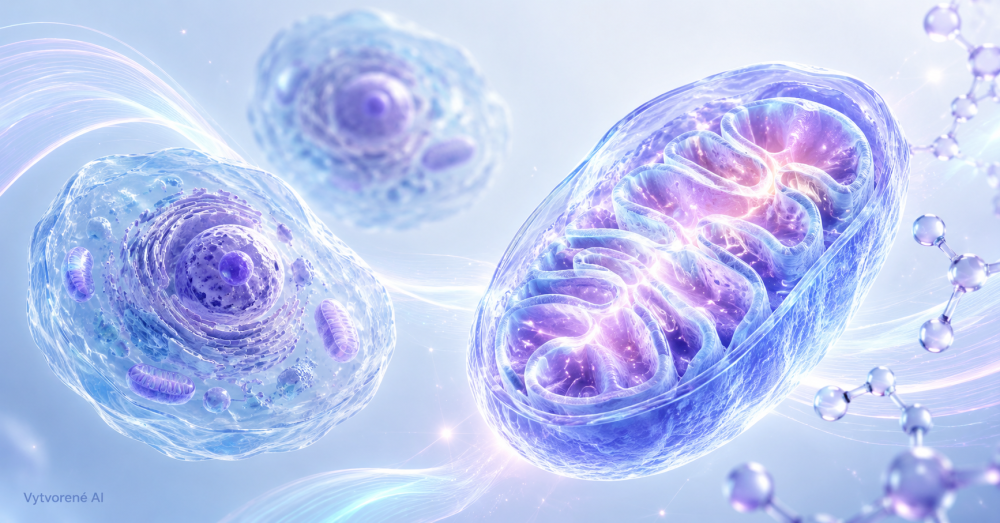
01 · Mitochondria and Cellular Energy
Mitochondria convert energy from nutrients into a form the cell can use – primarily ATP.
The cell’s energy currency.
The respiratory chain and oxygen.
Mitochondria’s own DNA.
Regulation of cell death.
What are mitochondria?
Mitochondria are cellular organelles with their own DNA. They contribute to ATP production, nutrient processing, calcium regulation and signals that influence cell survival. Their number and activity vary with the tissue and its needs.
ATP: energy the cell can use
ATP is a molecule that transfers energy for many cellular processes. Mitochondria produce it mainly through oxidative phosphorylation. Another source of ATP is glycolysis, which takes place in the cytoplasm.
Your perceived energy level or fatigue alone cannot tell you whether your mitochondria are functioning properly.
The Krebs cycle and oxidative phosphorylation
Fatty acid beta-oxidation, the Krebs cycle and the respiratory chain are key mitochondrial processes involved in nutrient metabolism and ATP production.
Beta-oxidation
Fatty acids are broken down and their energy enters mitochondrial metabolism.
The Krebs cycle + OXPHOS
The Krebs cycle generates the reduced electron carriers NADH and FADH₂. Their energy is used in the respiratory chain to create a proton gradient that drives ATP production. Oxygen is the final electron acceptor.
Mitochondria have their own DNA
Mitochondria contain their own mitochondrial DNA (mtDNA). Its presence is linked to their endosymbiotic origin.
Which cells have many mitochondria?
Many mitochondria
Heart and skeletal muscle cells, neurons and liver cells have high energy demands.
Red blood cells
Mature red blood cells lack mitochondria, so they do not consume the oxygen they carry.
Apoptosis and calcium regulation
Mitochondria contribute to the intrinsic pathway of apoptosis – regulated cell death. Permeabilisation of the outer mitochondrial membrane can release cytochrome c and activate apoptotic signalling.
Read more: cytochrome c, the apoptosome and caspases
Once released into the cytoplasm, cytochrome c binds to APAF-1 and helps assemble the apoptosome. This activates caspase-9 and then effector caspases. It is one of the best-studied mechanisms of mitochondrial apoptosis.
Mitochondria also help regulate cellular calcium, which is important for muscle contraction, nerve signalling and the activity of many enzymes.
Mitochondria and oxidative stress
Cellular metabolism also produces reactive oxygen species (ROS). At appropriate levels, they can act as signals; when the balance is disturbed, they can contribute to cellular damage.
Oxidative stress alone is neither a diagnosis nor a reason to take high-dose supplements without appropriate advice.
What does mitochondrial dysfunction mean?
It means disruption of one or more mitochondrial functions, such as ATP production or cellular signalling. The term describes a biological phenomenon; it does not, by itself, identify the cause of symptoms or establish a specific diagnosis.
Research also examines mitochondrial division and fusion, and the removal of damaged mitochondria through mitophagy. Findings from cell experiments cannot automatically be translated into treatment for people.
What supports overall health and metabolism?
Regular appropriate physical activity, sufficient sleep, a varied diet and management of existing conditions support overall health. Lifestyle changes should not be presented as a treatment for mitochondrial disease.
If a doctor diagnoses a mitochondrial disease, further care depends on the specific cause and specialist assessment.
Mitochondria and cancer: where does basic biology end and research begin?
Mitochondria participate in energy metabolism, apoptosis and signalling, making them important in cancer biology research. However, it is incorrect to claim that damaged mitochondria are the sole cause of all cancers.
Frequently asked questions
Are mitochondria only the cell’s powerhouses?
No. In addition to producing ATP, they contribute to metabolism, calcium regulation, heat production and apoptosis.
Do all cells have mitochondria?
No. Mature red blood cells do not have mitochondria.
Does fatigue automatically mean a mitochondrial problem?
No. Fatigue has many possible causes and cannot automatically be explained by mitochondrial dysfunction.
Are mitochondria the sole cause of cancer?
No. They are an important part of cancer biology, but cancer is a complex and heterogeneous group of diseases.
Scientific sources
Scientific reviews explain cellular mechanisms. On their own, they do not demonstrate the effectiveness of a particular supplement or treatment.
Show scientific sources