

 Slovensky (EUR)
 Česky (CZK)
 Magyar (HUF)
 Slovenščina (EUR)
 Deutsch (EUR)


03. Mitochondria and Ageing — What Science Is Exploring About Cellular Energy and Longevity
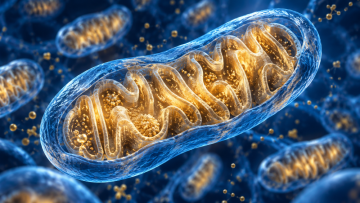

Mitochondria need more than just “fuel”.
Discussions of longevity often feature terms such as “mitochondrial optimisation”, “mitochondrial renewal” or “energy at the cellular level”. But what do they mean in scientific research?
This article focuses on mitochondria during ageing: their maintenance, adaptation and how scientists test possible interventions. We also explain why a favourable laboratory result does not yet demonstrate a longer life.
Cellular energy and renewal: why mitochondria matter
Mitochondria convert energy from nutrients into ATP, which cells use to do their work. They help provide the conditions for muscle activity, nerve signalling and tissue renewal. Healthy ageing depends on both their performance and ongoing maintenance.
Human research shows that muscle mitochondria can respond to training even in later life. Scientists are also studying photobiomodulation – the effects of red and near-infrared light on cellular processes. Below, we explain what has been observed and what these findings mean. [3] [7] [8]

1. ATP: energy the cell can use
ATP (adenosine triphosphate) is a molecule that supplies energy for cellular activity. Cells continually produce and use it – for example, for muscle work, protein production, transport across membranes and repairs to their components.
A series of reactions called the respiratory chain takes place in mitochondria. It transfers electrons obtained from processing nutrients, with oxygen involved at the end. This creates differences in proton concentration and electrical charge across the inner membrane. The enzyme ATP synthase uses this difference to produce ATP. In simple terms, the mitochondrion converts energy from nutrients into a form the cell can use. [9]
2. Mitochondria are a dynamic part of the cell
Mitochondria are not a fixed collection of separate “power stations”. They change shape, merge and divide. These dynamics help cells respond to metabolic needs and stress. In addition to energy metabolism, mitochondria also contribute to cellular signalling. [1]
| Term | Simple explanation |
|---|---|
| Fusion | The merging of mitochondria and their membranes. |
| Fission | The division of mitochondria; part of network remodelling and quality control. |
| Mitophagy | Targeted breakdown of mitochondria, for example damaged ones, through cellular recycling. |
| Biogenesis | Production of new mitochondrial components and renewal or expansion of their network. |
These terms are related, but they do not describe the same process. Sources: [1], [2], [6].
3. Mitochondria and ageing: what can change?
Research examines changes in energy metabolism, mitochondrial DNA and quality-control mechanisms. The balance between maintaining existing components, removing damaged mitochondria and producing new ones is important. [6]
Mitophagy helps process damaged mitochondria. Scientists investigate how its disruption relates to ageing and disease, and whether this process can be usefully influenced. Findings must, however, be assessed in the context of the specific tissue, method and study type. [2]
More does not automatically mean better. The number of mitochondria, the amount of a particular protein and a tissue’s ability to use energy are different measures. The phrase “mitochondrial support” therefore explains little without specifying the outcome measured.
It is also inappropriate to describe ageing as a uniform “shutdown of mitochondria”. Differences between people, tissues and measurement conditions are part of the research question.
4. How can light affect mitochondria?
Photobiomodulation (PBM) uses light at selected wavelengths and doses to influence biological processes. For red and near-infrared light, researchers are particularly interested in the enzyme cytochrome c oxidase. It is part of the mitochondrial respiratory chain, known as complex IV, and helps transfer electrons to oxygen. [7]
In experiments with cultured nerve cells whose function had been impaired, scientists observed improvements in this enzyme’s activity and energy metabolism after illumination under certain conditions. This was not a study of treatment in humans. [7]
Another experiment in mouse nerve cells found that 810 nm light increased ATP content and mitochondrial membrane potential at lower doses tested. At higher doses, this favourable effect diminished or reversed. [8]
More light does not necessarily mean a greater effect. Wavelength, the dose reaching the tissue and the condition of the cells all matter. Cytochrome c oxidase is one important mechanism under investigation; other signalling processes may also contribute. The benefit of any particular application in humans needs to be assessed in clinical studies.
5. What does membrane potential mean?
It is the difference in electrical potential between the two sides of a membrane – in other words, the voltage across it. We need to distinguish the mitochondrial membrane from the membrane surrounding the whole cell.
- In a mitochondrion, the voltage is part of the difference that drives ATP production.
- At the cell surface, the voltage helps create the conditions for signal transmission, for example in nerves and muscles.
ATP supplies energy to ion pumps – proteins that move electrically charged particles across membranes. One example is the sodium–potassium pump. Together with ion channels, these pumps help maintain the appropriate differences between the inside of a cell and its surroundings. [9]
The aim is not to achieve a voltage that is “as negative as possible”. What matters is an appropriate value and controlled changes according to the cell type and what it is doing.
6. Energy and blood flow create conditions for renewal
Repairing damaged components, producing proteins and moving substances within a cell all use energy. ATP availability is therefore one condition for renewal. If energy metabolism is impaired, improving it may create more favourable conditions for these processes. This is also why photobiomodulation is being studied in relation to cell and tissue renewal. [7] [9]
Renewal also depends on nutrients, oxygen, local signals and the type of damage. Microcirculation means blood flow through the smallest vessels. It enables oxygen and nutrients to reach tissues and waste products to be removed.
What did a small blood-flow study find?
In a controlled study involving 20 healthy volunteers, local microcirculatory blood flow increased after the wrist was illuminated with 830 nm light. Responses varied with wavelength and initial skin temperature. With 633 nm light, an increase in median blood flow was not confirmed. [10]
The study showed a change in local blood flow under specific conditions. It did not measure ATP production and does not by itself demonstrate the whole process of regeneration or an extension of lifespan.
7. How do scientists determine whether an intervention changed anything?
Measuring cellular energy in research is not the same as a subjective feeling of vitality. Human studies combine laboratory markers, muscle assessments and functional tests. [3] [4]
| Measurement | What we can infer |
|---|---|
| Gene activity or substances produced during metabolism | A biological response does not necessarily mean better tissue function. |
| Mitochondrial respiration in a muscle sample | The result relates to a specific sample and experimental conditions. |
| Estimated maximal ATP production | This is not a measurement of “the whole person’s energy”. |
| Muscle endurance or a six-minute walk | A functional outcome does not demonstrate an extension of lifespan. |
8. Research from around the world: three human studies
These selected papers show why it is worth reading the full findings, including what was not confirmed. They are not an exhaustive review of all the evidence or a recommendation of any particular preparation.
Exercise: muscles can adapt even in later life
A study published in 2017 compared 12 weeks of different training regimens in younger and older people. Aerobic interval training and combined training improved aerobic capacity and mitochondrial respiration in skeletal muscle. With interval training, researchers also observed changes in mitochondrial proteins. [3]
What this means: muscle can respond to training even at an older age. However, the study did not measure an extension of lifespan, and it does not mean that an intensive regimen is suitable for everyone without adjustment to their health status.
Urolithin A: the result depended on the outcome measured
A randomised, double-blind study from 2022 included 66 adults aged 65–90 and lasted four months. Compared with placebo, no significant improvement was confirmed in the primary outcomes: six-minute walking distance and maximal ATP production in the hand muscle studied. [4]
After two months, some secondary muscle-endurance outcomes improved, and selected blood biomarkers also changed. This is a reason for further research, not evidence of universal “mitochondrial renewal” or a longer life. The small, specific group also limits how widely the results can be applied.
Nicotinamide riboside: changes in metabolites without a change in bioenergetics
In a small 2019 study, 12 older men received nicotinamide riboside (NR) or placebo in a double-blind crossover design. After 21 days, researchers recorded changes in NAD+-related substances and a reduction in some inflammatory signalling proteins in the blood, but found no improvement in mitochondrial bioenergetics in muscle. [5]
This example shows the difference between the availability of a substance to tissue and a functional benefit. The short duration and small number of participants do not allow broad conclusions. Findings for NR also cannot automatically be applied to NMN or all products labelled “NAD+”.
9. What can we do for mitochondria in everyday life?
A good practical foundation is regular activity adapted to fitness and health status. Walking, cycling or other aerobic activity trains muscles’ ability to use oxygen and nutrients. Strength training helps maintain muscles and their function. Increase the workload gradually and allow time for rest. [3]
Adequate nutrition, good sleep and attention to vascular health, blood pressure and blood sugar also matter. With persistent fatigue, it is important to find its actual cause. Fatigue alone cannot tell us whether the cause is a mitochondrial problem, anaemia, a sleep disorder or something else.
For supplements and light-based approaches, look at what has actually been demonstrated and in whom. A change in ATP in a cell culture, better muscle endurance and a longer life are different outcomes. In everyday life, maintaining performance, resilience and independence is particularly important.

10. What does “mitochondrial optimisation” mean?
In articles and advertising, this expression can mean very different things. It is useful to replace a general promise with specific questions:
- What improved? A laboratory parameter, physical performance or a health outcome?
- In whom? In a cell culture, in animals or in a precisely defined group of people?
- Compared with what? Placebo, another intervention or only the participants’ own baseline?
- For how long? Is this a brief response or a persistent change?
- What was not confirmed? Does the headline reflect the study’s main question?
Research on cellular energy is not automatically research on longevity. To talk about a longer life in good health, we need evidence of that outcome, not just a biologically interesting mechanism.
What will matter in future research?
Larger and longer studies, validation in different groups and links between biomarkers and human function. Another important question is who benefits from an intervention, and whether the same approach helps people with different starting conditions.
Frequently asked questions
Does more ATP automatically mean better health?
ATP is essential for cells. However, what matters is that it is available where and when it is needed and that regulation works properly. A single better laboratory measure does not describe a person’s overall health.
How can light influence cellular energy?
Is mitophagy the same as autophagy?
Mitophagy is a form of selective autophagy targeting mitochondria. Autophagy is a broader term for the cellular processing of a cell’s own components.
Do more mitochondria automatically mean more energy?
Not necessarily. Their function, quality and regulation, as well as the tissue’s needs, matter. Their number alone does not capture all these properties.
Does an increase in NAD+ prove rejuvenation?
A change in NAD+ or related metabolites alone does not demonstrate rejuvenation or an extension of lifespan. Functional and health outcomes also need to be assessed.
Can fatigue tell me that my mitochondria are damaged?
The feeling of fatigue alone is not a test of mitochondrial function. Persistent or unexplained symptoms require individual assessment; this article is not intended for diagnosis.
Are the substances mentioned recommendations for use?
No. We describe them as subjects of specific research. The results cannot be applied to any arbitrary supplement, dose or combination.
Where can I find a simple explanation of ATP?
In our introductory article Mitochondria and cellular energy, which explains the basic concepts and how mitochondria function.
Sources and further reading · 10 sources
- Tábara L.-C., Segawa M., Prudent J. Molecular mechanisms of mitochondrial dynamics. Nature Reviews Molecular Cell Biology. Published online in 2024; 2025 volume. Review article. Publication.
- Mitophagy in human health, ageing and disease. Nature Metabolism (2023). Review article. Publication.
- Robinson M. M. et al. (2017). Enhanced Protein Translation Underlies Improved Metabolic and Physical Adaptations to Different Exercise Training Modes in Young and Old Humans. Cell Metabolism. Human study. Publication.
- Effect of Urolithin A Supplementation on Muscle Endurance and Mitochondrial Health in Older Adults: A Randomized Clinical Trial. JAMA Network Open (2022). Randomised human study. Publication.
- Elhassan Y. S. et al. (2019). Nicotinamide Riboside Augments the Aged Human Skeletal Muscle NAD+ Metabolome and Induces Transcriptomic and Anti-inflammatory Signatures. Cell Reports. Randomised crossover human study. Publication.
- Mitochondria in health, disease, and aging. Review article (2023). Publication.
- Wong-Riley M. T. T. et al. (2005). Photobiomodulation directly benefits primary neurons functionally inactivated by toxins: role of cytochrome c oxidase. Journal of Biological Chemistry. Experiment in cultured nerve cells. Publication.
- Sharma S. K. et al. (2011). Dose response effects of 810 nm laser light on mouse primary cortical neurons. Lasers in Surgery and Medicine. Experiment in mouse nerve cells. Publication.
- NobelPrize.org (1997). The Nobel Prize in Chemistry 1997. ATP synthase and sodium–potassium ATPase. Publication.
- Gavish L. et al. (2020). Microcirculatory Response to Photobiomodulation—Why Some Respond and Others Do Not: A Randomized Controlled Study. Lasers in Surgery and Medicine. Controlled study in 20 healthy volunteers. Publication.
Author’s note: This is an educational selection of findings, not a systematic review of all the literature. It does not replace individual health advice or recommend specific products. New findings will be added with an update date.