

 Slovensky (EUR)
 Česky (CZK)
 Magyar (HUF)
 Slovenščina (EUR)
 Deutsch (EUR)


How to Use Stimlight: Attachments, Modes and Safety Instructions
KINGRAY GUIDE · BIOLAMPS AND LIGHT
How do you use the STIMLIGHT biolamp correctly?
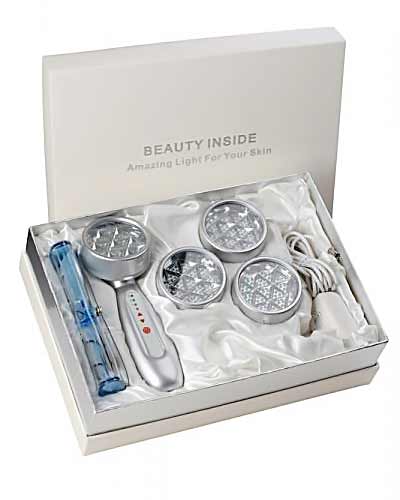
STIMLIGHT is a handheld LED device with interchangeable attachments and three light modes. Before switching it on, fit the correct attachment, prepare clean, dry skin and eye protection, and choose the distance and duration specified in your device's manual. [1]

Hello! I will guide you through STIMLIGHT attachments and settings, including what to check before switching it on.
Contents and articles about biolamps
The specifications and times below come from the STIMLIGHT_002 manual (2018), pages 10–17. The manual supplied with your particular device takes precedence; check any different version or unclear setting with the seller before use. [1]
Which attachments and wavelengths does STIMLIGHT use?
The version described uses four visible colours and near-infrared light. These are light attachments, not a universal colour chart for treating diseases. [1]
Simply put: Wavelength describes the light. On its own, it does not establish the dose, the depth of an effective exposure or the outcome.
What do 2 Hz, 20 Hz and continuous light mean?
Mode 1 · 2 Hz
Light pulses approximately twice per second. [1]
Mode 2 · 20 Hz
Light pulses approximately twenty times per second. [1]
Mode 3 · continuous light
Light is emitted without intentional pulsed interruption. [1]
Simply put: Hz describes pulse frequency, not power. A higher number does not automatically mean a stronger or more suitable mode.
How do you change the attachment and start using it?
Switch off and change the attachment.
Release it using the white button beside the attachment. Fit the upper part of the new attachment towards the contacts first, then gently press its lower part into place; do not force it. [1]
Prepare your skin and eyes.
Skin should be clean and dry. Use the protective goggles specified in the manual and do not look directly into the light source. [1]
Check the position and distance.
The manual for this version specifies an approximately perpendicular position, 1.5–2 cm from the skin. If your manual gives different instructions, follow those. [1]
Switch on, select a mode and monitor the time.
The power button controls operation, while the arrow buttons select the mode. Use the duration specified for that attachment and mode, then switch the device off. [1]
How long should an application last, and why do times differ?
One duration does not apply to every attachment and mode. The following values reproduce the cosmetic application table in the 2018 manual; they are not an individual medical treatment plan. [1]
Cosmetic application times in the manual (2018)
Blue
2 Hz15 min
20 Hz12 min
continuous10 min
Green
2 Hz12 min
20 Hz10 min
continuous8 min
Yellow
2 Hz10 min
20 Hz8 min
continuous5 min
Red
2 Hz12 min
20 Hz10 min
continuous6 min
The infrared attachment is not included in this cosmetic table. Do not infer its duration from the red attachment. Do not add the times together for one session or extend or repeat an application without checking the instructions.
Simply put: Choose the attachment and mode first, then look up the matching duration in the relevant manual.
When should you avoid STIMLIGHT, and how do you protect your eyes?
- The manual advises against use during pregnancy or breastfeeding, in people with cancer, and when taking medicines that cause photosensitivity. [1]
- Observe the restrictions concerning fever, acute infection or an abscess, and application over the thyroid area. If anything is unclear, postpone use and consult a doctor. [1]
- For epilepsy, an eye condition or use on a child, suitability needs individual assessment first. An adult should operate the device. [1]
- Do not shine the light directly into the eyes. Closed eyelids are not a substitute for the protective goggles required by the manual. [1]
- Stop using the device if you experience burning, pain, marked redness or visual symptoms, or if the attachment overheats. Seek medical advice for persistent symptoms. [1]
How do you clean it, and what if no light appears?
How should I clean STIMLIGHT?
Switch it off and disconnect the power. Clean the surface with a slightly damp cloth and a cleaning agent permitted by the manual, then dry it. Do not immerse it in water, and keep liquids away from the contacts. [1]
Do I need a gel or cream?
The manual described here specifies clean, dry skin; a gel is not automatically required. Add cosmetics or medicated ointments only if the instructions explicitly allow the combination or it has been checked with a professional. [1]
What if the attachment does not light up?
Switch off and check the power supply and attachment fitting. Infrared light at 850 nm may not be visible to the naked eye, so never test the device by looking into the source. Contact servicing support if you are unsure. [1]
Can I use every colour each day?
Multiple applications increase total exposure. Using all colours in sequence is therefore not automatically an appropriate routine; frequency and combinations must follow the manual for your model. [1]
Why do the settings matter?
Photobiomodulation research considers wavelength, intensity, time and mode. Results from another device do not establish the same effect for STIMLIGHT. [2]
Biolamp effects and the limits of research →References
- STIMLIGHT_002_oz.pdf, STIMLIGHT manual (2018), pp. 10–17: restrictions, controls, attachment changes, distance and cosmetic application times.
- Zein, Selting and Hamblin (2018): review of photobiomodulation light parameters. Journal of Biomedical Optics 23(12).
This article is educational. It does not replace a medical assessment or individual clinical advice for health concerns.