

 Slovensky (EUR)
 Česky (CZK)
 Magyar (HUF)
 Slovenščina (EUR)
 Deutsch (EUR)


Light Devices – Laser, LED, Infrared, RLT & Biolamps - Technologies and functions - Infra 808nm

KINGRAY · TECHNOLOGY · WELLNESS
Light for your wellness ritual.
Discover light-based wellness devices for home use, including LED belts, panels, local laser devices, nasal applicators and STIMLIGHT biolamps. Choose a device with red, blue or infrared light (RLT) according to the target area, wavelength and application method.
These devices are intended to support home wellness and recovery and are not medical devices. Always read the manufacturer’s instructions before first use.
How to choose
Choosing starts with the details.
Compare the light source, wavelength, design and application method. Always check the intended use, recommended duration of use and safety instructions in the specific manufacturer’s manual.
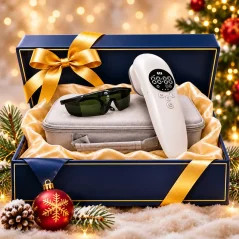
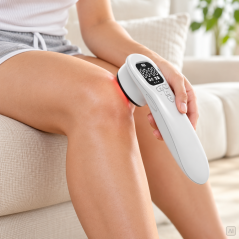
COZ T03 – red and infrared light device, 650 and 808 nm, with display
Articles
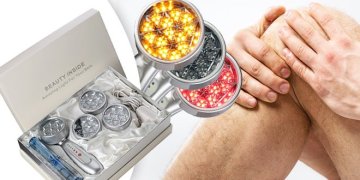
STIMLIGHT Light Therapy Lamp in Your Home Routine: How Often to Use It and Set It Up for the Whole Family
Discover how to incorporate the STIMLIGHT light therapy lamp into your whole family's daily routine. In this article, you will find a practical guide on how often to use it, why blue light belongs in the first half of the day while red and infrared are best for the evening, as well as how to properly clean and store the heads.
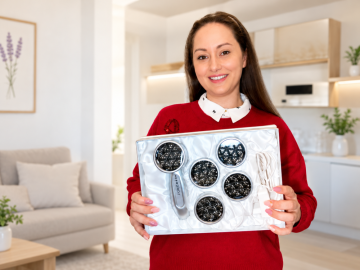
Light therapy lamps and their uses: Colour filters, effects and comparison with infrared heat lamps (2026)
A practical guide to using a light therapy lamp and colour filters: find out when to choose red, blue, green or yellow light, how it differs from an infrared heat lamp, and when not to use it.
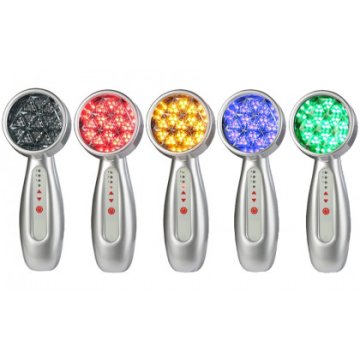
LED lamp or laser for home use? Compare four devices
Compare the STIMLIGHT Biolamp, COZ T03 local laser, KINGRAY Light nasal laser, and BioWave platform. Discover the differences in technology, application, and choosing a home device.
Light guide: photobiomodulation, lasers, LEDs and infrared light
A biolamp, nasal applicator or local red and infrared light?
The application method and intended use of the specific model are key. Compare STIMLIGHT, KINGRAY Light, COZ T03 and BioWave, then explore articles on their use, technologies and related research.
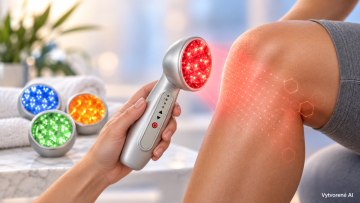
STIMLIGHT 850 nm Light Therapy Lamp: Infrared Head and Its Use
The 850 nm infrared head expands the capabilities of the STIMLIGHT light therapy lamp into the invisible part of the spectrum. Discover the difference between red and infrared light, what the technical parameters mean, and what to keep in mind before use.
How to choose a light device: what is the difference between LED, RLT, laser and biolamps?
Light-based wellness devices use specific parts of the light spectrum (most commonly red light at 630–660 nm and near-infrared light at 808–880 nm) for targeted home care, relaxation and recovery. Although they all use light, they differ in design, coverage area and method of use.
Quick comparison of light technologies
| Device type | Light source and spectrum | Application method | Who it is suitable for |
|---|---|---|---|
| RLT LED belts and panels | Red (660 nm) and near-infrared light (850–880 nm) | Placement against or illumination of larger areas (back, lower back, joints, muscles) | For users seeking convenient recovery over larger areas after exercise or a demanding day. |
| Local laser devices | Coherent laser beam (e.g. 650 nm and 808 nm) | Point or local application to smaller target areas according to the programme | For those who prefer precisely targeted local application with a compact device. |
| Biolamps (e.g. STIMLIGHT) | Broad-spectrum polarised light (red, blue, green, yellow + IR 850 nm) | Directed locally at the skin or body from a specified distance | For the whole family as a versatile home device with interchangeable colour filters. |
| Nasal applicators (KINGRAY Light) | Low-intensity red light at 650 nm | Special applicators designed for a gentle daily routine | For users seeking a compact device for regular, short sessions. |
What should you consider when choosing?
- Wavelength (nm): Red light (around 650–660 nm) is commonly used for surface and skin care, while the near-infrared spectrum (808–880 nm) is popular for deeper muscle and joint recovery.
- Power supply and ergonomics: Flexible LED belts allow freedom of movement or comfortable attachment to the body, while desktop lamps and handheld lasers offer precise targeting.
- Safety and instructions: Before each use, check the recommended exposure time, distance from the skin and list of contraindications in the manufacturer's supplied manual.