

 Slovensky (EUR)
 Česky (CZK)
 Magyar (HUF)
 Slovenščina (EUR)
 Deutsch (EUR)


Biohacking and weight loss. What works and what science is studying
Red light, glucose monitoring, berberine and intermittent fasting often come up in conversations about weight loss. What have studies in people found, and what can we take from them in everyday life?
The strongest support for weight management is for an eating pattern that allows a lower energy intake over the long term, together with regular activity. Sleep and stress management help sustain an everyday routine. For sensors, light or supplements, what matters is whom researchers studied, what they measured and how long they followed participants. [1, 2]
A family memory
Grandmother knew nothing about biohacking. She lived to 96.
She got up in the morning, opened the windows, tidied up and moved naturally as she did so. She made herself agrimony tea every day. When the weather was fine, she enjoyed sitting in the sunshine, with her dog for company.
She ate what she fancied and knew how to enjoy her food.
Bacon, cod liver and fresh pork cracklings occasionally appeared on the table. In later life, she no longer worried about weighing a kilo more or less. These are the small things through which our family remembers her.
An old family recording also shows a BioQuant nasal laser applicator with a red cord, from the time when we manufactured these devices. BioQuant is no longer part of the KINGRAY range.
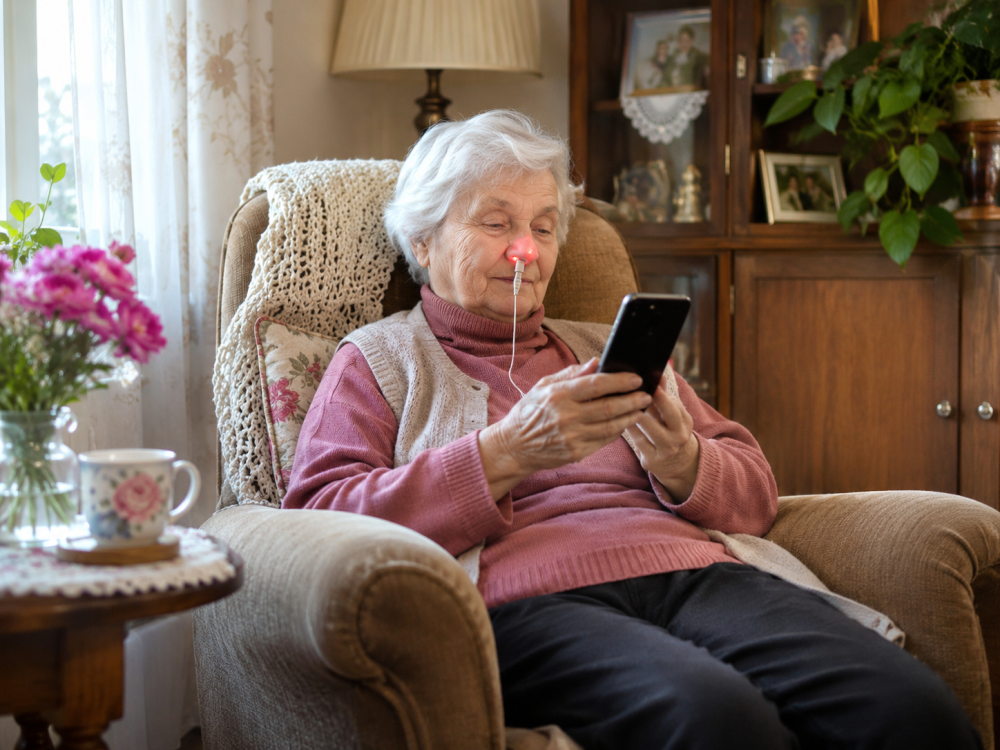
When she was around eighty, her cardiologist was worried about her heart because of rhythm disturbances. She lived approximately another sixteen years. An unfortunate fall ended her life. We cannot determine from a family memory everything that contributed to her longevity.
A family video of Grandmother
Simply put: The memory of Grandmother captures her everyday life. We study the effects of individual habits through research.
What does biohacking mean for weight loss?
Biohacking is a broad term for deliberate changes to habits or surroundings and trying different technologies. For some, it means a regular morning walk. Others track their steps or glucose. When the goal is weight loss, it is worth first understanding hunger and satiety signals and finding a routine that works during an ordinary working week too. [1]
Food, movement and daily rhythms
For weight loss, the crucial factor is taking in less energy than the body uses over the long term. How to achieve this difference depends on your health and circumstances. Meals with protein and a source of fibre may help with satiety. Read more about how meal composition affects appetite in the article on protein, fibre and GLP‑1. [1, 2]
Resistance training during weight loss helps preserve fat-free mass and improve strength. This matters in practical terms even when the scales show a similar decrease to dietary changes alone. For help fitting training into the week, see the article on exercise, muscles and metabolism. [3]
Time-restricted eating can make planning the day easier. Two year-long randomised trials found no additional weight loss compared with calorie restriction. If tiredness or stress often leads you to eat, see also the links between sleep, stress and hunger. [4, 5]
Simply put: Choose a routine you can maintain and remember your muscles when losing weight.
Watches, glucose sensors and muscle stimulation
Watches and step counters. A review of 31 studies in people with overweight or obesity and chronic diseases found benefits in some programmes using activity trackers. In practice, a step count is particularly useful when it helps you adjust your day. [6]
Continuous glucose monitoring (CGM). A sensor shows how glucose changes throughout the day. A review of 23 studies in people without diabetes found improvements in some glucose measures, while BMI did not change significantly compared with controls. For questions about diagnosis, see the article on blood glucose and testing for insulin resistance. [7]
Whole-body electrical muscle stimulation (EMS). A review of 26 studies with 1,183 participants found changes in muscle strength, muscle mass and body fat. It investigated specific whole-body EMS training protocols. A home or cosmetic device would need separate studies to demonstrate its effects. [8]
Simply put: Measurement shows you a trend. What matters most is what you do with that information.
Does red light help with weight loss?
Daylight, especially in the first part of the day, helps set the body clock. Photobiomodulation (PBM) is a different procedure. It uses selected wavelengths of light, often red or near-infrared, to investigate and influence tissue responses. [9, 10]
A review of 11 randomised studies with 569 participants found favourable changes in weight, BMI and waist circumference with the procedures studied. The pooled analysis did not show a statistically significant change in body fat percentage. The length of follow-up and differences between procedures limit what these results can tell us about long-term weight loss. [10]
Follow-up in the included studies lasted 1 to 4 months. The authors rated the certainty of the evidence for weight and BMI as low; body weight itself was assessed in 9 studies with 477 participants. [10]
Another review of low-level laser light focused mainly on body circumferences. The US FDA cautions that the effects of non-invasive body contouring may be temporary and that these procedures do not treat obesity or reduce body weight. For a particular device, it is worth checking its intended purpose and whether that exact model has been studied clinically. [11, 12]
Simply put: Research into some light-based procedures continues. Long-term fat loss remains an open question.
Saunas, cold exposure and various body-contouring procedures are also often included under biohacking. A sense of recovery, short-term weight change and long-term fat loss are different outcomes. In a sauna, the number on the scales may change simply because of sweating. [13, 12]
What do we know about berberine and other substances?
Supplement discussions often focus on what a substance does inside a cell. What human studies have shown matters more to the reader. The form used, the population studied, the size of the difference and safety all matter. [14, 15]
Could berberine help with weight loss?
Some research found a small difference in weight. A larger study from 2026 provided a more restrained picture. [16, 17]
A review of 23 publications
The average difference in body weight was −0.88 kg compared with control groups. Doses, follow-up periods and participant groups varied. [16]
Six months, 337 adults
In people with obesity and metabolic dysfunction-associated fatty liver disease without diabetes, no significant difference in weight, visceral fat or liver fat was found compared with placebo. [17]
Our view. The results give reason to continue studying berberine. There is still little certainty about whom it might help with weight management and whether the effect would last. More about the proposed mechanisms is explained in the article Berberine and GLP‑1. [16, 17]
Read the label. Check the product's form, the declared amount of berberine in the daily dose and the other ingredients. For a plant powder, a standardised extract and berberine alone, the same number of milligrams can refer to different things. [16, 15]
Safety. Berberine can cause digestive problems and interact with medicines. It is not recommended during pregnancy or breastfeeding. If you take medicines, discuss its suitability with a doctor or pharmacist. [15]
The French agency ANSES recommends that children and adolescents, pregnant and breastfeeding women, and people with diabetes or liver or heart disease do not consume supplements containing berberine. It also warns of numerous interactions with medicines. [29]
Simply put: Study findings for berberine differ. The form, composition and medicines a person takes also matter.
L-carnitine, chromium, green tea and other substances
L-carnitine and chromium. L-carnitine plays a role in transporting fatty acids into mitochondria. A meta-analysis of 37 randomised studies found a modest weight difference. For chromium, the EU permits a claim about normal macronutrient metabolism and normal blood glucose levels when the food meets the conditions of use. Chromium studies in weight loss show at most a small effect with limited practical significance. Details are in the article on chromium and L-carnitine. [18, 19, 20]
Green tea and capsaicin. Reviews of clinical studies found small average differences in weight. Ordinary tea and concentrated extracts differ in composition and safety profile. Cases of liver damage have also been reported with green tea extracts. A separate article covers research on gymnema, green tea and garcinia. [21, 22, 14]
Glucomannan. This is a soluble fibre. The EU permits a claim that it contributes to weight loss as part of an energy-restricted diet, with precisely specified intake and conditions of use. These include sufficient water and a warning for people with swallowing difficulties. [19]
Ashwagandha and sleep. A small study involving 52 people under long-term stress mainly assessed stress and food cravings. Researchers assessed weight change as a secondary outcome. Ashwagandha can interact with medicines, including thyroid medicines. It should be avoided during pregnancy and breastfeeding. [23, 24]
Cellular energy and longevity. Coenzyme Q10, PQQ and creatine are discussed in relation to cellular energy and performance. NR, NMN, resveratrol and spermidine appear in ageing research. When reading findings, check whether the authors measured a person's weight, sporting performance or only a laboratory marker.
Simply put: For every substance, first check exactly what researchers measured and in whom.
How to read study findings
Reports on weight loss often place kilograms, centimetres and glucose values side by side. Each figure answers a different question.
Body weight
The number on the scales is influenced by fat, muscle mass and water.
Waist circumference
Shows whether circumference is changing at the measurement site. Estimating the proportion of body fat requires more information.
Blood glucose after a meal
Shows how blood glucose changes after eating.
Selected clinical study findings
| What was studied | What was found |
|---|---|
| Resistance training during dietary changes | A review of 25 studies found better preservation of fat-free mass and greater fat loss. Overall weight loss was similar. [3] |
| An eight-hour eating window | In a year-long study, weight fell by an average of 4.61 kg more than in the control group. The difference compared with calorie restriction was not statistically significant. [4] |
| Walking after meals | In a study involving 41 people with type 2 diabetes, post-meal glucose was lower with short walks after main meals than with one daily walk without specified timing. [25] |
| Photobiomodulation | A review of 11 studies found favourable changes in weight and waist circumference. A more pronounced change in body fat percentage was not statistically confirmed. [10] |
| L-carnitine | The average weight difference compared with controls was −1.21 kg. No significant difference was found in several other measures, including waist circumference. [18] |
| Capsaicin | A review of 15 studies in people with overweight or obesity found average differences of −0.51 kg and −1.12 cm at the waist compared with control groups. [22] |
Simply put: For each result, always check what was measured, what researchers compared it with and how long the study lasted.
Five simple steps for an ordinary day
- Morning light When possible, spend a little time outdoors in the first part of the day. Daylight helps set the sleep–wake rhythm. [9]
- Walking after a meal If your health allows, try a short walk after whichever meal makes it easiest for you. [25]
- Regular sleep Try going to bed and getting up at roughly the same times. [9]
- Food that satisfies you Add a source of protein and fibre. Practical examples include yoghurt with oats and fruit, or lentils with vegetables. [1, 2]
- One habit to start with Choose a step you can repeat even on a busy day. [2]

Simply put: You can start with one short walk, more regular sleep or a meal that keeps you more satisfied.
18 questions about biohacking and weight loss
Getting started with biohacking (6)
What is biohacking, and is it suitable for beginners?
It is a broad term for deliberate changes to habits and surroundings. More regular sleep, movement or a change to meals is enough to get started. [2]
Can you lose weight without starving yourself?
Yes. Energy intake can also be reduced by adjusting portions and meals so that they are satisfying and fit into your life. Very low energy diets belong within a professionally supervised programme. [1]
Do I have to count every calorie to lose weight?
Counting calories is one option. Some people prefer short-term tracking; others prefer a simpler structure for meals and portions. [1, 4]
Is biohacking science or marketing?
The name covers both well-supported habits and commercial promises. For each approach, check whether its benefits were tested in people and exactly what was measured.
Why are mitochondria mentioned in biohacking?
Mitochondria help cells obtain usable energy from nutrients. When people discuss “activating mitochondria”, it is worth asking whether the study also measured weight or body composition.
When does tracking habits become a burden?
Notice whether the data help you make decisions or become a source of anxiety. If you find that tracking affects your relationship with food or exercise, it is all right to seek support. [1]
Light, sleep, food and movement (7)
Does morning light help with weight loss?
Morning daylight helps set the sleep–wake rhythm. Its direct long-term effect on fat loss remains unconfirmed. [9]
What is photobiomodulation?
It involves using selected wavelengths of light to influence tissue responses. Convincing evidence of a long-term effect on weight management is still lacking. [10]
Can red or infrared light reduce waist circumference?
Some precisely defined procedures reduced circumference in studies. The device studied, how long the effect lasted and whether body fat was also measured all matter. [11, 12]
Does walking after meals help reduce the rise in glucose?
In a randomised study in type 2 diabetes, short post-meal walks helped moderate the rise in blood glucose. The study assessed post-meal glucose, so it cannot tell us the effect on long-term weight. [25]
Does the order of vegetables, protein and carbohydrates matter?
In short-term experiments, the post-meal glucose response was often lower when participants ate the carbohydrate portion last. There is little evidence about long-term effects on weight. [26]
Is intermittent fasting suitable for everyone?
Some people prefer a fixed meal schedule. Fasting may be unsuitable during pregnancy and breastfeeding, with eating disorders and with some diabetes treatments. If you are being treated for diabetes, discuss it with your doctor first. [27]
Will a cold shower help me lose weight through brown fat?
Cold can briefly increase energy expenditure and brown fat activity. Studies of short-term cooling cannot establish the long-term effect of cold showers on weight. [28]
Health, supplements and longevity (5)
Can biohacking help you live to a hundred?
Many factors affect lifespan. Movement, nutrition and sleep matter for health at every age. [2]
What do lifespan and healthspan mean?
Lifespan means the total length of life. Healthspan refers to the years spent in good health with the ability to function in everyday life preserved.
Which habits can I try without equipment?
A more regular wake-up time, time in daylight and short walks according to your own abilities. [2, 9]
Can supplements “burn fat”?
Check whether the study measured body fat percentage, weight change or only a laboratory marker. Human findings and the safety of the form used also matter when assessing a supplement. [14]
What do data from watches and rings mean?
A step count can help track changes in activity. Measurements such as heart-rate variability (HRV) make sense when assessed in a wider context, alongside how you feel and what you did that day. [6]
Where should you start when weight loss is difficult?
Start with what is hardest for you at the moment. It may be evening hunger, lack of movement, sleep or eating in response to emotions. If weight does not respond to changes over the long term or health problems arise, you can review your health, medicines and whether further tests would be useful with a doctor. [2, 1]
Scientific sources
The numbers beside claims lead to the relevant study, professional guideline or safety review.
- NICE. Overweight and obesity management. NG246. Physical activity and diet.
NICE NG246. Diet and physical activity in the management of overweight and obesity. Open source ↗ - CDC. Steps for Losing Weight. 17 January 2025.
CDC. Practical steps for weight management (2025). Open source ↗ - Binmahfoz A, Dighriri A, Gray C, Gray SR. Effect of resistance exercise on body composition, muscle strength and cardiometabolic health during dietary weight loss in people living with overweight or obesity: a systematic review and meta-analysis. BMJ Open Sport Exerc Med. 2025;11(3):e002363. DOI: 10.1136/bmjsem-2024-002363.
BMJ Open Sport & Exercise Medicine (2025). Systematic review of resistance training during weight loss. Open source ↗ - Lin S, et al. Time-Restricted Eating Without Calorie Counting for Weight Loss in a Racially Diverse Population: A Randomized Controlled Trial. Ann Intern Med. 2023;176(7):885–895. DOI: 10.7326/M23-0052.
Lin et al., Annals of Internal Medicine (2023). A year-long randomised trial of time-restricted eating. Open source ↗ - Liu D, et al. Calorie Restriction with or without Time-Restricted Eating in Weight Loss. N Engl J Med. 2022;386(16):1495–1504. DOI: 10.1056/NEJMoa2114833.
Liu et al., New England Journal of Medicine (2022). Calorie restriction with and without an eating window. Open source ↗ - McDonough DJ, Su X, Gao Z. Health wearable devices for weight and BMI reduction in individuals with overweight/obesity and chronic comorbidities: systematic review and network meta-analysis. Br J Sports Med. 2021;55(16):917–925. DOI: 10.1136/bjsports-2020-103594.
McDonough et al., British Journal of Sports Medicine (2021). Review of studies of wearable activity trackers. Open source ↗ - Liao X, et al. Continuous glucose monitoring in non-diabetic populations: a systematic review of observational and interventional studies with meta-analysis. Eur J Med Res. 2026;31:397. DOI: 10.1186/s40001-026-03920-0.
Systematic review (2026). Continuous glucose monitoring in people without diabetes. Open source ↗ - Rodrigues-Santana L, et al. The effects of whole-body muscle stimulation on body composition and strength parameters: A PRISMA systematic review and meta-analysis. Medicine (Baltimore). 2023;102(8):e32668. DOI: 10.1097/MD.0000000000032668.
Medicine (Baltimore) (2023). Meta-analysis of whole-body electrical muscle stimulation. Open source ↗ - CDC. About Sleep and Your Heart Health. 15 May 2024.
CDC. Sleep, regular routines and daylight (2024). Open source ↗ - Sun W, Zhuang Z, Yang L, Zhou J, Zhang L, Yuan J. Effectiveness of photobiomodulation therapy in improving health indicators in obese patients: a systematic review and meta-analysis of RCTs. BMC Complement Med Ther. 2025;25:133. DOI: 10.1186/s12906-025-04874-2.
BMC Complementary Medicine and Therapies (2025). Meta-analysis of photobiomodulation in obesity. Open source ↗ - Mustafa GA, et al. Low-level laser therapy for reducing body circumferences: a systematic review. Lasers Med Sci. 2025;40:534. DOI: 10.1007/s10103-025-04755-7.
Mustafa et al., Lasers in Medical Science (2025). Systematic review of low-level lasers and circumference measurements. Open source ↗ - FDA. Non-Invasive Body Contouring Technologies.
FDA. Non-invasive body contouring, effects and risks. Open source ↗ - Podstawski R, Boraczyński T, Boraczyński M, Choszcz D, Mańkowski S, Markowski P. Sauna-Induced Body Mass Loss in Young Sedentary Women and Men. ScientificWorldJournal. 2014;2014:307421. DOI: 10.1155/2014/307421.
The Scientific World Journal (2014). Short-term body weight change after sauna use. Open source ↗ - NIH Office of Dietary Supplements. Dietary Supplements for Weight Loss: Fact Sheet for Consumers.
NIH Office of Dietary Supplements. Weight-loss supplements, effectiveness and safety. Open source ↗ - NCCIH. Berberine and Weight Loss: What You Need To Know.
NCCIH. Berberine for weight loss and its safety. Open source ↗ - Elahi Vahed I, et al. The effect of berberine on obesity indices: a systematic review and meta-analysis. Int J Obes. 2026;50(1):53–73. Published online 27 November 2025. DOI: 10.1038/s41366-025-01943-x.
International Journal of Obesity (online 2025, issue 2026). Meta-analysis of berberine and obesity measures. Open source ↗ - Lei L, et al. Berberine and Adiposity in Diabetes-Free Individuals With Obesity and MASLD: A Randomized Clinical Trial. JAMA Netw Open. 2026;9(1):e2554152. DOI: 10.1001/jamanetworkopen.2025.54152.
JAMA Network Open (2026). Randomised trial of berberine in obesity and metabolic dysfunction-associated fatty liver disease. Open source ↗ - Talenezhad N, et al. Effects of l-carnitine supplementation on weight loss and body composition: A systematic review and meta-analysis of 37 randomized controlled clinical trials with dose-response analysis. Clin Nutr ESPEN. 2020;37:9–23. DOI: 10.1016/j.clnesp.2020.03.008.
Talenezhad et al., Clinical Nutrition ESPEN (2020). L-carnitine and body composition in 37 randomised studies. Open source ↗ - European Commission. Commission Regulation (EU) No 432/2012 of 16 May 2012. Permitted health claims made on foods and conditions of use.
EUR-Lex. Regulation (EU) No 432/2012, authorised health claims and their conditions of use. Open source ↗ - NIH Office of Dietary Supplements. Chromium: Fact Sheet for Health Professionals.
NIH Office of Dietary Supplements. Chromium, professional fact sheet. Open source ↗ - Zhang Y, et al. The effect of green tea supplementation on the anthropometric outcomes in overweight and obese women: a time and dose-response meta-analysis of randomized controlled trials. Crit Rev Food Sci Nutr. 2024;64(28):10138–10147. Published online 10 June 2023. DOI: 10.1080/10408398.2023.2220796.
Zhang et al., Critical Reviews in Food Science and Nutrition (online 2023, issue 2024). Review of green tea studies in women with overweight or obesity. Open source ↗ - Zhang W, et al. The effects of capsaicin intake on weight loss among overweight and obese subjects: a systematic review and meta-analysis of randomised controlled trials. Br J Nutr. 2023;130(9):1645–1656. DOI: 10.1017/S0007114523000697.
British Journal of Nutrition (2023). Meta-analysis of capsaicin and body weight. Open source ↗ - Choudhary D, Bhattacharyya S, Joshi K. Body Weight Management in Adults Under Chronic Stress Through Treatment With Ashwagandha Root Extract: A Double-Blind, Randomized, Placebo-Controlled Trial. J Evid Based Complementary Altern Med. 2017;22(1):96–106. DOI: 10.1177/2156587216641830.
Choudhary et al., Journal of Evidence-Based Complementary & Alternative Medicine (2017). A study of ashwagandha in long-term stress. Open source ↗ - NCCIH. Ashwagandha: Usefulness and Safety.
NCCIH. Ashwagandha, research findings and safety. Open source ↗ - Reynolds AN, Mann JI, Williams S, Venn BJ. Advice to walk after meals is more effective for lowering postprandial glycaemia in type 2 diabetes mellitus than advice that does not specify timing: a randomised crossover study. Diabetologia. 2016;59(12):2572–2578. DOI: 10.1007/s00125-016-4085-2.
Reynolds et al., Diabetologia (2016). Randomised crossover study of post-meal walking in type 2 diabetes. Open source ↗ - Ferguson BK, Wilson PB. Ordered Eating and Its Effects on Various Postprandial Health Markers: A Systematic Review. J Am Nutr Assoc. 2023;42(8):746–757. DOI: 10.1080/27697061.2022.2161664.
Journal of the American Nutrition Association (2023). Review of the short-term effect of meal order on blood glucose. Open source ↗ - Harvard T.H. Chan School of Public Health, The Nutrition Source. Diet Review: Intermittent Fasting for Weight Loss.
Harvard T.H. Chan School of Public Health. Intermittent fasting and situations in which it may be unsuitable. Open source ↗ - Huo C, et al. Effect of Acute Cold Exposure on Energy Metabolism and Activity of Brown Adipose Tissue in Humans: A Systematic Review and Meta-Analysis. Front Physiol. 2022;13:917084. DOI: 10.3389/fphys.2022.917084.
Huo et al., Frontiers in Physiology (2022). Review of short-term cold exposure and brown fat activity. Open source ↗ - ANSES – safety of berberine supplements and interactions with medicines. Open source ↗
About the author
Ing. František Kokoš is a KINGRAY Academy author, a technician with experience in light technologies and a graduate of nutrition counselling training. His profile contains information about his education, publications and professional work.