

 Slovensky (EUR)
 Česky (CZK)
 Magyar (HUF)
 Slovenščina (EUR)
 Deutsch (EUR)


9. Insulin Resistance and Blood Glucose — What They Mean and How They Are Tested
KINGRAY ACADEMY · GLP-1, HUNGER AND METABOLISM · 09
Insulin resistance means that tissues respond less strongly to insulin. At first, the pancreas can make more insulin, keeping blood glucose within the normal range. [2]
What insulin does after a meal
When blood glucose rises after eating, the pancreas releases insulin. It moves more GLUT4 transporters to the surface of muscle and fat cells so they can take up glucose. Muscle and liver store glucose as glycogen. Insulin also suppresses glucose release from the liver and promotes fat storage. [1]
How insulin resistance develops
A persistent energy surplus can lead to fat accumulating in the liver and muscles. Some lipid intermediates interfere with insulin signalling. Muscles then take up less glucose and the liver fails to suppress glucose production sufficiently. The pancreas can compensate by making more insulin. Genetics also plays a role. [1, 2]
Fat tissue can become resistant too
Fat tissue may store incoming fat less effectively and release more fatty acids into the blood. A greater supply of fatty acids to the liver and muscles can reduce insulin sensitivity further. Researchers have observed differences even in people of similar weight. Fat cells can still store fat despite resistance. [1, 3]
Insulin and energy storage
Benjamin Bikman emphasises insulin's role even when glucose remains normal. In an interview, he described fat droplets growing after insulin was added to a cell culture. Other experiments found fat accumulation without added insulin. Nutrient supply and the state of the cells also matter. [4, 5]
When blood glucose starts to rise
Blood glucose may remain normal while pancreatic beta cells produce enough extra insulin to compensate. When they can no longer meet demand, prediabetes and later type 2 diabetes may develop. Early lifestyle changes can reduce the risk. [2]
High blood glucose and blood vessels
Persistently high glucose promotes glycation, oxidative stress and damage to the lining of blood vessels, including small vessels supplying the retina, kidneys and nerves. Glucose can appear in urine when kidney reabsorption cannot keep up. SGLT2 inhibitors deliberately increase glucose excretion in urine. Urinary glucose alone does not establish vascular damage. [6, 7]
Which tests are useful?
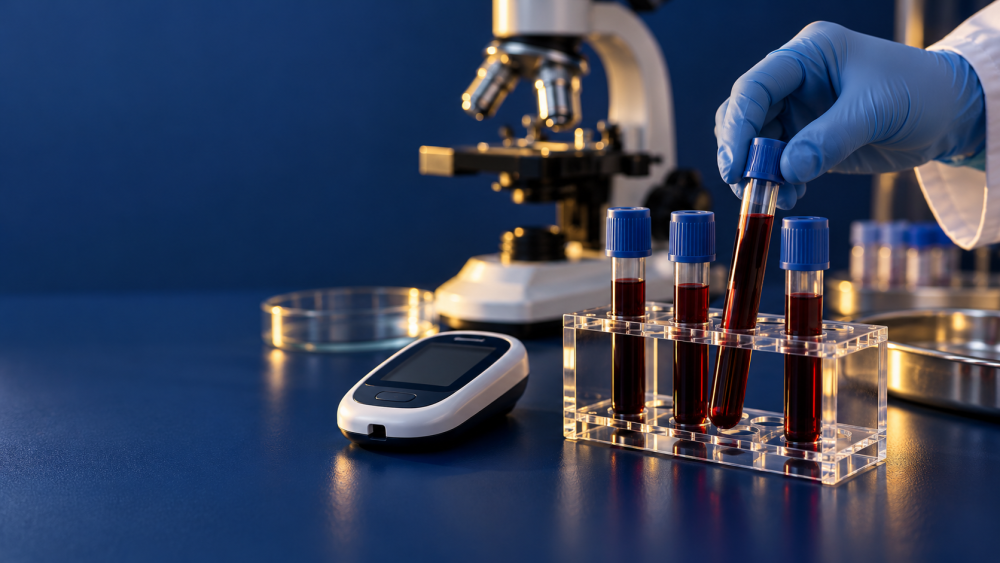
Laboratory fasting glucose and HbA1c, which reflects roughly the previous two to three months, are standard tests. An oral glucose tolerance test (OGTT) may also be used. These ADA 2026 thresholds apply to non-pregnant adults. [8]
| Test | Prediabetes | Diabetes threshold |
|---|---|---|
| Fasting glucose (mmol/L) | 5.6 až 6.9 | 7.0 a viac |
| Glucose two hours after 75 g of glucose in an OGTT (mmol/L) | 7.8 až 11.0 | 11.1 a viac |
| HbA1c (% and mmol/mol) | 5.7 až 6.4 % 39 až 47 mmol/mol | 6.5 % a viac 48 mmol/mol a viac |
The WHO uses 6.1 mmol/L as the lower limit for impaired fasting glucose. In the absence of clear symptoms of hyperglycaemia, diagnosis requires a second abnormal result. Before an OGTT, eat a usual mixed diet with at least 150 g of carbohydrate daily for three days and follow the clinic's fasting instructions. Tell the clinic about low-carbohydrate eating or fasting. HOMA-IR uses fasting glucose and insulin and has no universal cutoff. Routine diabetes diagnosis does not usually require insulin measurement. [8–10]
Benjamin Bikman's four pillars
Bikman's framework is to limit sugary drinks and large servings of refined carbohydrates, include suitable protein sources, consider fat as a source of both satiety and energy, and leave time between meals according to your health and treatment. [11]
Movement helps the body use energy
Working muscles can take up glucose through pathways independent of insulin. Walking, resistance exercise and breaks from prolonged sitting can help. In the Diabetes Prevention Program (3,234 participants), intensive lifestyle changes reduced diabetes incidence by 58% relative to placebo over an average of 2.8 years. The targets were at least 7% weight loss and 150 minutes of activity per week. Discuss major changes with your clinician if you take insulin or medicines that can cause hypoglycaemia. [12, 13]
Photobiomodulation and diabetes
In a randomised study of 60 people with type 2 diabetes, participants who received laser irradiation through the skin over a blood vessel alongside usual medication had better glucose and HbA1c values after 12 weeks than those receiving medication alone. There was no sham irradiation, and the finding needs confirmation. [14]
Type 2 diabetes and laser blood irradiation (in Slovak)
Simply put
Tissues can respond less strongly to insulin even while blood glucose stays normal. Laboratory tests and professional assessment help clarify what is happening. A balanced diet and regular movement also matter.
Curious about what’s in food supplements?
Compare ingredients, amounts per daily dose and precautions for use.
This article is for education. Findings on laser irradiation cannot automatically be applied to wellness devices. Discuss changes to prescribed treatment with your clinician.