

 Slovensky (EUR)
 Česky (CZK)
 Magyar (HUF)
 Slovenščina (EUR)
 Deutsch (EUR)


10. Gymnema, Green Tea and Garcinia: What Research Shows About Weight Management.
KINGRAY ACADEMY · GLP-1, HUNGER AND METABOLISM · 10
Plant compounds are being studied for possible links with appetite, energy metabolism and body weight. However, an interesting mechanism does not yet mean proven weight loss.
Gymnema, green tea and garcinia represent three different stories. For each, what matters is what was studied, in which form and for how long — as well as what the study did not establish.
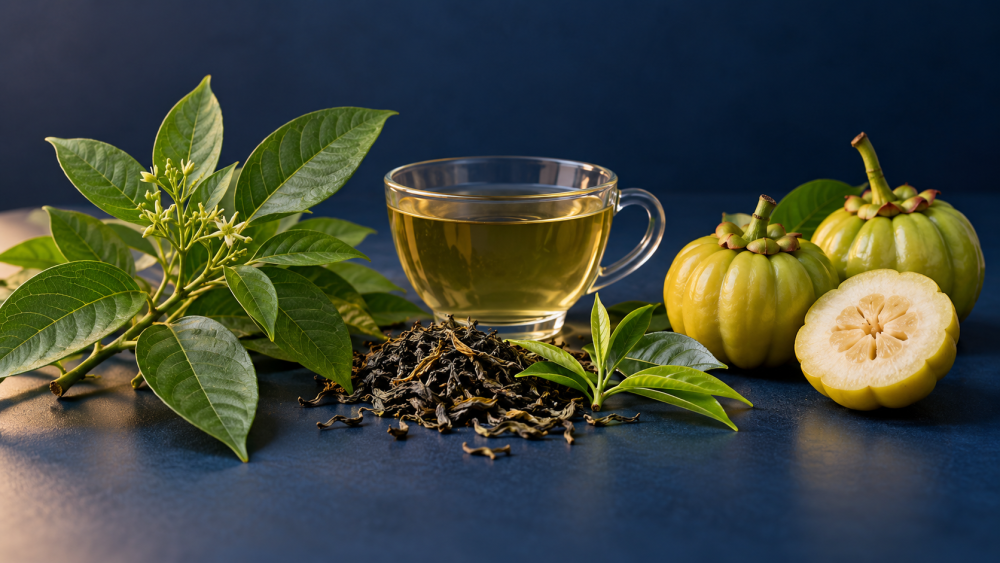
What does “it works” actually mean?
Research may measure the perception of sweetness, the amount of food eaten, energy expenditure or a change in body fat. These outcomes are not interchangeable.
If a participant rates chocolate as less pleasant after using a preparation, this does not automatically mean they will consume less energy for months and lose weight. That conclusion requires longer-term studies with appropriate outcomes.
Gymnema: research on sweet taste
Gymnema sylvestre contains gymnemic acids, which can temporarily suppress the perception of sweetness when they come into contact with taste receptors in the mouth. This is why human studies use preparations such as lozenges. [1, 2]
What did human studies find?
A 2025 study followed 32 healthy adults who reported a strong preference for sweet foods. When using gymnema lozenges as needed, participants reported 42% lower daily intake of sugar-sweetened drinks and 28% lower sweet-craving scores compared with the initial placebo period. Each regimen lasted 14 days. This small, short-term study did not establish long-term weight loss. [1]
Another study involving 58 participants produced mixed results: after the initial dose, the intervention group ate less chocolate, but at the measurement on day 15, the groups did not differ on this outcome. No differences were found in the assessed food categories in everyday life either. [2]
The form matters: findings from a lozenge acting in the mouth cannot automatically be applied to a swallowed capsule. The same plant does not mean the same mode of action.
Green tea: a drink and an extract are not the same
Green tea is studied mainly in relation to catechins, including EGCG. Some preparations also contain caffeine. The result of a particular study therefore also depends on the composition of the preparation used.
A 2025 meta-analysis of randomised trials found that green tea supplementation reduced body weight by an average of 0.74 kg and waist circumference by 1.04 cm more than in control groups. These small average differences reflect the study periods and cannot predict monthly weight loss or the effect of a particular product. [7]
In a 12-month randomised study of 237 postmenopausal women with overweight or obesity, a decaffeinated green tea extract did not produce a demonstrated reduction in weight, BMI or waist circumference compared with placebo. This result relates to the extract studied and this group of participants. [3]
Why does extract safety matter?
EFSA distinguishes traditionally prepared tea infusions from concentrated extracts. In intervention studies of supplements providing at least 800 mg EGCG daily, it observed increases in liver enzymes. It was also unable to identify an extract dose that could generally be considered safe. [4]
The figure of 800 mg is therefore neither a recommended dose nor a guarantee that lower doses are safe. Furthermore, the milligram amount of the whole extract is not the same as its EGCG content.
Garcinia: uncertain benefits and safety questions
Garcinia cambogia contains hydroxycitric acid, known as HCA. It has been studied as a possible aid to weight management.
In a randomised trial of 135 participants, both groups followed a low-energy, high-fibre diet. After 12 weeks, average weight loss was 3.2 kg with garcinia and 4.1 kg with placebo. The difference was not statistically significant. In this trial, garcinia did not produce additional weight or body fat loss compared with placebo. [5]
Safety cannot be left out of the assessment. After analysing reports and scientific literature, the French agency ANSES recommended not consuming supplements containing garcinia. Serious reported effects included liver injury and also affected people without previous health problems. [6]
These findings do not provide a basis for recommending garcinia as a safe route to weight loss.
Comparison of the compounds studied
| Compound | What was studied | What cannot be concluded |
|---|---|---|
| Gymnema | Sweet taste, the appeal of sweets and consumption of selected foods when using lozenges. | Guaranteed hunger suppression, long-term weight loss or the same effect from capsules. |
| Green tea | Effects of specific extracts on weight and metabolic markers. | That every extract reduces weight or that a higher dose produces a better result. |
| Garcinia | HCA, body weight and fat mass; reported adverse effects were also assessed. | Reliable weight loss or safety based solely on plant origin. |
How do these findings relate to GLP-1?
The findings described do not provide evidence that these plants cause clinically meaningful weight loss through GLP-1. A change in sweet taste or a metabolic marker cannot be described as an effect comparable to medicines acting on GLP-1 receptors.
Frequently asked questions
Does a weaker sweet taste also mean less hunger?
Not necessarily. Sweet taste, a craving for a particular food and overall hunger are different phenomena. The result of one measurement does not establish a change in all the others.
Does research on gymnema lozenges also apply to capsules?
Not automatically. A lozenge allows gymnemic acids to come into contact with receptors in the mouth. For a capsule, evidence matching its form and method of use needs to be assessed. [1, 2]
Is a cup of green tea the same as a concentrated extract?
No. The concentration, composition and way it is consumed differ. EFSA therefore distinguishes traditional infusions from extracts when assessing safety. [4]
Is 800 mg EGCG a safe daily limit?
No. This is the dose at and above which EFSA observed increases in liver enzymes in intervention studies. It did not identify a generally safe extract dose. [4]
Does a study of one ingredient establish the effect of a whole blend?
No. A blend may contain different doses, forms and combinations of compounds. Findings for a specific preparation cannot be applied to every product containing the same plant without further verification.
Simply put For plant compounds, consider the exact study outcome, the form of the preparation, the follow-up period and safety. An appealing name or a biological mechanism is not enough to promise weight loss.
Next article 11: Weight loss after forty: muscles, hormonal changes and energy needs.
Continue to article 11: Weight loss after forty →Curious about what’s in food supplements?
Compare ingredients, amounts per daily dose and precautions for use.
This article is educational and is not a recommendation to take the compounds discussed. It does not replace individual health advice. If you take medication, have liver disease, are pregnant or are breastfeeding, discuss the suitability of food supplements with a healthcare professional. Do not change prescribed treatment on the basis of this article.