

 Slovensky (EUR)
 Česky (CZK)
 Magyar (HUF)
 Slovenščina (EUR)
 Deutsch (EUR)
12. Trans Fats and Processed Foods: What to Limit and Why

KINGRAY ACADEMY · CELLS AND METABOLISM · 12
Trans Fats and Processed Foods: What to Limit and Why
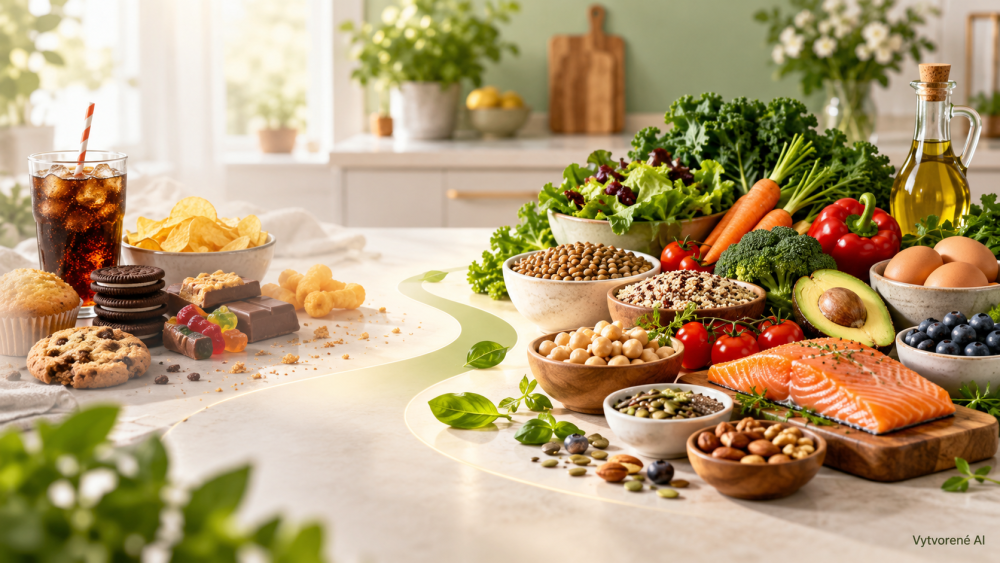
Not every processed food is a poor choice, and not every fat is a trans fat. Food choices depend on ingredients, quantities and what we eat regularly. This article explains why industrial trans fats should be limited, what research shows about ultra-processed diets and why there is no need to eliminate entire food groups as a precaution.
Trans fats
Intake should be as low as possible. Industrial sources are mainly associated with the partial hydrogenation of oils.
Food processing
Freezing vegetables or pasteurising milk differs from producing ultra-processed formulations.
The overall diet
What matters is which foods predominate over time. One meal does not determine the quality of the whole diet.
1. What are trans fatty acids?
Trans fatty acids are a type of unsaturated fatty acid. They can form during industrial fat processing, particularly partial hydrogenation, which partially hardens oils. Smaller amounts also occur naturally in meat and dairy products from ruminant animals.
A higher intake of trans fats adversely affects blood lipids and increases cardiovascular disease risk. The World Health Organization recommends keeping intake below 1% of total energy intake and supports eliminating industrially produced trans fats from the food supply. [1]
What limit applies in the EU?
Foods intended for the final consumer or for supply to retail are subject to a limit of 2 g of trans fat per 100 g of fat, excluding trans fats naturally occurring in fat of animal origin. The transitional period ended in April 2021. [2]
Check the units: this means 100 g of fat, not 100 g of the whole food. The limit is not a recommended daily intake.
The words “margarine”, “biscuit” or “fried food” alone do not reveal the exact amount of trans fat. The specific formulation and fat used matter. Older information about product ingredients may not reflect what is sold today.
2. Trans fats, saturated fats and overheated oil are different
These terms are often confused, although they describe different things. The amount of saturated fat in a nutrition table does not indicate the amount of trans fatty acids.
| Term | What it means | What to look for |
|---|---|---|
| Industrial trans fats | Trans fatty acids formed during industrial fat processing, particularly partial hydrogenation. | Look for partially hydrogenated fats or oils in the ingredients list. |
| Saturated fats | A different group of fatty acids. They are not another name for trans fats. | Compare amounts in similar products and consider the overall mix of fats in the diet. |
| Overheated oil | Excessive or repeated heating causes fat to break down and oxidise. | Do not heat oil until it smokes. Oil degradation should not be assessed solely by its trans fat content. |
3. Processed and ultra-processed foods
Processing includes familiar methods that improve food safety or shelf life: freezing, pasteurisation, fermentation and canning. Frozen vegetables, canned pulses and plain yoghurt can be practical parts of a varied diet.
Under the NOVA classification, ultra-processed foods are industrial formulations often made from several food-derived components and additives that modify flavour or texture. Examples include many sugary drinks, packaged sweets and some ready meals. [3]
This is a diverse category. The degree of processing alone cannot replace an assessment of salt, sugars, fibre, protein and fat content. A longer ingredients list does not automatically prove that a product is harmful.
4. What does research show?
In a controlled study by Hall and colleagues in 2019, 20 adults followed two diets for two weeks each: one ultra-processed and one unprocessed. Participants could eat as much as they wanted. On the ultra-processed diet, they consumed approximately 500 kcal more per day on average and gained weight; on the other diet, they lost weight. [3]
The result supports the conclusion that the characteristics of the food offered can influence spontaneous energy intake. However, the study was small and short. It does not show that every ultra-processed product has the same effect or that a single additive explains the result.
How does this relate to metabolism?
If a pattern of eating makes it easier to consume more energy than the body uses over time, it may contribute to weight gain. When assessing a diet, it therefore makes sense to consider fullness, portion sizes and how often foods are eaten.
These findings do not mean that one food “destroys mitochondria” or that removing it automatically “repairs cells”.
5. What changes make sense in practice?
Start with habits that occur every day. Choose one or two changes you can maintain.
| Common habit | Possible change | What to consider |
|---|---|---|
| Sugary drinks throughout the day | Choose water or unsweetened tea more often. | Quantity and frequency, not just the size of one glass. |
| Regularly replacing meals with sweets | Depending on tolerance, choose fruit, plain yoghurt, nuts or a balanced meal. | Whether the food is filling and provides protein or fibre. |
| Frequent ready meals and salty snacks | Replace some servings with simple meals containing vegetables, a protein source and a side dish. | Salt, the mix of fats and portion size. |
| Choosing only by labels such as “fitness”, “organic” or “gluten-free” | Compare the ingredients and nutrition information of similar products. | Marketing terms do not replace the information on the label. |
Compare products on the same basis, such as per 100 g. When planning a meal, also consider the portion you actually eat. “Of which sugars” refers to total sugars, not only added sugar.
6. Should you eliminate grains, gluten or GMOs?
Not automatically. Limiting industrial trans fats does not mean banning grains, milk or other major food groups. An elimination diet should have a specific medical reason.
A gluten-free diet is necessary for confirmed coeliac disease. If you only suspect coeliac disease, do not stop eating gluten before testing without discussing it with your doctor: changing your diet may affect test results. [4]
Genetic modification and ultra-processing are different concepts. A GMO label alone does not tell you how much sugar, salt or fibre a product contains, nor does it identify the cause of a food intolerance. GMO safety is assessed for the specific product and its intended use. [5]
A varied diet without unnecessary restrictions
The aim is to improve the overall diet over the long term. If digestive symptoms persist, discuss their cause with your doctor. Eliminating many foods at once can make the problem harder to identify and restrict nutrient intake.
Frequently asked questions
Are all processed foods poor choices?
No. Freezing vegetables, pasteurising milk and canning pulses are also forms of processing. What matters is the specific composition, quantity and overall diet.
Are trans fats the same as saturated fats?
No. They are different groups of fatty acids. The saturated fat figure in a nutrition table does not indicate the amount of trans fatty acids.
Does every margarine contain a lot of trans fat?
No. It depends on the formulation and manufacturing process. The word margarine alone does not reveal its trans fat content, and current products may differ from older formulations.
Do I have to stop eating sweets and ready meals completely?
Their quantity, frequency and place in the overall diet matter. A practical aim is to ensure they do not regularly replace a varied diet that provides enough nutrients.
Should I stop eating gluten as a precaution?
No. If you suspect coeliac disease, first discuss testing with your doctor. Stopping gluten before testing may affect the results.