

 Slovensky (EUR)
 Česky (CZK)
 Magyar (HUF)
 Slovenščina (EUR)
 Deutsch (EUR)
05. Fatty Liver (MASLD) and Metabolic Health
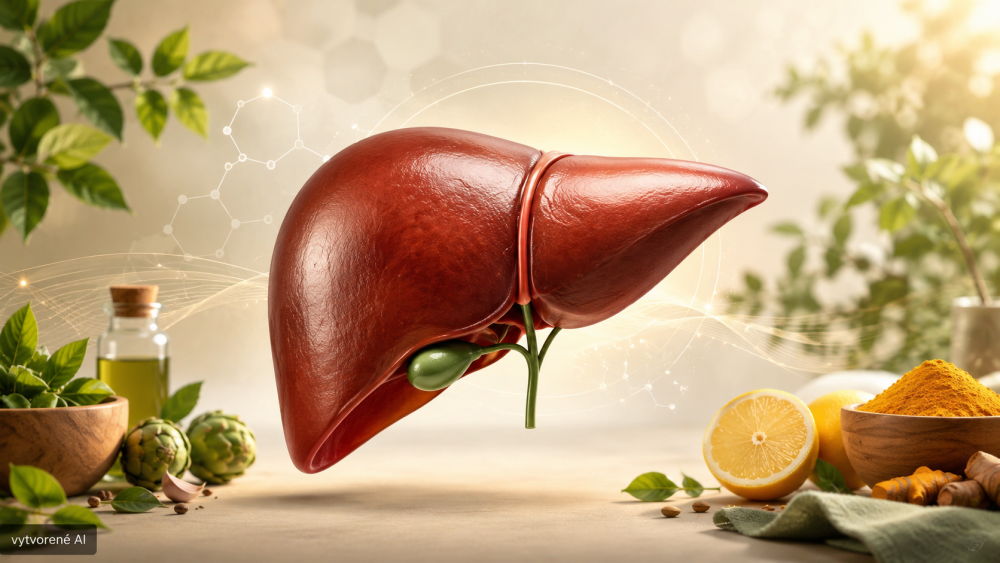
05 · Fatty Liver (MASLD) and Metabolic Health
Fatty liver disease can remain unnoticed for a long time. In some people, inflammation and fibrosis may gradually develop.
Fat in the liver and metabolic risk factors.
It may not cause pain.
Important for assessing future risk.
Physical activity, weight, diet and metabolic health.
What is MASLD?
MASLD stands for metabolic dysfunction-associated steatotic liver disease: confirmed fat accumulation in the liver together with at least one cardiometabolic risk factor. A doctor also assesses alcohol intake and other possible causes of fatty liver. Finding fat on an ultrasound scan does not, by itself, establish its cause.
The condition is not caused by one particular food or simply by “too much sugar”. It usually develops through several interacting processes.
Why does fat accumulate in the liver?
The liver is a central hub of the body's metabolism. It processes nutrients, glucose, fats, alcohol, medicines and many other substances.
With a long-term energy surplus and insulin resistance, more fatty acids may reach the liver, while the production of new fat within the liver may also increase.
- overweight and obesity, particularly abdominal fat,
- insulin resistance,
- type 2 diabetes,
- elevated triglycerides,
- high blood pressure,
- physical inactivity,
- sleep apnoea,
- genetic predisposition.
Some medicines and other diseases can also cause fatty liver. These are possible additional or alternative causes that need to be distinguished during assessment.
Can a lean person have fatty liver?
Yes. There is also a form known as lean MASLD, meaning metabolic fatty liver disease in someone who does not have the typical presentation of obesity.
Genetic factors, insulin resistance, body fat distribution, diet, insufficient muscle activity and other metabolic or health factors may play a role.
Fructose, sugar and the liver
The liver plays an important role in fructose metabolism. High intakes, particularly from sugary drinks, syrups and concentrated juices, may promote fat production in the liver and contribute to excessive energy intake.
Whole fruit contains water and fibre, is consumed more slowly, and an ordinary portion has a different metabolic context from a large volume of sugary drink or juice.
Which foods and habits may increase risk?
The main concern is the overall long-term pattern of eating and lifestyle rather than one particular food.
- frequent sugary drinks and energy drinks,
- large amounts of added sugar and syrups,
- frequent sweets and sweet pastries,
- highly processed foods,
- frequent fried foods,
- excessive saturated fat intake,
- regular overeating and excess energy intake,
- physical inactivity.
What about alcohol?
Alcohol is an important independent cause of liver damage. A person may have both metabolic risk factors and regular alcohol intake, so not every case of fatty liver can automatically be attributed solely to MASLD.
People with fatty liver are advised to limit alcohol and discuss their intake openly with a doctor. Complete and permanent abstinence is recommended for advanced fibrosis or cirrhosis.
Why does fatty liver also occur in children?
MASLD is not limited to older adults. It can also occur in children and adolescents, particularly in those with obesity and metabolic disorders.
- overweight or obesity,
- rapid weight gain,
- a larger waist circumference,
- insulin resistance or type 2 diabetes,
- elevated triglycerides,
- high blood pressure,
- sleep apnoea,
- a family history of diabetes or fatty liver.
A child may appear completely healthy. In some children, liver inflammation and fibrosis may gradually develop.
From liver fat to cirrhosis
Not every case of steatosis automatically gets worse. However, the disease can progress in some people.
One of the most important indicators of future risk is the extent of fibrosis — scarring of the liver. It is therefore not enough simply to establish whether the liver contains excess fat.
How is the liver assessed?
For people at increased metabolic risk, a doctor may assess a combination of laboratory results, clinical findings and imaging, depending on the situation.
Normal liver blood tests do not necessarily mean a healthy liver
Laboratory results are therefore assessed alongside metabolic risk factors and, where needed, further investigations.
What is FIB-4?
In adults at risk, a screening score called FIB-4 may be used. It is calculated from age, AST and ALT levels, and the platelet count.
It helps estimate whether the risk of advanced fibrosis is low or whether further assessment is appropriate.
If the risk is unclear or elevated, a doctor may recommend other methods, such as elastography.
What is FibroScan?
FibroScan is a type of elastography examination that helps estimate liver stiffness and, indirectly, the possible extent of fibrosis.
It is not the same as a conventional ultrasound scan, and its result is interpreted alongside other findings.
What applies to children?
FIB-4 is not used as a reliable standard assessment tool in children. A paediatrician primarily considers:
- growth charts and BMI for age and sex,
- waist circumference and body composition where appropriate,
- blood pressure,
- family medical history,
- metabolic risk factors,
- ALT and other laboratory results as needed.
Further investigations or referral to a paediatric gastroenterologist or hepatologist are decided individually.
Can fatty liver improve?
In metabolic fatty liver disease, an important goal is improving overall metabolic health.
- limit sugary drinks,
- reduce excessive consumption of sweets and highly processed foods,
- eat more vegetables, pulses and fibre-rich foods,
- choose suitable sources of protein,
- choose appropriate unsaturated fats,
- adjust portion sizes,
- be physically active regularly,
- include suitable strength training,
- gradually reduce excess weight,
- manage diabetes, blood pressure and disorders of fat metabolism,
- substantially limit or avoid alcohol according to your health status.
How much weight loss is needed?
In an adult with overweight or obesity, even a relatively modest reduction in body weight may help reduce liver fat.
a sustained weight-loss target to reduce liver fat
a weight-loss target to improve liver inflammation
a weight-loss target to improve fibrosis
These targets from the EASL–EASD–EASO guidelines (2024) apply to adults with MASLD and overweight. They do not guarantee a result or mean that everyone should lose weight. The approach is adapted to health status; preserving muscle mass is also important in cirrhosis.
Drastic fasting is not necessary and may cause additional health problems.
What about children with overweight?
Children should not simply follow an adult weight-loss diet. They are still growing and need sufficient energy and nutrients.
Depending on age, growth and the degree of overweight, the goal may be to stabilise weight or slow further weight gain so that BMI can gradually improve as the child grows.
The approach should be guided by a paediatrician and, where needed, a specialist in paediatric nutrition or a paediatric gastroenterologist or hepatologist.
A “detox” programme does not replace treatment
The liver does not need a miracle cleansing programme. It needs long-term attention to metabolic health: appropriate body weight, physical activity, a good-quality diet, management of diabetes, blood pressure and blood lipids, and an appropriate approach to alcohol.
Frequently asked questions
Does fatty liver cause pain?
MASLD can remain without noticeable symptoms for a long time. Some people may experience a non-specific feeling of pressure or discomfort, but the absence of pain does not rule out the disease.
Can I have fatty liver with normal liver blood tests?
Yes. Normal ALT or AST levels do not rule out steatosis or significant fibrosis.
Does sugar cause fatty liver?
It is not accurate to attribute MASLD to one food. Long-term excess energy intake, metabolic health, insulin resistance, body weight, physical activity, genetics and the overall eating pattern all matter.
Can children have it too?
Yes. MASLD can also occur in children, particularly in those with obesity, insulin resistance and other metabolic risk factors.
Is a liver detox necessary?
There is no need to rely on “detox” programmes. In MASLD, the priorities are body weight, metabolic risks, physical activity, diet, alcohol intake and medical follow-up where appropriate.
What should you remember?
Fatty liver can remain completely silent for a long time. The absence of pain and normal liver blood tests do not always mean that a person with metabolic risk factors has no liver problem.
Particular attention is warranted in people with obesity, type 2 diabetes, insulin resistance, high triglycerides and other metabolic risk factors.
What matters is not only the amount of fat in the liver, but also whether inflammation and fibrosis are developing. This is why identifying people at risk early and providing long-term metabolic care are important.
Scientific and clinical sources
This information is educational and does not replace individual diagnosis or treatment. Consult a doctor if you have elevated liver blood test results or metabolic risk factors. Seek medical help promptly for new jaundice or a marked deterioration in your condition.