

 Slovensky (EUR)
 Česky (CZK)
 Magyar (HUF)
 Slovenščina (EUR)
 Deutsch (EUR)
Uric Acid and Gout: Causes of High Levels, Symptoms and Hyperuricemia
Uric Acid and Gout: Causes of High Levels, Symptoms and Hyperuricemia
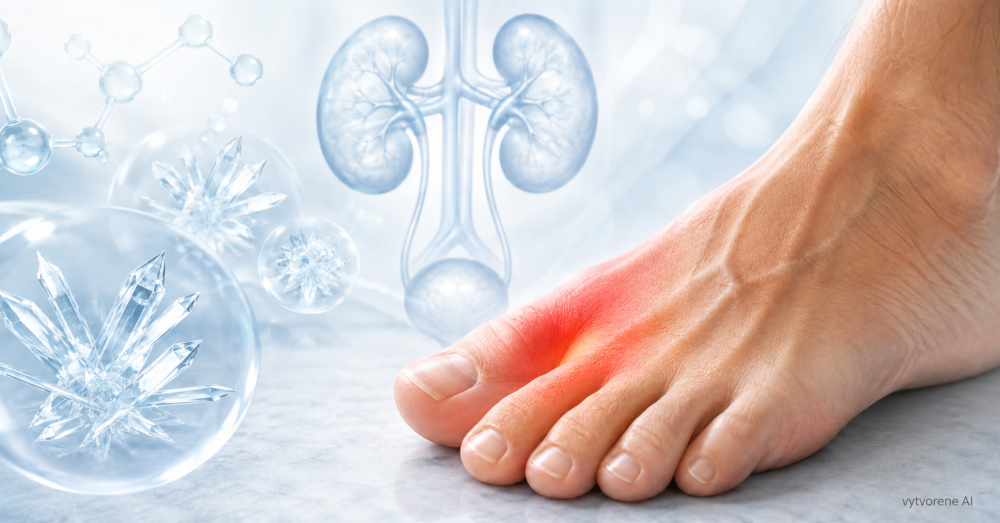
High uric acid levels often cause no symptoms. However, sudden severe pain, redness and swelling in a joint may be linked to gout. What does hyperuricemia mean, why do uric acid levels rise, and when is a medical assessment needed?
Uric acid is a natural part of metabolism. Problems may arise when levels remain high over time and urate crystals begin to form.
A natural metabolite
Produced when purines break down and removed mainly by the kidneys.
An elevated level
Uric acid levels can be high without causing any symptoms.
Urate crystals
In gout, urate crystals accumulate in tissues and can trigger intense joint inflammation.
It is not just about meat
Kidney function, genetics, metabolism, alcohol, fructose, medication and body weight all matter.
What is uric acid?
Uric acid is produced when the body breaks down purines. These are naturally present in our cells and are also found in food.
Uric acid enters the bloodstream, and most is removed by the kidneys. A smaller proportion is eliminated through the digestive tract.
Why can uric acid levels rise?
- genetically influenced reductions in uric acid excretion,
- reduced kidney function,
- dehydration,
- excess body weight and visceral fat,
- insulin resistance and metabolic syndrome,
- high intake of fructose and sugar-sweetened drinks,
- alcohol, particularly beer and spirits,
- organ meats and large amounts of certain animal foods,
- rapid weight loss or prolonged fasting,
- some medicines, including certain diuretics,
- conditions associated with increased cell breakdown.
Explaining high uric acid levels simply by saying someone “ate too much meat” is therefore an oversimplification.
High uric acid does not automatically mean gout
Elevated uric acid levels without symptoms of gout are known as asymptomatic hyperuricemia.
Gout develops when monosodium urate crystals form and accumulate in joints or surrounding tissues. The immune system can respond to these crystals with intense inflammation.
- sudden, very severe pain,
- joint swelling,
- redness,
- noticeable warmth,
- extreme sensitivity to touch.
The big toe is the best-known site, but gout can also affect the ankle, knee, wrist, fingers or elbow.
Seek medical assessment as soon as possible, ideally the same day, for a newly painful, hot and swollen joint that develops suddenly. Do not delay if you also have fever, chills or feel generally unwell: a joint infection is another possibility and requires urgent treatment. The absence of fever does not rule out infection.
How are hyperuricemia and gout diagnosed?
A blood test measures uric acid levels. The laboratory reference range and the treatment target for gout are not the same thing. Results are interpreted alongside symptoms, kidney function and current medicines.
Uric acid levels may not be elevated during a gout flare. If gout is still suspected, a clinician may repeat the blood test at least two weeks after the flare has settled. When the diagnosis is uncertain, examining joint fluid for crystals or using imaging may help.
| Term | What it means |
|---|---|
| Hyperuricemia | An elevated blood uric acid level; this alone does not confirm gout. |
| Asymptomatic hyperuricemia | An elevated level without manifestations of gout. Urate-lowering medication is not automatically started on the basis of a single test result. |
| Gout | A condition involving urate crystal deposits; it can involve both flares and periods without pain. |
What can you influence when uric acid levels are high?
Diet and lifestyle changes can help, but often are not enough to manage confirmed gout. Medical treatment is particularly important when flares recur or tophi (crystal deposits) develop. No diet or food supplement guarantees that gout will go away.
1. Maintain an appropriate fluid intake
Adequate hydration supports normal kidney function and helps keep urine less concentrated.
However, people with heart or kidney failure should follow their clinician’s advice about fluid intake.
2. Limit sugar-sweetened drinks and excessive fructose intake
Large amounts of fructose can increase uric acid production. Practical steps include limiting:
- sugary soft drinks,
- energy drinks,
- syrups,
- large amounts of sugary drinks and concentrated fruit juices.
Fruit contains water, fibre, vitamins, minerals and polyphenols. Moderate portions should not be treated in the same way as drinks containing large amounts of added sugar.
3. Limit alcohol
Alcohol can increase the risk of gout flares and affect uric acid excretion. Beer can be particularly problematic.
4. Review sources of purines
- organ meats,
- large portions of red meat,
- certain rich meat stocks and gravies,
- sardines, anchovies and some seafood.
Purine-containing plant foods do not have the same relationship with gout risk as organ meats, alcohol or sugar-sweetened drinks. There is no reason to automatically exclude all legumes and vegetables.
5. Lose weight gradually
For people who are overweight, gradual weight loss can be beneficial.
In contrast, rapid weight loss, prolonged fasting or marked ketosis may temporarily raise uric acid levels.
6. Review kidney function, metabolic health and medicines
When levels are repeatedly elevated, a clinician may assess:
Do not stop prescribed medicines on your own.
Treating a flare and lowering urate over time
Medicines for acute inflammation address pain and swelling. Long-term urate-lowering treatment has a different purpose: maintaining levels that limit further crystal deposition. Medication choices also depend on kidney function, other health conditions and potential interactions. Do not change or stop prescribed treatment without discussing it with your clinician.
What is the target level in confirmed gout?
A common treatment target for urate-lowering therapy in gout.
This value is a treatment target for people being treated for gout. It is not a universal diagnostic cut-off that can establish gout from a single blood test.
What should you remember about uric acid?
Uric acid is a natural product of purine metabolism. Its presence alone is not a problem.
An elevated level does not automatically mean gout. Gout involves the formation and deposition of urate crystals, which can trigger an intense inflammatory response.
With persistent hyperuricemia, it is important to consider kidney function, metabolic health, body weight, alcohol, fructose, diet and current medicines and arrange appropriate treatment when needed.
This article is for educational purposes. A suddenly hot, swollen and painful joint, recurrent gout flares, kidney stones or persistently high uric acid levels require medical assessment.
Frequently asked questions
Does high uric acid automatically mean gout?
No. Elevated levels without symptoms are known as asymptomatic hyperuricemia. Gout involves urate crystal deposition and an inflammatory response.
What is the target level in confirmed gout?
In confirmed gout, a common treatment target is below 6 mg/dL, approximately below 360 µmol/L. This is not a universal threshold for establishing the diagnosis.
Is a hot, swollen joint always gout?
No. A joint infection can cause similar symptoms. A newly hot, swollen and painful joint that develops suddenly needs prompt medical assessment, particularly with fever or feeling generally unwell.