

 Slovensky (EUR)
 Česky (CZK)
 Magyar (HUF)
 Slovenščina (EUR)
 Deutsch (EUR)
Inflammation and Mental Health: What We Know About Links to Depression and Anxiety
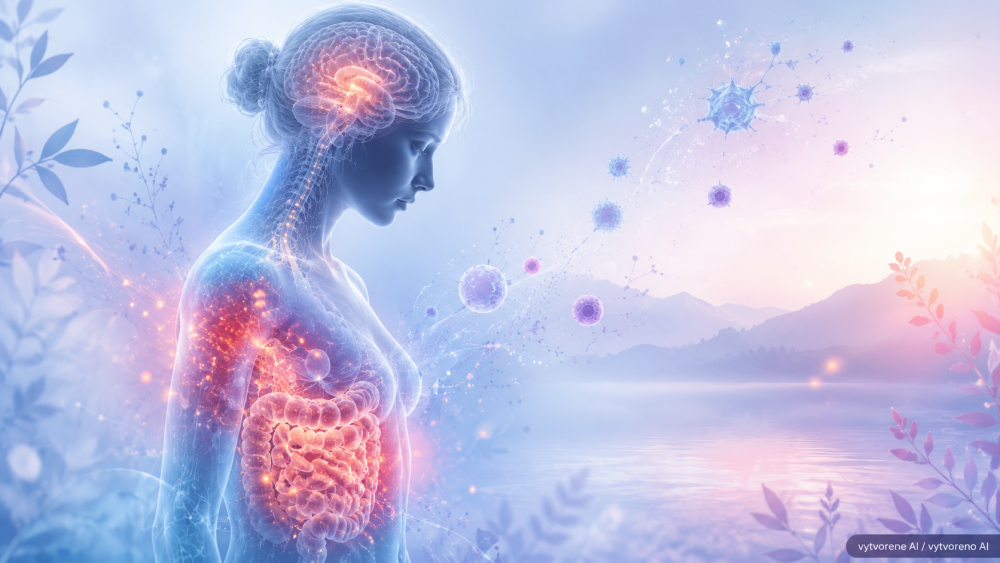
Do you experience persistent fatigue, loss of interest in everyday activities, poor sleep or unexplained anxiety? These symptoms can have many causes. Research is also exploring possible links between mental health and inflammatory processes; symptoms alone cannot establish their cause.
Author: Ing. František Kokoš and colleagues · Updated:
Educational content. This article does not provide an individual diagnosis or attribute effects in preventing or treating depression or anxiety to foods or food supplements.
Depression and anxiety disorders involve multiple interconnected biological, psychological and social factors. Research is also exploring links with inflammatory processes. An ordinary feeling of anxiety does not, in itself, mean that someone has an anxiety disorder.
An observed association between inflammatory markers and mental health difficulties does not prove that inflammation caused depression or anxiety in a particular person. Findings vary between studies and are influenced by other factors.
The immune system can communicate with the brain through cytokines.
Research explores the relationship between inflammation and mood, stress, fatigue and sleep.
The microbiome communicates with the brain through neural, metabolic and immune pathways.
Sleep, physical activity, smoking, alcohol, diet and stress can influence inflammatory processes.
Inflammation is not always an enemy
Acute inflammation is a natural defence response. It helps the body fight infection and repair damaged tissue. Once it has fulfilled its role, it should gradually subside.
Chronic inflammation persists for longer. The term “low-grade” describes inflammatory activity of low intensity. It may not have obvious signs; however, “hidden inflammation” is not a standalone diagnosis that can be established from how someone feels.
It may be associated with changes in metabolism, blood vessels, the nervous system and other bodily processes.
What does research on inflammation and the brain explore?
The immune system communicates with the brain through inflammatory signalling molecules called cytokines.
When certain inflammatory signals remain elevated over time, research explores their relationship with areas such as:
A person may experience exhaustion, slower thinking, reduced interest, sleep disturbances or greater sensitivity to stress. However, these are non-specific symptomsthat can have many other causes.
Sleep, stress, physical illnesses, medication and other circumstances need to be considered when interpreting findings. A simple explanation such as “inflammation causes depression” does not reflect the complexity of the research.
The gut, microbiome and mental health
Trillions of microorganisms live in the gut. Together, they form the gut microbiome.
Gut microorganisms are involved in processing food, producing certain substances, interacting with the intestinal barrier and communicating with the immune system.
Fibre and short-chain fatty acids
Some gut bacteria process fibre and produce short-chain fatty acids, such as butyrate. These metabolites are being intensively studied in relation to the intestinal lining and the regulation of immune processes.
What is dysbiosis?
The term dysbiosis refers to a disruption or change in the composition and functioning of the gut microbial community.
The gut and brain communicate through:
- neural pathways, including the vagus nerve,
- the immune system,
- hormones,
- metabolites produced by gut bacteria,
- the metabolism of tryptophan and other nutrients.
Although much of the body’s serotonin is produced in the gut, this serotonin does not pass directly into the brain. The gut influences the brain mainly indirectly, through neural, metabolic and immune signals.
Research has identified differences in the gut microbiome between some people with depression and healthy individuals. However, there is currently no single universal “depression microbiome” and a stool test alone cannot reliably establish the cause of depression.
What other factors may be involved?
When studying inflammatory markers and mental health, researchers also consider the following circumstances. This is not a list of causes of depression or a guide to self-diagnosis.
Assessing diet requires consideration of the overall eating pattern, quantities and individual needs. A single meal cannot establish inflammatory activity or the cause of mental health difficulties.
Difficulties that deserve assessment
The following difficulties can have various physical and psychological causes. If they persist or interfere with everyday life, it is appropriate to consult a professional:
These difficulties do not, by themselves, confirm inflammation. A doctor assesses their course, accompanying symptoms, medication use and overall health.
What does CRP show, and what are its limitations?
CRP (C-reactive protein) is a non-specific marker of inflammatory activity. The more sensitive hs-CRP test detects lower concentrations and is used, for example, when assessing cardiovascular risk. Neither test diagnoses depression or an anxiety disorder.
What can CRP not tell you?
CRP alone cannot tell you where inflammation originates or whether it is causing mental health difficulties. It may be elevated with infection, injury, obesity, autoimmune disease or after substantial physical exertion.
Depending on symptoms and examination findings, a doctor may consider further tests, such as a full blood count or thyroid function tests. The following list is not a recommendation to have every test:
- a full blood count,
- blood glucose and HbA1c,
- liver tests,
- thyroid hormones,
- iron and ferritin,
- vitamin B12 and folate,
- other tests where appropriate for the person’s health.
They are not routine tests used to diagnose depression or so-called “leaky gut”.
What can be part of everyday care?
Review your eating pattern
A varied diet can include minimally processed foods such as:
- vegetables and appropriate portions of fruit,
- legumes and other sources of fibre,
- fish and sources of omega-3 fatty acids,
- nuts, seeds and olive oil,
- eggs, meat or suitable plant-based sources of protein,
- fermented foods according to individual tolerance.
Consider limiting sugary drinks, sweets, frequent snacking on treats, fried foods and highly processed foods.
The small, 12-week SMILES trial involving 67 adults recorded an improvement in depressive symptoms in a group receiving professional dietary counselling compared with a social support group. Most participants also continued their treatment. This does not prove that a particular food or supplement treats depression, or that reduced inflammation caused the improvement.
Consider variety and food tolerance
Gut microorganisms use components of the diet, particularly different types of fibre. Examples of foods containing fibre include:
vegetables, legumes, onions, garlic, leeks, chicory, oats, nuts and seeds.
Food tolerance is individual. If digestive difficulties recur, discuss an appropriate eating pattern with a doctor or qualified nutrition professional. Findings from microbiome research cannot automatically be applied to the effects of probiotic supplements on depression or anxiety.
Include regular physical activity
Physical activity can form part of mental health care. Choose a manageable activity suited to your circumstances and health, such as a short walk. Intensity should be individual; there is no requirement to achieve an athletic performance.
Make time for sleep
A regular sleep–wake routine is part of everyday care. Persistent insomnia or pronounced daytime sleepiness should be discussed with a doctor. Adjusting your routine does not guarantee reduced inflammation or recovery from mental health difficulties.
Discuss persistent difficulties with a doctor
When difficulties persist, it makes sense to assess both physical and mental health. There is no need to assume in advance that inflammation is the cause. Investigations and any treatment are chosen according to the individual findings.
Do not start taking anti-inflammatory medicines or antibiotics for mental health difficulties without medical advice. Do not stop prescribed medicines, including antidepressants, without consulting your doctor.
Mental health difficulties should be taken seriously
Professional psychological and psychiatric care is used for depression and anxiety disorders. Changes to a daily routine can complement this care, but do not replace necessary treatment.
If sadness, anxiety, apathy or loss of interest persists, interferes with everyday functioning, or thoughts of self-harm occur, seek professional help. In an immediate emergency in the EU, call 112.
What should you remember?
The brain is not separate from the rest of the body. The gut, immune system, metabolism, sleep and mental processes interact with one another.
Research observes an association between inflammatory markers and mental health difficulties in some people. This association alone does not establish the cause in an individual.
Professional care is important for mental health difficulties; sleep, physical activity and diet can be part of that care. Any identified physical illnesses are assessed and treated separately.
Frequently asked questions
Is elevated CRP proof of depression?
No. CRP is a non-specific marker of inflammation. It does not establish the cause or a psychiatric diagnosis.
Does normal CRP mean there is no inflammation in the body?
Not always. The result is interpreted alongside symptoms and other examinations.
Can a dietary change replace treatment for depression?
No. Research on dietary interventions is interesting, but treatment decisions require professional assessment.
Is the gut microbiome linked to mental health?
Researchers are exploring connections between the gut, immune system and brain. Existing findings cannot establish the cause of a particular person’s difficulties.
Scientific and clinical sources
- Lifelines cohort study (2025): links between inflammation, depression and anxiety; causality remains uncertain
- Wastyk et al., Cell (2021): diet, the microbiome and immune markers
- Jacka et al., BMC Medicine (2017): the SMILES trial on diet in depression
- MedlinePlus: what CRP can and cannot show
- WHO: depression and available support and treatment
- Radjabzadeh et al., Nature Communications (2022): associations between the gut microbiome and depressive symptoms
Results from individual studies cannot be used to diagnose a condition or establish the effectiveness of a food supplement.