

 Slovensky (EUR)
 Česky (CZK)
 Magyar (HUF)
 Slovenščina (EUR)
 Deutsch (EUR)
ADHD in Children: Symptoms, Diagnosis, Treatment, Exercise and Nutrition
ADHD in Children: Symptoms, Diagnosis, Treatment, Exercise and Nutrition
Does your child struggle to concentrate, keep forgetting things, interrupt others, find it difficult to finish tasks or seem constantly “on the go”? These behaviours can have many causes. When they are persistent, pronounced and interfere with daily life at home, at school or with peers, ADHD may be one possible explanation.
ADHD – attention-deficit/hyperactivity disorder – is one of the most common neurodevelopmental conditions of childhood. It is not simply a result of poor parenting or a child “not trying hard enough”.
Difficulty sustaining attention
A child may forget things, lose belongings, leave tasks unfinished or become easily distracted.
A need to move
A child may be constantly moving, fidgeting, talking a lot or finding it difficult to sit still.
Difficulty waiting and regulating behaviour
A child may interrupt others, act before thinking or struggle to wait their turn.
ADHD is not diagnosed with a single test
No single blood test, EEG or computer-based assessment can confirm ADHD on its own. Diagnosis considers a child's symptoms, how long they have been present and their impact on everyday life.
Information from parents, teachers and, depending on their age, the child is important. A clinician also assesses whether another condition better explains the symptoms.
The clinician considers whether the behaviours are inappropriate for the child's age and developmental level, persistent and present in more than one setting. They assess their onset in childhood and their impact on learning, relationships and daily activities. Parent and teacher questionnaires help, but do not establish a diagnosis on their own. Source: CDC.
ADHD may have a predominantly inattentive, predominantly hyperactive-impulsive or combined presentation. Not every child with ADHD is noticeably restless.
- insufficient sleep or sleep disorders,
- anxiety or depression,
- learning difficulties,
- language and developmental difficulties,
- autism,
- tics,
- hearing or vision problems.
What are the main treatment options?
A treatment plan takes account of age, symptom severity, functioning at school, coexisting difficulties and the family's needs.
| Approach | Role |
|---|---|
| Behaviour therapy and parent training | Established approaches that form an important part of care. |
| School adjustments | A very important component of everyday support. |
| Medication | An effective option for reducing core symptoms; selection and monitoring are the responsibility of the prescribing clinician. |
| Exercise and movement | Support general health and fitness; effects on ADHD symptoms continue to be studied. |
| Neurofeedback | Research does not establish a reliable benefit as a stand-alone treatment. |
| Omega-3 and probiotics | Subjects of research, not substitutes for established treatment. |
For preschool children, care usually starts with parent training in behaviour management and changes to the environment. For school-age children and adolescents, a plan may also include medication alongside support at home and school. Decisions take account of the severity of difficulties, benefits, adverse effects and the rules for using medicines in the relevant country.
Medication treatment involves monitoring both benefits and adverse effects, including changes in appetite and sleep. The clinician also checks growth, weight, heart rate and blood pressure. Do not change the dose or treatment without consulting the prescriber. CDC · NICE NG87.
Neurodevelopmental therapy and movement
The term neurodevelopmental therapy may refer to different exercise, motor or sensorimotor programmes. It does not describe one consistently defined ADHD treatment.
If a child also has difficulties with coordination, balance, motor planning, posture or sensory processing, an individual assessment by a physiotherapist, occupational therapist or another appropriate professional may be helpful.
- running and brisk walking,
- cycling and swimming,
- ball games,
- dancing,
- coordination exercises,
- martial arts with well-structured coaching,
- balance and motor-skills activities.
Some randomised studies have reported improvements in selected executive functions following structured exercise. Results from a particular programme do not guarantee the same effects from every sport or “neurodevelopmental therapy”. Exercise does not replace necessary assessment and treatment. Example of a clinical trial.
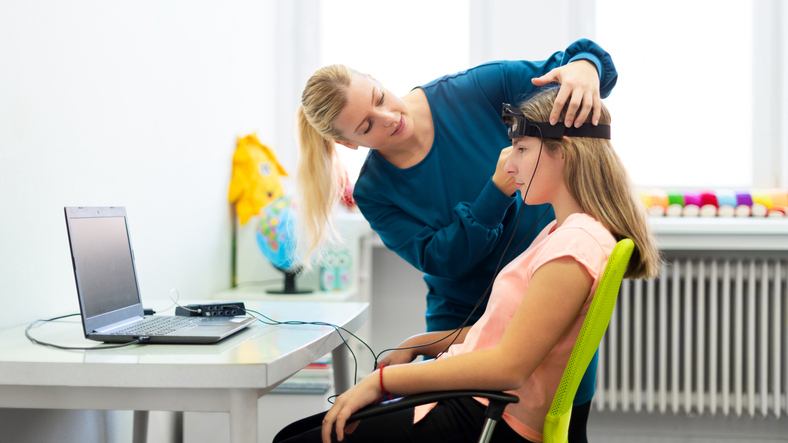
Neurofeedback – training with feedback on brain activity
Neurofeedback is a form of biofeedback. EEG neurofeedback records the brain's electrical activity and gives the child visual or auditory feedback intended to help them learn to change certain patterns of activity.
A meta-analysis published in 2025 included 38 randomised trials. Ratings by people who were probably unaware of which intervention participants received showed no significant improvement in total ADHD symptoms. Some narrower analyses found small effects, but the overall findings do not support neurofeedback as a stand-alone ADHD treatment. Source: Westwood and colleagues, 2025.
Omega-3 fatty acids
The omega-3 fatty acids EPA and DHA are dietary components, and DHA also has a role in the nervous system. Researchers have therefore investigated whether supplementation can affect ADHD.
A 2023 Cochrane review found no convincing benefit of polyunsaturated fatty acid supplementation for total parent-rated ADHD symptoms compared with placebo. NICE advises against offering fatty acid supplements to treat ADHD in children and young people. Cochrane · NICE.
If a child takes a supplement, discuss its suitability and dose with their paediatrician, particularly if they take other medicines or have another medical condition.
ADHD, the gut and the gut microbiome
The gut and brain communicate through nervous, hormonal, immune and metabolic pathways. This connection is known as the gut–brain axis.
Research explores associations between the gut microbiome, the nervous system and behaviour. In ADHD research, scientists investigate whether particular features of the gut microbiome differ between children with and without ADHD.
We cannot currently conclude that a particular gut bacterium causes ADHD or that changing the microbiome can eliminate it. This remains an area of research.
Probiotics and ADHD
Probiotics and synbiotics are being studied in relation to the gut microbiome. Clinical trials in children with ADHD have generally been small and have used different microbial strains and combinations.
The cited 2024 meta-analysis included seven trials with 379 participants and found no statistically significant improvement in total ADHD symptoms compared with placebo. Its findings cannot be applied to any product containing bacterial cultures. Source: Liang and colleagues, 2024.
They remain a subject of research and may have a separate reason for use in certain digestive conditions. It is not appropriate to promise that “fixing the gut will cure ADHD”.
Nutrition for a child with ADHD
A child with ADHD does not automatically need a special “ADHD diet”. The starting point is a varied diet that meets the child's needs.
- regular sources of protein,
- vegetables and fruit,
- wholegrain foods as tolerated,
- fish, nuts and seeds, taking age, allergies and safe preparation into account,
- enough fibre,
- adequate fluids,
- limiting excess sugary drinks and highly processed foods.
Routine elimination diets or the removal of large food groups should not be introduced without a clear reason. If a parent repeatedly notices an association between a particular food and their child's behaviour, keeping a record and discussing any proposed elimination with a professional is appropriate.
Discuss reduced appetite, weight loss or a very restricted range of foods with the child's paediatrician and treating clinician. The aim is to ensure adequate nutrition and monitor growth. Vitamins, minerals and restrictive diets should not automatically be added as ADHD treatments.
Sleep can have a substantial effect on ADHD symptoms
Insufficient sleep can worsen attention, impulsivity, mood and learning. Some sleep disorders may also mimic or worsen ADHD symptoms.
A regular routine, adequate sleep, limiting screens before bedtime and seeking assessment for snoring, breathing pauses or pronounced daytime sleepiness are important.
What can comprehensive support look like?
- Give one clear instruction at a time and check that the child understands it.
- Break longer tasks into smaller steps with short breaks.
- Use a clear daily schedule and a consistent place for school supplies.
- Recognise specific efforts and agree predictable rules.
- Work with the teacher to reduce distractions and make appropriate adjustments to schoolwork.
Adapt these approaches to the child's age and needs. The goal is to make everyday life easier, not punish symptoms of the condition.
Confirm the diagnosis and assess coexisting difficulties.
Behavioural strategies and clear structure at home.
Adjustments to the environment, tasks and support.
Regular physical activity and motor-skills therapy where appropriate.
A consistent routine and a balanced diet.
Assess daily functioning, treatment benefits and any adverse effects.
What should you remember about ADHD in children?
ADHD is a neurodevelopmental condition, not a result of poor parenting or a single “damaged” part of the brain.
Well-supported approaches include behaviour therapy, parent and school support and, depending on age and severity, medication.
Exercise, adequate sleep and a varied diet are part of caring for overall health. Neurofeedback and microbiome-focused interventions do not have the same standing as established treatments. We do not attribute ADHD treatment effects to food supplements or recommend using them instead of professional care.
Frequently asked questions about ADHD in children
How is ADHD diagnosed in a child?
ADHD is not diagnosed with a single test. Assessment considers persistent symptoms, their presence in more than one setting, their impact on daily functioning and other possible explanations.
What are the main treatment options for ADHD?
A treatment plan may include behavioural interventions, parent and school support and, depending on age, severity and individual circumstances, medication. The plan should be developed with a qualified clinician.
Does exercise help with ADHD?
Regular physical activity supports general health, and research is investigating its effects on some symptoms and executive functions. It should not replace necessary assessment or treatment.
Is neurofeedback an established ADHD treatment?
Neurofeedback is being studied, but a 2025 meta-analysis found no significant improvement in total symptoms in probably blinded ratings. The findings do not support its use as a stand-alone ADHD treatment.
Can probiotics or changes to the gut cure ADHD?
It has not been established that changing the gut microbiome can eliminate ADHD. Gut–brain axis research continues, but probiotics are not an established ADHD treatment.
Does a child with ADHD need a special diet?
Not automatically. A varied diet that meets the child’s needs is the starting point. Elimination diets or the removal of large food groups should not be introduced without a clear reason and professional supervision.
Professional sources and further reading
ADHD diagnosis and treatment draw on clinical guidance and an individual assessment of the child. Complementary approaches do not replace professional assessment or a treatment plan.
- NICE NG87: ADHD diagnosis and management
- CDC: treatment recommendations for ADHD in children
- CDC: diagnosing ADHD
- Cochrane (2023): polyunsaturated fatty acids for ADHD
- Liang and colleagues (2024): meta-analysis of probiotics for ADHD
- Westwood and colleagues (2025): meta-analysis of neurofeedback
- Randomised trial of exercise and executive functions in children with ADHD
Important information: This article is educational and does not replace a child’s clinical assessment, diagnosis or individual treatment. Change medication or dietary restrictions only in consultation with the treating professional.
Clear articles about health, development, nutrition and how the human body works.
↑ Back to top